Istituto Nazionale di Geofisica e Vulcanologia-Osservatorio Etneo, Piazza Roma 2, Catania, Italy.
Department of Electrical, Electronic and Computer Engineering, University of Catania, Viale Andrea Doria, 6, 95125, Catania, Italy.
Sci Rep. 2023 Mar 21;13(1):4641. doi: 10.1038/s41598-023-31779-2.
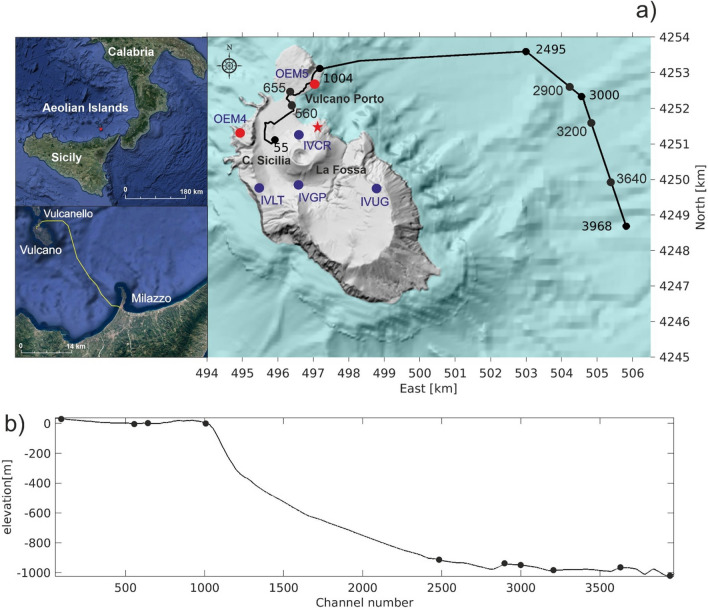
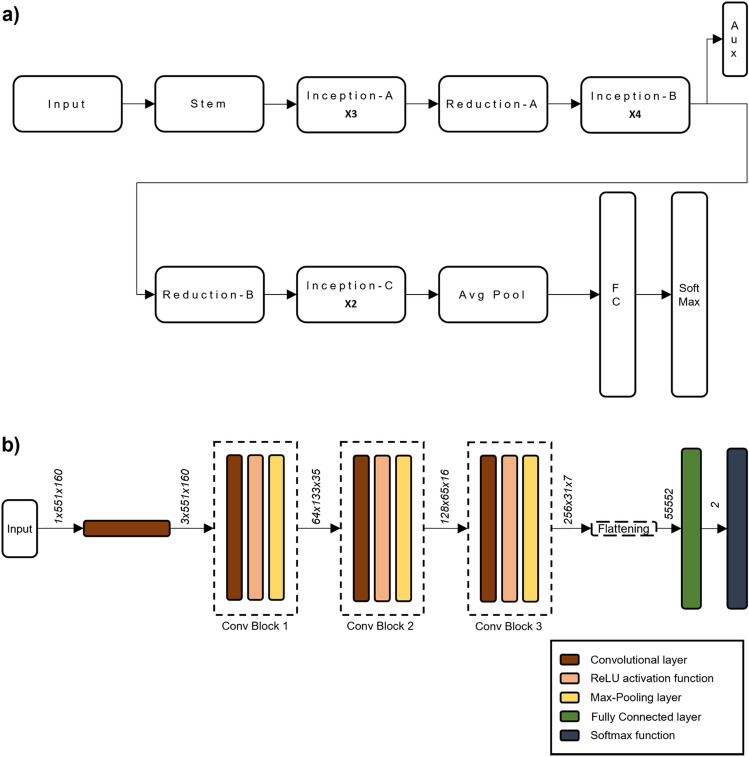
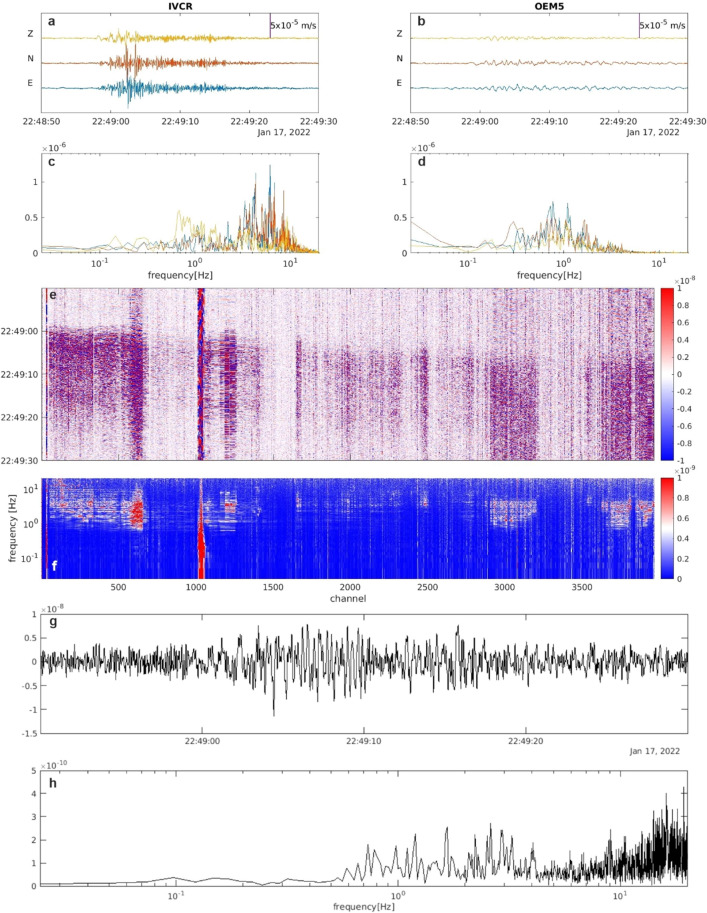
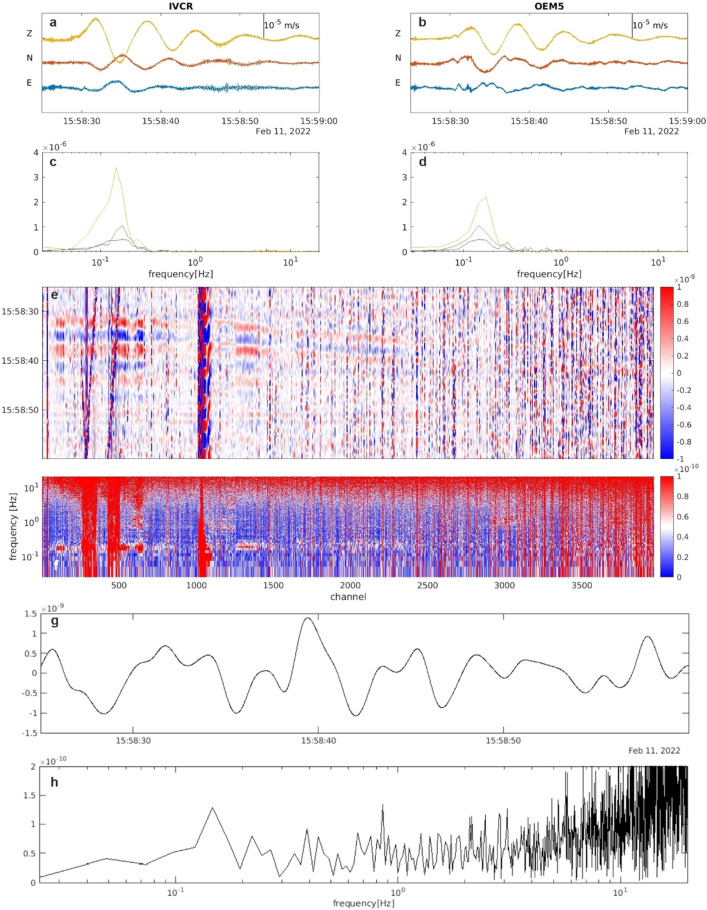
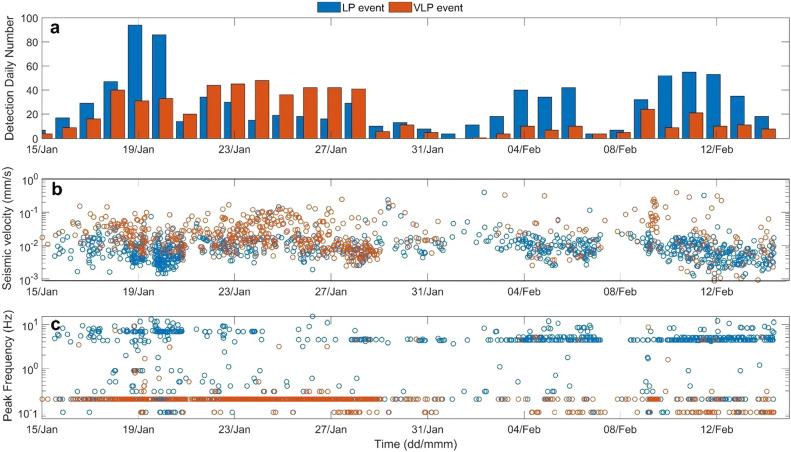
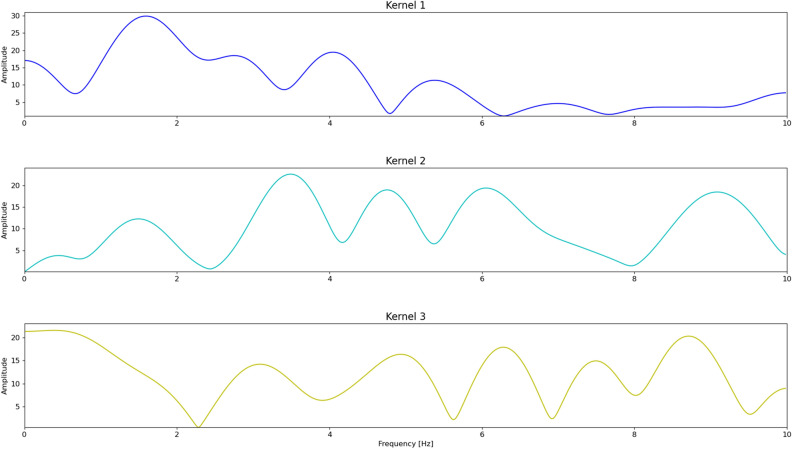
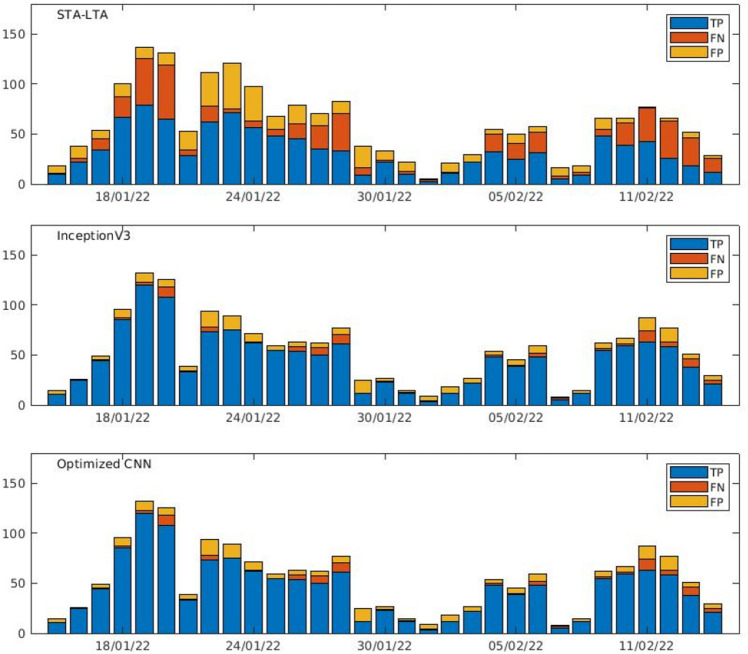
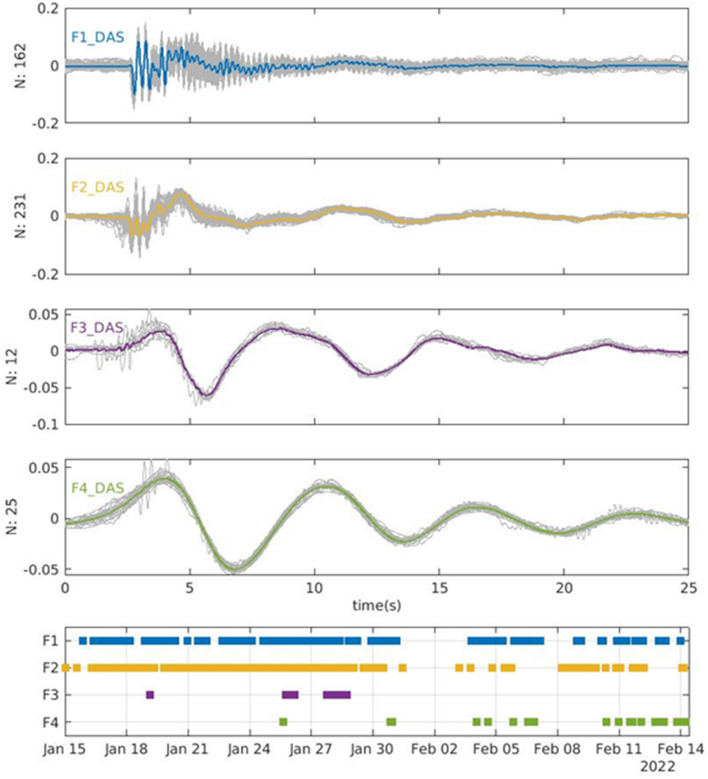
Volcano-seismic signals can help for volcanic hazard estimation and eruption forecasting. However, the underlying mechanism for their low frequency components is still a matter of debate. Here, we show signatures of dynamic strain records from Distributed Acoustic Sensing in the low frequencies of volcanic signals at Vulcano Island, Italy. Signs of unrest have been observed since September 2021, with CO degassing and occurrence of long period and very long period events. We interrogated a fiber-optic telecommunication cable on-shore and off-shore linking Vulcano Island to Sicily. We explore various approaches to automatically detect seismo-volcanic events both adapting conventional algorithms and using machine learning techniques. During one month of acquisition, we found 1488 events with a great variety of waveforms composed of two main frequency bands (from 0.1 to 0.2 Hz and from 3 to 5 Hz) with various relative amplitudes. On the basis of spectral signature and family classification, we propose a model in which gas accumulates in the hydrothermal system and is released through a series of resonating fractures until the surface. Our findings demonstrate that fiber optic telecom cables in association with cutting-edge machine learning algorithms contribute to a better understanding and monitoring of volcanic hydrothermal systems.
火山地震信号有助于火山灾害评估和喷发预测。然而,其低频成分的潜在机制仍存在争议。在这里,我们展示了来自意大利武尔卡诺岛分布式声传感的动态应变记录在火山信号低频段的特征。自 2021 年 9 月以来,一直观察到 CO 排放以及长周期和超长周期事件的发生,表明存在不稳定迹象。我们在连接武尔卡诺岛和西西里岛的陆地上和海上的光纤通信电缆上进行了询问。我们探索了各种自动检测地震火山事件的方法,包括调整传统算法和使用机器学习技术。在一个月的采集期间,我们发现了 1488 个事件,它们的波形多种多样,由两个主要频带(0.1 到 0.2 Hz 和 3 到 5 Hz)组成,具有各种相对幅度。基于频谱特征和家族分类,我们提出了一个模型,其中气体在热液系统中积聚,并通过一系列共振裂缝释放到表面。我们的研究结果表明,光纤电信电缆与先进的机器学习算法相结合,有助于更好地了解和监测火山热液系统。