Ndungu Samuel Mathu, Messmer Monika M, Ziegler Dominik, Gamper Hannes A, Mészáros Éva, Thuita Moses, Vanlauwe Bernard, Frossard Emmanuel, Thonar Cécile
Institute of Agricultural Sciences, ETH Zurich Plant Nutrition group Eschikon 33, CH-8315 Lindau, Switzerland.
International Institute of Tropical Agriculture (IITA), c/o ICIPE Campus, P.O. Box 30772-00100 Nairobi, Kenya.
Agric Ecosyst Environ. 2018 Jul 1;261:161-171. doi: 10.1016/j.agee.2017.12.014.
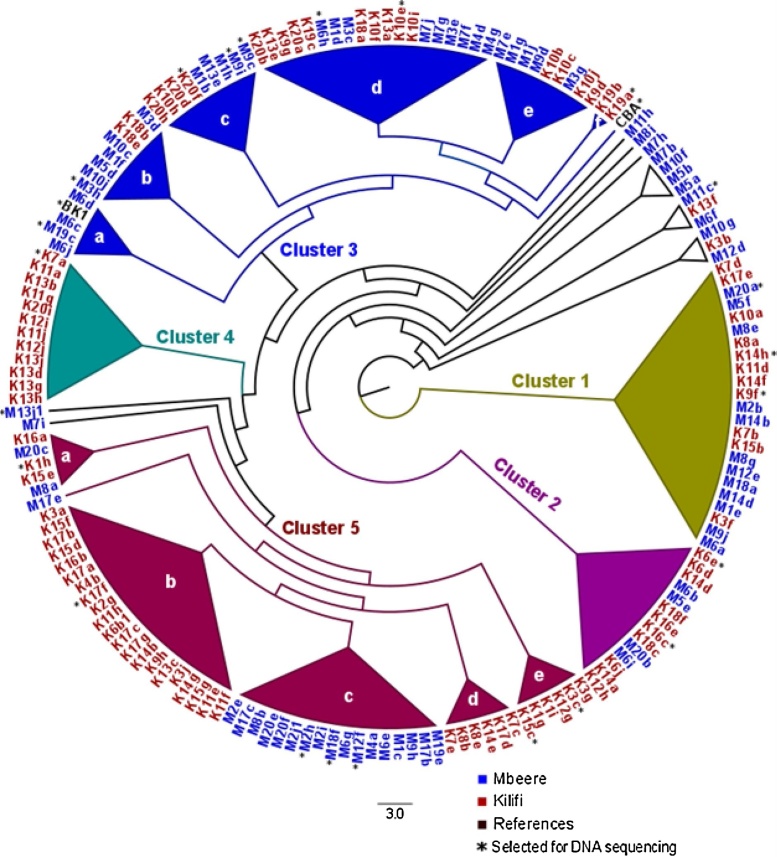
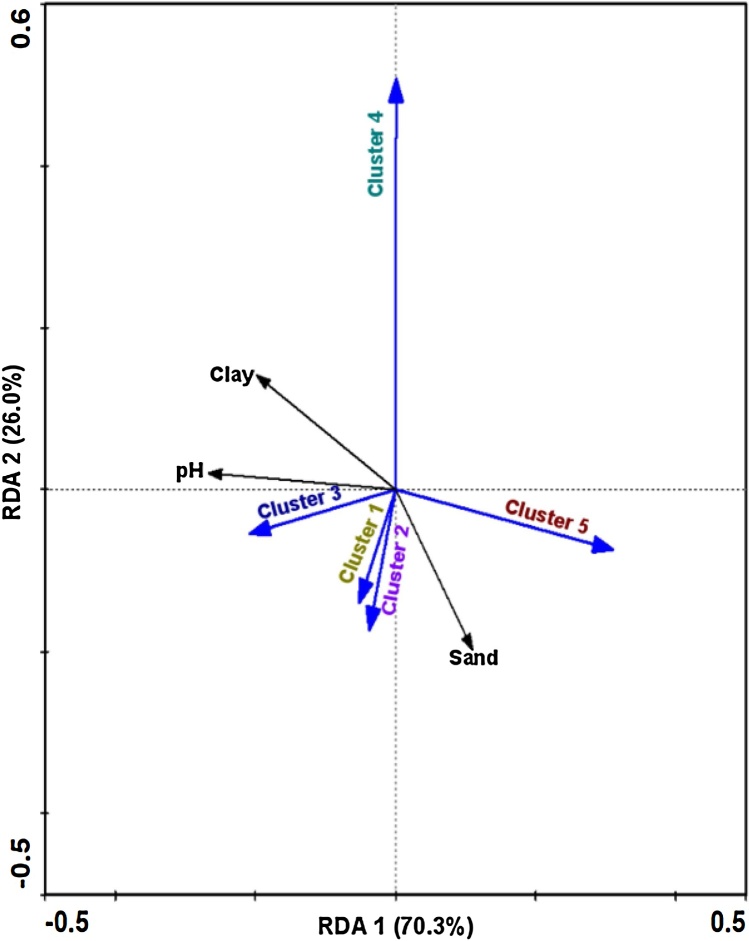
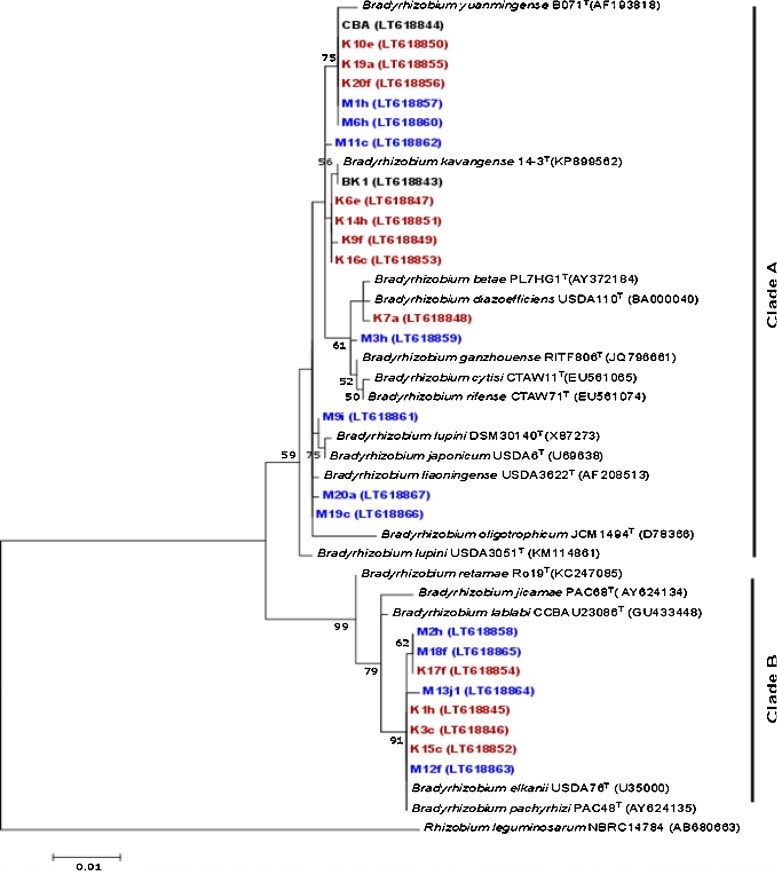
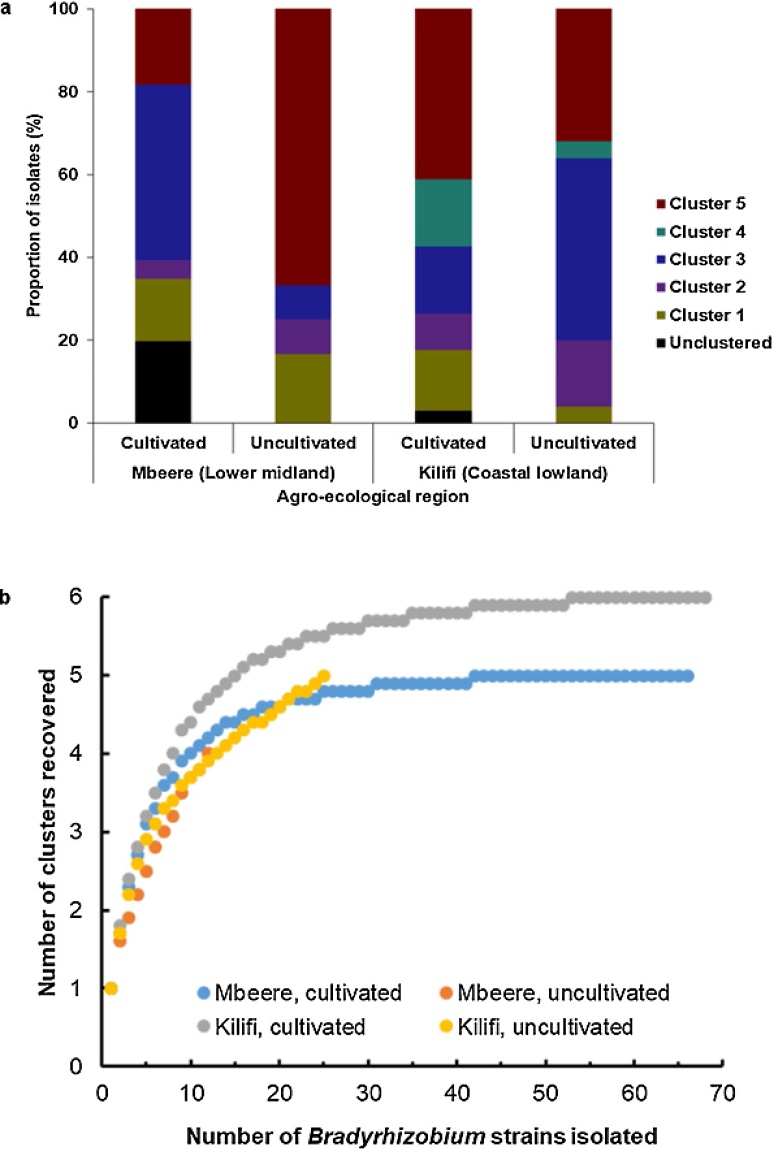
Cowpea ( L. Walp.) is an important African food legume suitable for dry regions. It is the main legume in two contrasting agro-ecological regions of Kenya as an important component of crop rotations because of its relative tolerance to unpredictable drought events. This study was carried out in an effort to establish a collection of bacterial root nodule symbionts and determine their relationship to physicochemical soil parameters as well as any geographical distributional patterns. spp. were found to be widespread in this study and several different types could be identified at each site. Unique but rare symbionts were recovered from the nodules of plants sampled in a drier in-land region, where there were also overall more different bradyrhizobia found. Plants raised in soil from uncultivated sites with a natural vegetation cover tended to also associate with more different bradyrizobia. The occurrence and abundance of different bradyrhizobia correlated with differences in soil texture and pH, but did neither with the agro-ecological origin, nor the origin from cultivated (n = 15) or uncultivated (n = 5) sites. The analytical method, protein profiling of isolated strains by Matrix-Assisted Laser Desorption Ionization Time-of-Flight Mass Spectrometry (MALDI-TOF MS), provided higher resolution than 16S rRNA gene sequencing and was applied in this study for the first time to isolates recovered directly from field-collected cowpea root nodules. The method thus seems suitable for screening isolate collections on the presence of different groups, which, provided an appropriate reference database, can also be assigned to known species.
豇豆(Vigna unguiculata (L.) Walp.)是一种适合干旱地区的重要非洲食用豆类。它是肯尼亚两个截然不同的农业生态区域的主要豆类,作为作物轮作的重要组成部分,因为它相对耐受不可预测的干旱事件。本研究旨在建立一个根瘤菌共生体库,并确定它们与土壤理化参数的关系以及任何地理分布模式。在本研究中发现慢生根瘤菌属广泛分布,并且在每个地点都可以鉴定出几种不同的类型。从内陆较干旱地区采集的植物根瘤中分离出了独特但罕见的共生体,在那里也发现了总体上更多不同的慢生根瘤菌。在有自然植被覆盖的未开垦土地上生长的植物往往也与更多不同的慢生根瘤菌相关联。不同慢生根瘤菌的出现和丰度与土壤质地和pH值的差异相关,但与农业生态起源无关,也与来自耕种地(n = 15)或未开垦地(n = 5)的起源无关。通过基质辅助激光解吸电离飞行时间质谱(MALDI-TOF MS)对分离菌株进行蛋白质谱分析的分析方法,提供了比16S rRNA基因测序更高的分辨率,并且在本研究中首次应用于直接从田间采集的豇豆根瘤中分离出的菌株。因此,该方法似乎适用于筛选不同群体存在的分离株库,在有合适参考数据库的情况下,也可以将其归类为已知物种。