Arien Yael, Dag Arnon, Shafir Sharoni
B. Triwaks Bee Research Center, Department of Entomology, The Robert H. Smith Faculty of Agriculture, Food and Environment, The Hebrew University of Jerusalem, Rehovot, Israel.
Gilat Research Center, Institute of Plant Sciences, Agricultural Research Organization, Negev, Israel.
Front Psychol. 2018 Jun 19;9:1001. doi: 10.3389/fpsyg.2018.01001. eCollection 2018.
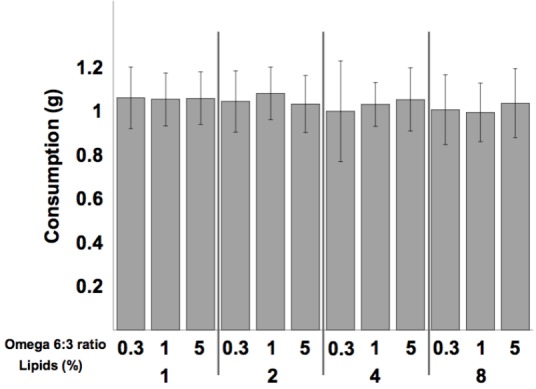
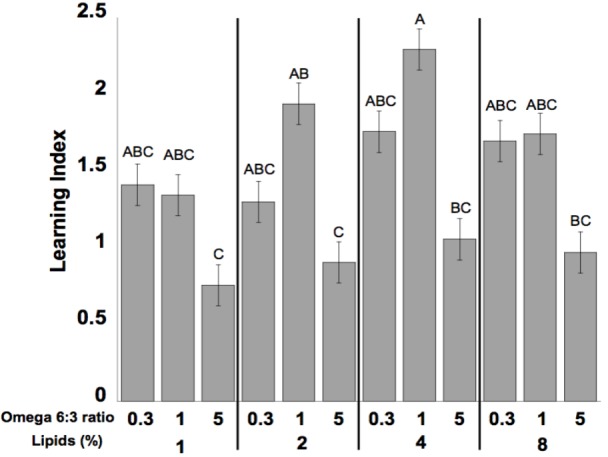
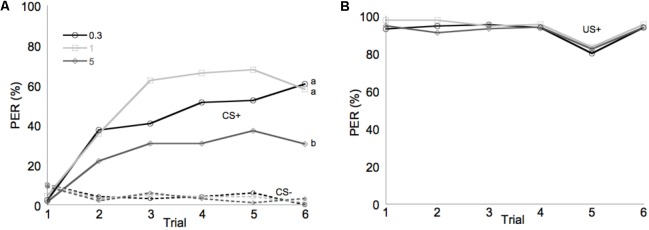
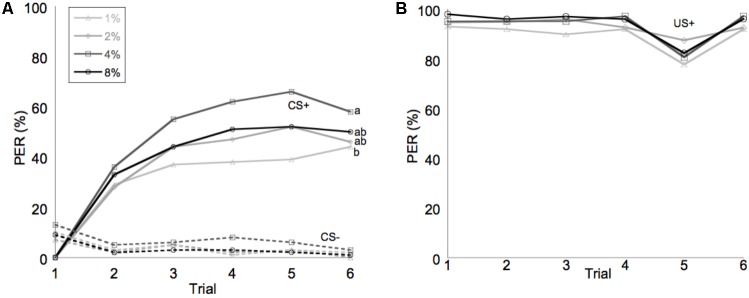
Floral pollen is a major source of honey bee nutrition that provides them with micro- and macro-nutrients, including proteins, fatty acids, vitamins, and minerals. Different pollens vary in composition, including in the essential fatty acids, alpha-linolenic acid (omega-3) and linoleic acid (omega-6). Monocultures, prevalent in modern agriculture, may expose honey bee colonies to unbalanced omega-6:3 diets. The importance of omega-3 in the diet for adequate learning and cognitive function, with a focus on suitable omega-6:3 ratio, is well documented in mammals. We have recently shown, for the first time in invertebrates, the importance of omega-3 in diets for associative learning ability in honey bees. In the current work, we examine the effect of the absolute amount of omega-3 in diet compared to the omega-6:3 ratio on honey bee associative learning. We fed newly emerged bees for 1 week on different artificial diets, which had lipid concentration of 1, 2, 4, or 8%, with omega-6:3 ratios of 0.3, 1, or 5, respectively. We then tested the bees in a proboscis-extension response olfactory conditioning assay. We found that both omega-6:3 ratio and total lipid concentration affected learning. The most detrimental diet for learning was that with a high omega-6:3 ratio of 5, regardless of the absolute amount of omega-3 in the diet. Bees fed an omega-6:3 ratio of 1, with 4% total lipid concentration achieved the best performance. Our results with honey bees are consistent with those found in mammals. Best cognitive performance is achieved by a diet that is sufficiently rich in essential fatty acids, but as long as the omega-6:3 ratio is not high.
花卉花粉是蜜蜂营养的主要来源,为它们提供微量和常量营养素,包括蛋白质、脂肪酸、维生素和矿物质。不同的花粉成分各异,包括必需脂肪酸α-亚麻酸(ω-3)和亚油酸(ω-6)。现代集约化农业中普遍存在的单一栽培可能会使蜂群接触到ω-6:3比例失衡的食物。ω-3对哺乳动物充分的学习和认知功能的重要性,尤其是合适的ω-6:3比例,已有充分记录。我们最近首次在无脊椎动物中证明了ω-3对蜜蜂联想学习能力的重要性。在当前的研究中,我们研究了饮食中ω-3的绝对含量与ω-6:3比例相比对蜜蜂联想学习的影响。我们用不同的人工饲料喂养新羽化的蜜蜂1周,这些饲料的脂质浓度分别为1%、2%、4%或8%,ω-6:3比例分别为0.3、1或5。然后,我们在伸吻反射嗅觉条件化试验中对蜜蜂进行测试。我们发现ω-6:3比例和总脂质浓度都会影响学习。对学习最不利的饮食是ω-6:3比例高达5的饮食,无论饮食中ω-3的绝对含量如何。喂食ω-6:3比例为1、总脂质浓度为4%的蜜蜂表现最佳。我们对蜜蜂的研究结果与在哺乳动物中发现的结果一致。富含必需脂肪酸但ω-6:3比例不高的饮食能实现最佳认知表现。