Vidale Simone, Longoni Marco, Valvassori Luca, Agostoni Elio
Department of Neurology and Stroke Unit, Sant'Anna Hospital, Como, Italy.
Department of Neurology and Stroke Unit, Niguarda Ca' Granda Hospital, Milan, Italy.
J Clin Neurol. 2018 Jul;14(3):407-412. doi: 10.3988/jcn.2018.14.3.407.
Mechanical thrombectomy with or without intravenous thrombolysis is indicated in the acute treatment of ischemic strokes caused by an emergent large-vessel occlusion (ELVO) within 6 hours from symptom onset. However, a significant proportion of patients are referred to comprehensive stroke centers beyond this therapeutic time window. This study performed a pooled analysis of data from trials in which mechanical thrombectomy was performed beyond 6 hours from symptom onset.
We searched for randomized controlled trials that compared mechanical thrombectomy with the best medical treatment beyond 6 hours for ischemic strokes due to ELVO and reported on between 1990 and April 2018. The intervention group comprised patients treated with mechanical thrombectomy. Statistical analysis was conducted while pooling data and analyzing fixed- or random-effects models as appropriate.
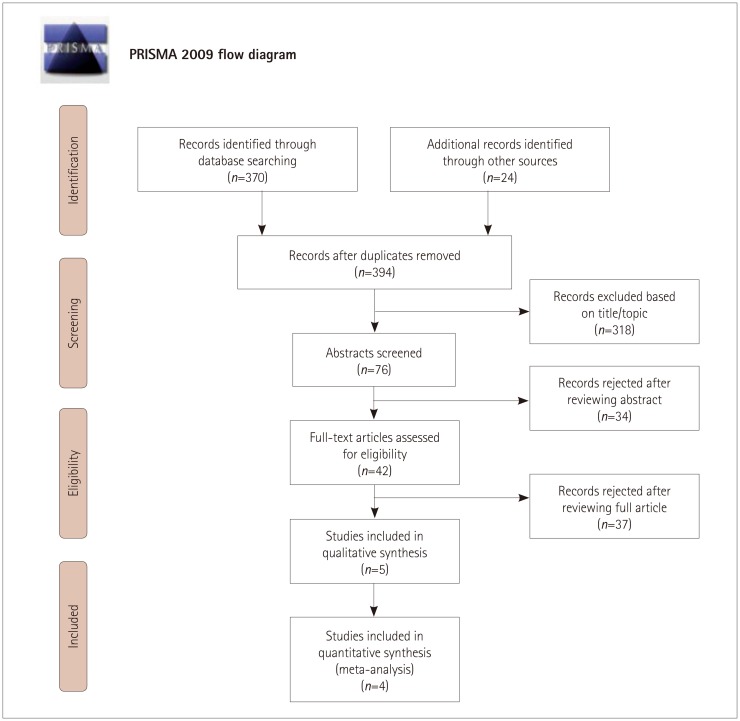
Four trials involving 518 stroke patients met the eligibility criteria. There were 267 strokes treated with mechanical thrombectomy, with a median time of 10.8 hours between when the patient was last known to be well to randomization. We observed a significant difference between groups concerning the rate of functional independence at 90 days from stroke, with an absolute difference of 27.5% (odds ratio=3.33, 95% CI=1.81-6.12, p<0.001) and good recanalization (odds ratio=13.17, 95% CI=4.17-41.60, p<0.001) favoring the intervention group.
This meta-analysis confirms the efficacy of mechanical thrombectomy in selected ischemic stroke patients beyond 6 hours from symptom onset. The selection is mainly based on the limited core infarct detected by emergent assessment using neuroimaging techniques.
对于症状发作6小时内由急性大血管闭塞(ELVO)导致的缺血性卒中,无论是否联合静脉溶栓进行机械取栓均适用于急性治疗。然而,相当一部分患者在这个治疗时间窗之后才被转诊至综合卒中中心。本研究对症状发作6小时后进行机械取栓的试验数据进行了汇总分析。
我们检索了1990年至2018年4月期间报道的、比较症状发作6小时后因ELVO导致的缺血性卒中机械取栓与最佳药物治疗的随机对照试验。干预组包括接受机械取栓治疗的患者。汇总数据时进行统计分析,并酌情分析固定效应模型或随机效应模型。
四项涉及518例卒中患者的试验符合纳入标准。有267例卒中接受了机械取栓治疗,从患者最后一次情况良好到随机分组的中位时间为10.8小时。我们观察到两组在卒中后90天时功能独立率存在显著差异,绝对差异为27.5%(优势比=3.33,95%CI=1.81-6.12,p<0.001),再通良好率也存在显著差异(优势比=13.17,95%CI=4.17-41.60,p<0.001),干预组更具优势。
这项荟萃分析证实了症状发作6小时后对部分缺血性卒中患者进行机械取栓的有效性。选择主要基于使用神经影像技术进行紧急评估所检测到的有限核心梗死灶。