Reimer Andrew P, Zafar Atif, Hustey Fredric M, Kralovic Damon, Russman Andrew N, Uchino Ken, Hussain Muhammad S, Udeh Belinda L
Critical Care Transport Team, Cleveland Clinic, Cleveland, OH, United States.
Frances Payne Bolton School of Nursing, Case Western Reserve University, Cleveland, OH, United States.
Front Neurol. 2020 Feb 12;10:1422. doi: 10.3389/fneur.2019.01422. eCollection 2019.
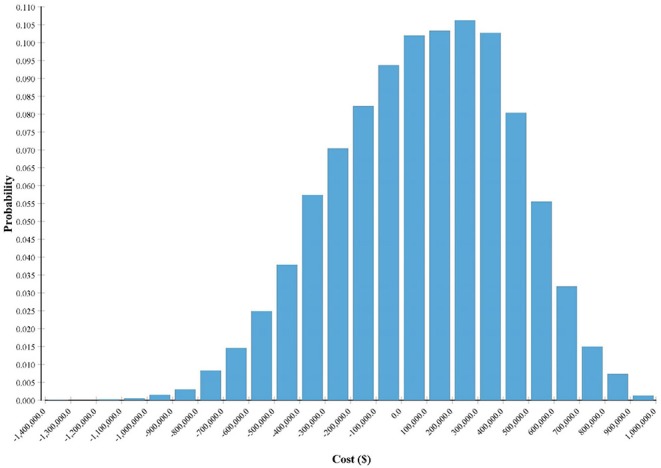
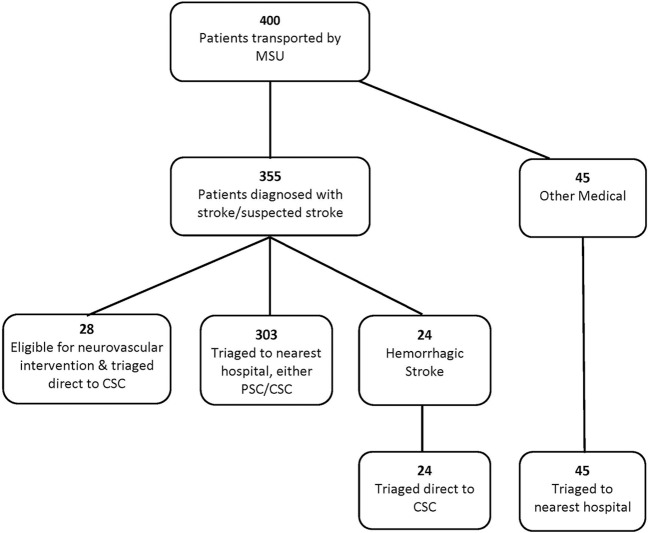
Mobile stroke units (MSUs) are the latest approach to improving time-sensitive stroke care delivery. Currently, there are no published studies looking at the expanded value of the MSU to diagnose and transport patients to the closest most appropriate facility. The purpose of this paper is to perform a cost consequence analysis of standard transport (ST) vs. MSU. A cost consequence analysis was undertaken within a decision framework to compare the incremental cost of care for patients with confirmed stroke that were served by the MSU vs. their simulated care had they been served by standard emergency medical services between July 2014 and October 2015. At baseline values, the incremental cost between MSU and ST was $70,613 ($856,482 vs. $785,869) for 355 patient transports. The MSU avoided 76 secondary interhospital transfers and 76 emergency department (ED) encounters. Sensitivity analysis identified six variables that had measurable impact on the model's variability and a threshold value at which MSU becomes the optimal strategy: number of stroke patients (>391), probability of requiring transfer to a comprehensive stroke center (CSC, >0.52), annual cost of MSU operations (<$696,053), cost of air transfer (>$8,841), probability initial receiving hospital is a CSC (<0.32), and probability of ischemic stroke with ST (<0.76). MSUs can avert significant costs in the administration of stroke care once optimal thresholds are achieved. A comprehensive cost-effectiveness analysis is required to determine not just the operational value of an MSU but also its clinical value to patients and the society.
移动卒中单元(MSU)是改善对时间敏感的卒中护理服务的最新方法。目前,尚无已发表的研究探讨MSU在诊断和将患者转运至最接近且最合适的医疗机构方面的扩展价值。本文的目的是对标准转运(ST)与MSU进行成本后果分析。在一个决策框架内进行了成本后果分析,以比较2014年7月至2015年10月期间由MSU服务的确诊卒中患者的增量护理成本与假设他们由标准紧急医疗服务提供服务时的模拟护理成本。在基线值时,355例患者转运中,MSU与ST之间的增量成本为70,613美元(856,482美元对785,869美元)。MSU避免了76次二次院间转运和76次急诊科(ED)就诊。敏感性分析确定了六个对模型变异性有可测量影响的变量以及MSU成为最优策略的阈值:卒中患者数量(>391)、需要转至综合卒中中心(CSC,>0.52)的概率、MSU运营的年度成本(<$696,053)、空中转运成本(>$8,841)、初始接收医院是CSC的概率(<0.32)以及ST时缺血性卒中的概率(<0.76)。一旦达到最佳阈值,MSU可以在卒中护理管理中避免大量成本。需要进行全面的成本效益分析,以不仅确定MSU的运营价值,还确定其对患者和社会的临床价值。