Graduate Program in Immunology, Tufts University Sackler School of Biomedical Sciences, Boston, MA 02111, USA.
Graduate Program in Immunology, Tufts University Sackler School of Biomedical Sciences, Boston, MA 02111, USA; MSTP, Tufts University School of Medicine, Boston, MA 02111, USA.
Cell Rep. 2018 Jul 3;24(1):155-168.e5. doi: 10.1016/j.celrep.2018.06.012.
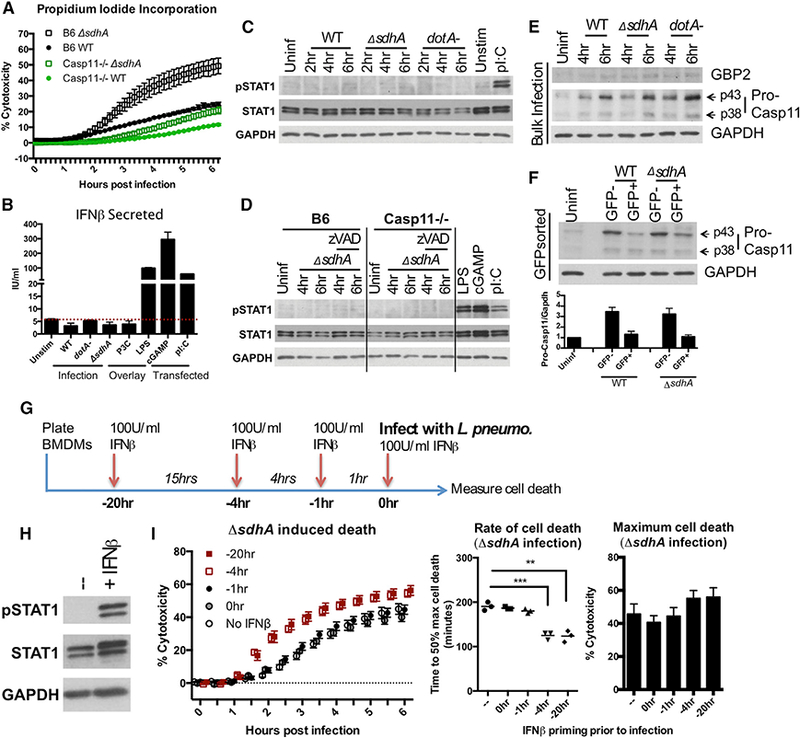
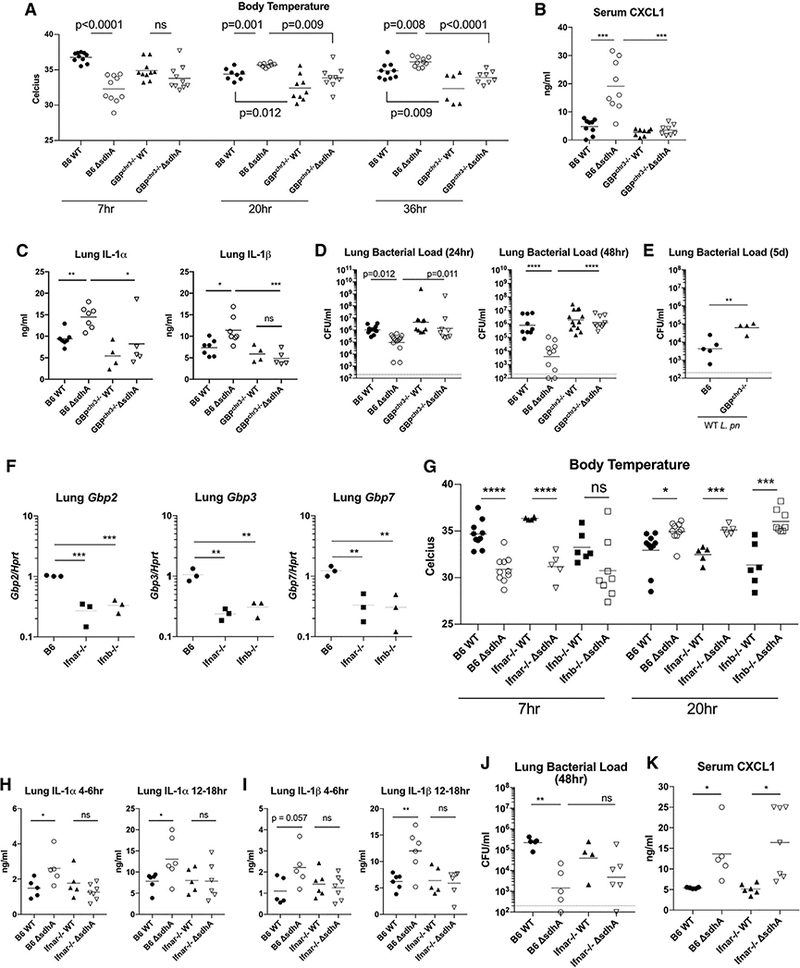
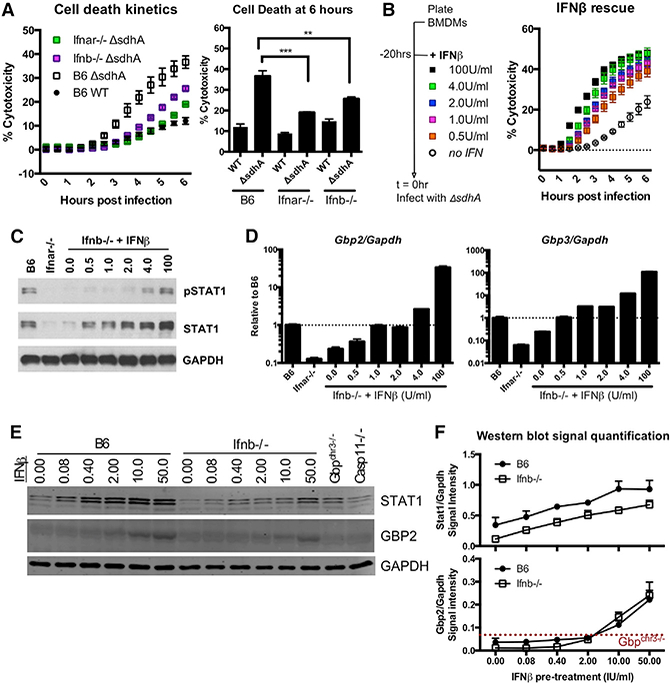
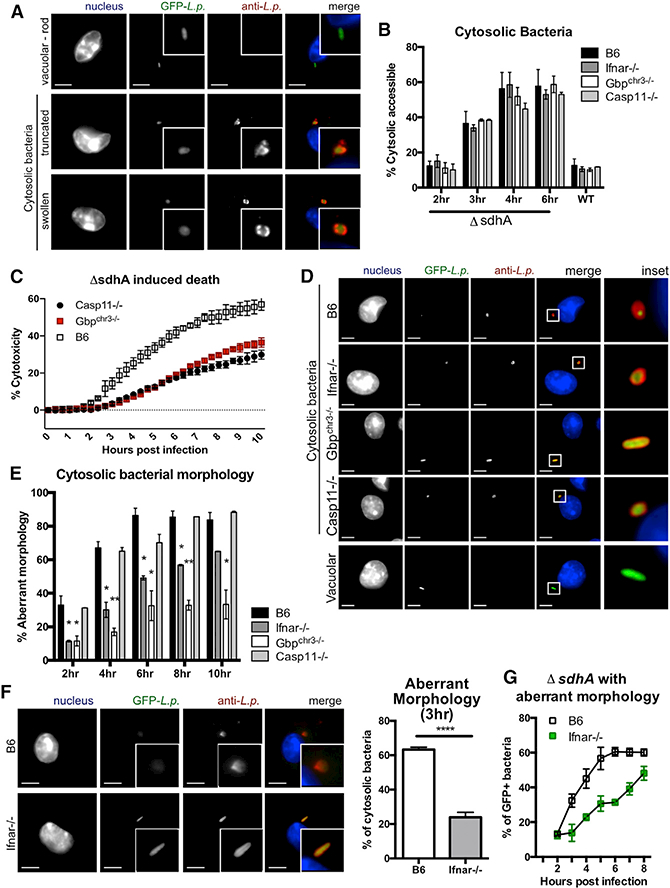
Legionella pneumophila elicits caspase-11-driven macrophage pyroptosis through guanylate-binding proteins (GBPs) encoded on chromosome 3. It has been proposed that microbe-driven IFN upregulates GBPs to facilitate pathogen vacuole rupture and bacteriolysis preceding caspase-11 activation. We show here that macrophage death occurred independently of microbial-induced IFN signaling and that GBPs are dispensable for pathogen vacuole rupture. Instead, the host-intrinsic IFN status sustained sufficient GBP expression levels to drive caspase-1 and caspase-11 activation in response to cytosol-exposed bacteria. In addition, endogenous GBP levels were sufficient for the release of DNA from cytosol-exposed bacteria, preceding the cyclic GMP-AMP synthase/stimulator of interferon genes (cGAS/STING) pathway for Ifnb induction. Mice deficient for chromosome 3 GBPs were unable to mount a rapid IL-1/chemokine (C-X-C motif) ligand 1 (CXCL1) response during Legionella-induced pneumonia, with defective bacterial clearance. Our results show that rapid GBP activity is controlled by host-intrinsic cytokine signaling and that GBP activities precede immune amplification responses, including IFN induction, inflammasome activation, and cell death.
嗜肺军团菌通过染色体 3 上编码的鸟苷酸结合蛋白 (GBP) 引发细胞焦亡。有人提出,微生物诱导的 IFN 上调 GBP 以促进囊泡破裂和细菌裂解,随后 caspase-11 激活。我们在这里表明,巨噬细胞死亡不依赖于微生物诱导的 IFN 信号,并且 GBP 对于囊泡破裂是可有可无的。相反,宿主固有 IFN 状态维持足够的 GBP 表达水平,以响应胞质暴露的细菌激活 caspase-1 和 caspase-11。此外,内源性 GBP 水平足以从胞质暴露的细菌中释放 DNA,随后是诱导 Ifnb 的环鸟苷酸-腺苷酸合酶/干扰素基因刺激物 (cGAS/STING) 途径。缺乏染色体 3 GBP 的小鼠在军团菌诱导的肺炎期间无法迅速产生 IL-1/趋化因子 (C-X-C 基序) 配体 1 (CXCL1) 反应,细菌清除能力受损。我们的结果表明,快速的 GBP 活性受宿主固有细胞因子信号的控制,并且 GBP 活性先于免疫放大反应,包括 IFN 诱导、炎症小体激活和细胞死亡。