Gnessi Lucio, Scarselli Filomena, Minasi Maria Giulia, Mariani Stefania, Lubrano Carla, Basciani Sabrina, Greco Pier Francesco, Watanabe Mikiko, Franco Giorgio, Farcomeni Alessio, Greco Ermanno
Department of Experimental Medicine, Section of Medical Pathophysiology, Food Science and Endocrinology, Sapienza University of Rome, Policlinico Umberto I, 00161, Rome, Italy.
Centre for Reproductive Medicine, European Hospital, Rome, Italy.
BMC Urol. 2018 Jul 4;18(1):63. doi: 10.1186/s12894-018-0379-7.
To provide indicators for the likelihood of sperm retrieval in patients undergoing testicular sperm extraction is a major issue in the management of male infertility by TESE. The aim of our study was to determine the impact of different parameters, including testicular histopathology, on sperm retrieval in case of reoperation in patients undergoing testicular sperm extraction.
We retrospectively analyzed 486 patients who underwent sperm extraction for intracytoplasmic sperm injection and testicular biopsy. Histology was classified into: normal spermatogenesis; hypospermatogenesis (reduction in the number of normal spermatogenetic cells); maturation arrest (absence of the later stages of spermatogenesis); and Sertoli cell only (absence of germ cells). Semen analysis and serum FSH, LH and testosterone were measured.
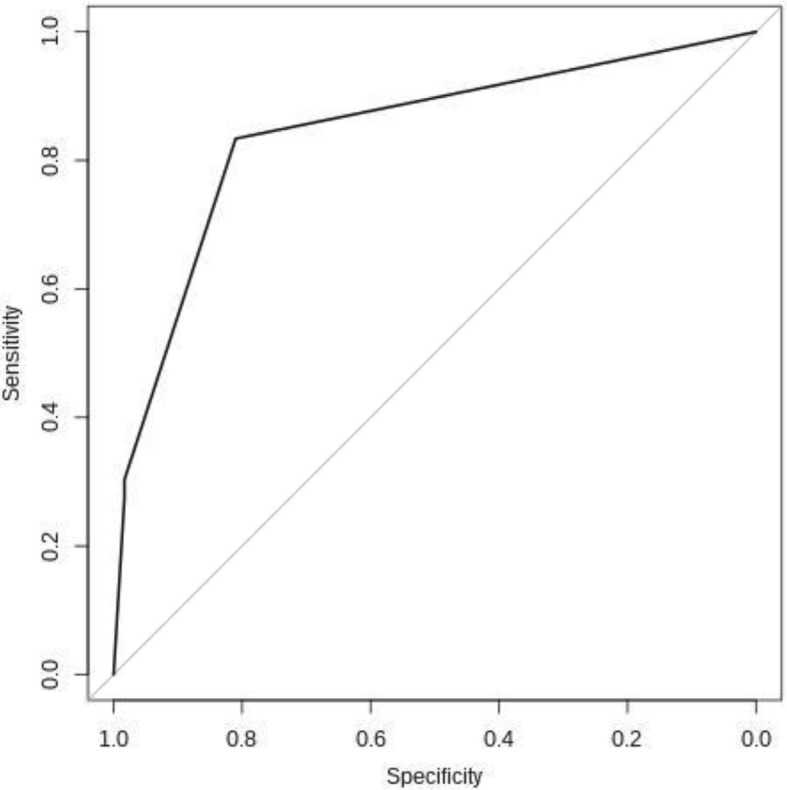
Four hundred thirty patients had non obstructive azoospermia, 53 severe oligozoospermia and 3 necrozoospermia. There were 307 (63%) successful sperm retrieval. Higher testicular volume, lower levels of FSH, and better histological features were predictive for sperm retrieval. The same parameters and younger age were predictive factors for shorter time for sperm recovery. After multivariable analysis, younger age, better semen parameters, better histological features and lower values of FSH remained predictive for shorter time for sperm retrieval while better semen and histology remained predictive factors for successful sperm retrieval. The predictive capacity of a score obtained by summing the points assigned for selected predictors (1 point for Sertoli cell only, 0.33 points for azoospermia, 0.004 points for each FSH mIU/ml) gave an area under the ROC curve of 0.843.
This model can help the practitioner with counseling infertile men by reliably predicting the chance of obtaining spermatozoa with testicular sperm extraction when a repeat attempt is planned.
对于接受睾丸精子提取术的患者,提供精子获取可能性的指标是睾丸精子提取术治疗男性不育管理中的一个主要问题。我们研究的目的是确定在接受睾丸精子提取术的患者再次手术时,包括睾丸组织病理学在内的不同参数对精子获取的影响。
我们回顾性分析了486例接受卵胞浆内单精子注射和睾丸活检精子提取术的患者。组织学分类为:正常精子发生;精子发生减少(正常生精细胞数量减少);成熟停滞(精子发生后期阶段缺失);以及唯支持细胞综合征(生殖细胞缺失)。检测精液分析及血清促卵泡生成素(FSH)、促黄体生成素(LH)和睾酮水平。
430例患者为非梗阻性无精子症,53例为严重少精子症,3例为坏死性无精子症。有307例(63%)成功获取精子。较高的睾丸体积、较低的FSH水平和较好的组织学特征可预测精子获取情况。相同参数及较年轻的年龄是精子恢复时间较短的预测因素。多变量分析后,较年轻的年龄、较好的精液参数、较好的组织学特征及较低的FSH值仍是精子获取时间较短的预测因素,而较好的精液和组织学仍是成功获取精子的预测因素。通过将选定预测指标的得分相加得到的评分(唯支持细胞综合征为1分,无精子症为0.33分,FSH每mIU/ml为0.004分)的预测能力使ROC曲线下面积为0.843。
当计划再次尝试时,该模型可通过可靠预测睾丸精子提取获得精子的机会,帮助医生为不育男性提供咨询。