Lyell McEwin Hospital, Haydown Road, Elizabeth Vale, SA, 5112, Australia.
Alliance for Research in Exercise, Nutrition and Activity (ARENA), School of Health Sciences, University of South Australia, City East Campus, Playford Building Level 7 Room 02, PO Box 2471, Adelaide, SA, 5001, Australia.
BMC Pregnancy Childbirth. 2018 Jul 4;18(1):288. doi: 10.1186/s12884-018-1929-4.
Approximately 50% of Australian women experience low back pain in pregnancy, with somewhere between 8 and 36% of women suffering from pregnancy related depression/anxiety. Both low back and pelvic pain and depression and anxiety are associated with poor maternal health outcomes, including increased sick leave, higher rates of functional disability, and increased access to healthcare. It also impacts upon time and mode of delivery with an increase in inductions and elective caesarean sections. For babies of women with depression and anxiety preterm birth, low birth weight and intrauterine growth restriction are all common complications. Given these poor health outcomes, it is important to determine the co-morbidity of low back and pelvic pain and depression/anxiety in pregnancy.
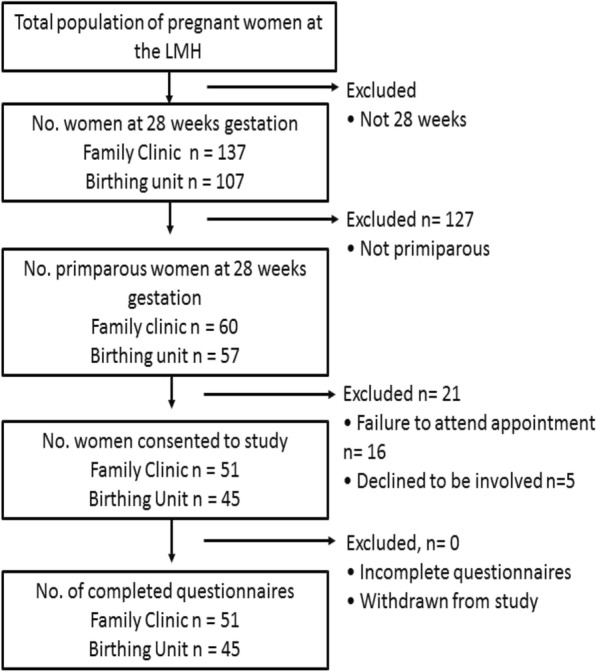
A cross sectional study of a hospital based sample of 96 nulliparous women were assessed at 28 weeks as part of their routine antenatal appointment. Data was collected via interview and clinical records and included the Edinburgh Depression Scale (EDS), the Numerical Rating Scale (NRS) and the Modified Oswestry Low Back Pain Disability Questionnaire (MODQ). Spearman's correlation co-efficients, prevalence ratios and ANOVA were used to determine comorbidity.
96 women consented to participation in the study. All study outcomes were moderately correlated. There were three main findings: One, there was a positive correlation between low back and pelvic girdle pain (LBPP) and depression/anxiety was rho = 0.39, p < 0.001, between LBPP and functional disability was rho = 0.51, p < 0.001 and between risk of depression/anxiety and functional disability was rho = 0.54, p < 0.001. Two, a woman with LBPP was 13 times more likely to have increased risk of depression/anxiety, whilst a woman with increased risk of depression/anxiety was 2.2 times more likely to have LBPP and finally three, amongst women who reported LBPP, the level of disability experienced was significantly higher in women who had concurrent increased risk of depression/anxiety (p = 0.003). This occurred even though the severity of pain did not differ between groups (NRS score mean p = 0.38).
This study found a high level of co-occurrence of LBPP, functional disability and depression/anxiety in women in their third trimester of pregnancy. Importantly women who reported higher depression/anxiety symptoms appeared to experience higher levels of functional disability in relation to their LBPP, than women with lower depression/anxiety symptoms and LBPP.
大约 50%的澳大利亚女性在怀孕期间会经历下腰痛,其中 8%至 36%的女性会出现与妊娠相关的抑郁/焦虑。下腰痛和骨盆痛以及抑郁和焦虑都与不良的产妇健康结局有关,包括增加病假、更高的功能残疾率以及更多地获得医疗保健。它还会影响分娩方式和时间,增加催产和选择性剖宫产。对于患有抑郁和焦虑的女性的婴儿,早产、低出生体重和宫内生长受限都是常见的并发症。鉴于这些不良的健康结局,确定妊娠期间下腰痛和骨盆痛与抑郁/焦虑的合并症非常重要。
对 96 名初产妇进行了一项基于医院的横断面研究,这些孕妇在 28 周时接受了常规产前检查。通过访谈和临床记录收集数据,包括爱丁堡抑郁量表(EDS)、数字评分量表(NRS)和改良 Oswestry 下腰痛残疾问卷(MODQ)。使用 Spearman 相关系数、患病率比和方差分析来确定合并症。
96 名女性同意参与研究。所有研究结果均呈中度相关。有三个主要发现:一是下腰痛和骨盆带痛(LBPP)与抑郁/焦虑呈正相关(rho=0.39,p<0.001),与功能障碍呈正相关(rho=0.51,p<0.001),与抑郁/焦虑风险和功能障碍呈正相关(rho=0.54,p<0.001)。二是患有 LBPP 的女性发生抑郁/焦虑风险增加的可能性增加 13 倍,而发生抑郁/焦虑风险增加的女性发生 LBPP 的可能性增加 2.2 倍,最后,三是报告 LBPP 的女性中,同时存在抑郁/焦虑风险增加的女性经历的残疾程度明显更高(p=0.003)。这是在两组之间疼痛的严重程度没有差异的情况下发生的(NRS 评分均值 p=0.38)。
本研究发现,孕妇在妊娠晚期 LBPP、功能障碍和抑郁/焦虑的合并率很高。重要的是,与 LBPP 相关的抑郁/焦虑症状较高的女性似乎比 LBPP 症状较低且同时患有抑郁/焦虑的女性经历更高水平的功能障碍。