Institute of Brain, Behaviour and Mental Health, Faculty of Medical and Human Sciences University of Manchester, Salford Royal Hospital, Stott Lane, Salford, M6 8HD, England.
South Birmingham Community NHS Trust, Birmingham, UK.
Acta Neuropathol Commun. 2018 Jul 4;6(1):56. doi: 10.1186/s40478-018-0559-4.
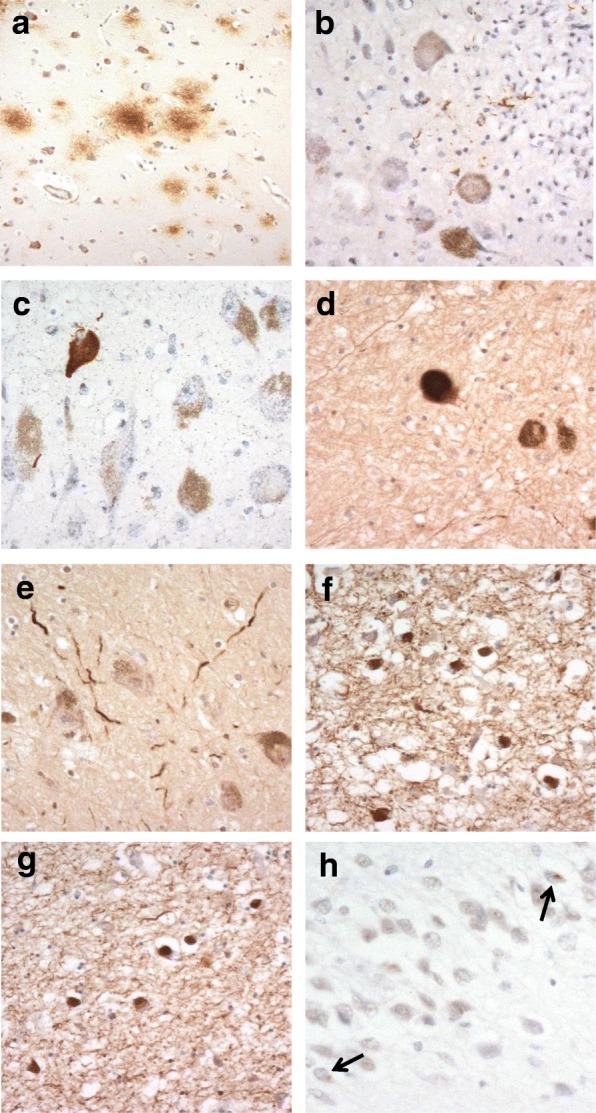
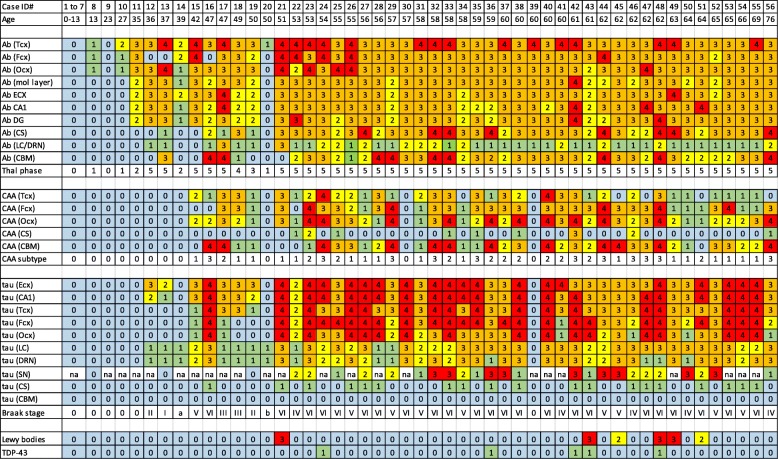
While post mortem studies have identified the major cell types and functional systems affected in Alzheimer's disease (AD) the initial sites and molecular characteristics of pathology are still unclear. Because individuals with Down syndrome (DS) (trisomy 21) develop the full pathological changes of AD in a predictable way by the time they reach middle to late age, a study of the brains of such persons at different ages makes an ideal 'model system' in which the sites of earliest onset of pathology can be detected and the subsequent progression of changes be monitored. In the present study we have examined the brains of 56 individuals with DS ranging from new-born to 76 years for the presence of amyloid and tau pathology in key cortical and subcortical regions. Amyloid pathology was found to commence in the late teens to twenties as a deposition of diffuse plaques initially within the temporal neocortex, quickly involving other neocortical regions but only reaching subcortical regions and cerebellum by the late forties. Cerebral amyloid angiopathy did not regularly commence until after 45-50 years of age. Tau pathology usually commenced after 35 years of age, initially involving not only entorhinal areas and hippocampus but also subcortical regions such as locus caeruleus (LC) and dorsal raphe nucleus (DRN). Later, tau pathology spread throughout the neocortex reaching occipital lobes in most instances by mid-50 years of age. Such a pattern of spread is consistent with that seen in typical AD. We found no evidence that tau pathology might commence within the brain in DS before amyloid deposition had occurred, but there was limited data that suggests tau pathology in LC or DRN might predate that in entorhinal areas and hippocampus or at least be coincident.
虽然尸检研究已经确定了阿尔茨海默病(AD)中受影响的主要细胞类型和功能系统,但病理学的初始部位和分子特征仍不清楚。由于唐氏综合征(DS)(21 三体)患者会在中年到晚年以可预测的方式发展出 AD 的全部病理变化,因此研究不同年龄段此类患者的大脑为发现病理学最早起始部位和监测后续变化的进展提供了一个理想的“模型系统”。在本研究中,我们检查了 56 名 DS 患者的大脑,这些患者的年龄从新生儿到 76 岁不等,以检测关键皮质和皮质下区域中淀粉样蛋白和 tau 病理学的存在。淀粉样蛋白病理学在十几岁到二十几岁时开始出现,最初表现为弥漫性斑块在颞叶新皮质内的沉积,很快累及其他皮质区域,但直到四十多岁才到达皮质下区域和小脑。大脑淀粉样血管病通常直到 45-50 岁以后才开始。tau 病理学通常在 35 岁以后开始,最初不仅涉及内嗅区和海马,还涉及蓝斑(LC)和中缝背核(DRN)等皮质下区域。后来,tau 病理学在整个新皮质中传播,在大多数情况下,到 50 岁中期已到达枕叶。这种传播模式与典型 AD 所见一致。我们没有发现 tau 病理学可能在淀粉样蛋白沉积之前在 DS 大脑中开始的证据,但有有限的数据表明 LC 或 DRN 中的 tau 病理学可能早于内嗅区和海马,或者至少是同时发生的。