Cao Lan, Wang Zigao, Wan Wenbin
The State Key Laboratory of Medical Neurobiology, The Institutes of Brain Science and the Collaborative Innovation Center for Brain Science, Shanghai Medical College, Fudan University, Shanghai, China.
Department of Neurology, Huashan Hospital, Fudan University, Shanghai, China.
Front Neurosci. 2018 Jun 20;12:417. doi: 10.3389/fnins.2018.00417. eCollection 2018.
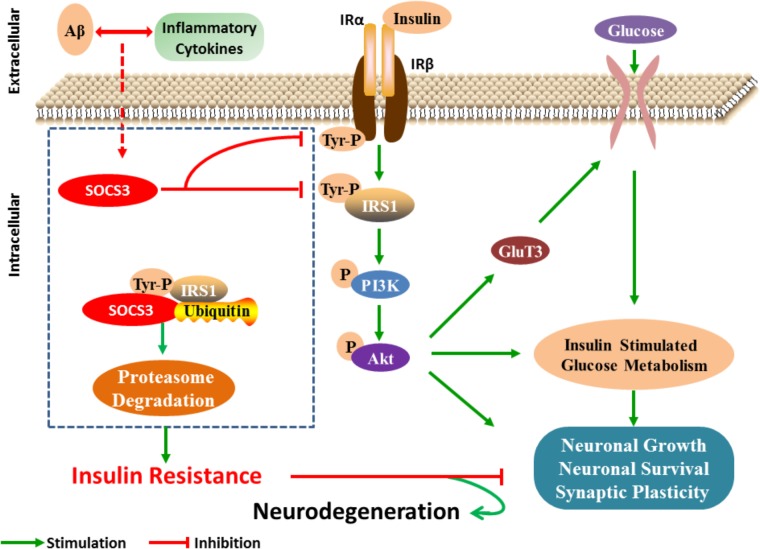
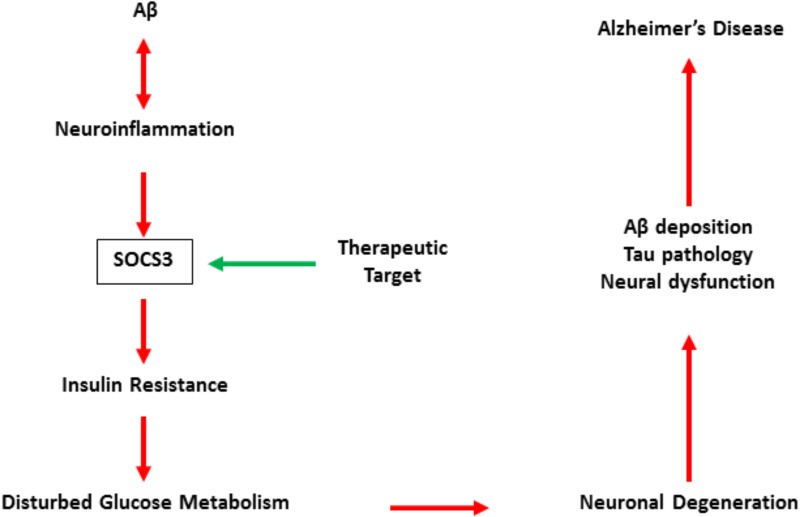
Currently, the etiology of Alzheimer's disease (AD) is still elusive. Central insulin resistance has been determined to play an important role in the progress of AD. However, the mechanism underlying the development of disrupted insulin signaling pathways in AD is unclear. Suppressor of cytokine signaling 3 (SOCS3) is a member of the SOCS protein family that acts as a negative modulator of insulin signaling in sensitive tissues, such as hepatocytes and adipocytes. However, little is known about its role in neurological diseases. Recent evidence indicates that the level of SOCS3 is increased in the brains of individuals with AD, especially in areas with amyloid beta deposition, suggesting that SOCS3 may regulate the central insulin signaling pathways in AD. Here, we discuss the potential role of SOCS3 in AD and speculate that SOCS3 may be a promising therapeutic target for the treatment of AD.
目前,阿尔茨海默病(AD)的病因仍不清楚。中枢胰岛素抵抗已被确定在AD的进展中起重要作用。然而,AD中胰岛素信号通路受损发展的潜在机制尚不清楚。细胞因子信号转导抑制因子3(SOCS3)是SOCS蛋白家族的成员,在敏感组织如肝细胞和脂肪细胞中作为胰岛素信号的负调节因子发挥作用。然而,关于其在神经疾病中的作用知之甚少。最近的证据表明,AD患者大脑中SOCS3的水平升高,特别是在淀粉样β蛋白沉积的区域,这表明SOCS3可能调节AD中的中枢胰岛素信号通路。在此,我们讨论SOCS3在AD中的潜在作用,并推测SOCS3可能是治疗AD的一个有前景的治疗靶点。