EF Myers Consulting Inc, Trenton, Illinois, United States of America.
Departments of Interdisciplinary Studies and Nutritional Sciences, Rutgers University, Newark, New Jersey, United States of America.
PLoS One. 2018 Jul 5;13(7):e0197425. doi: 10.1371/journal.pone.0197425. eCollection 2018.
This retrospective cross-sectional study aimed to identify opportunities for improvement in food and nutrition research by examining risk of bias (ROB) domains.
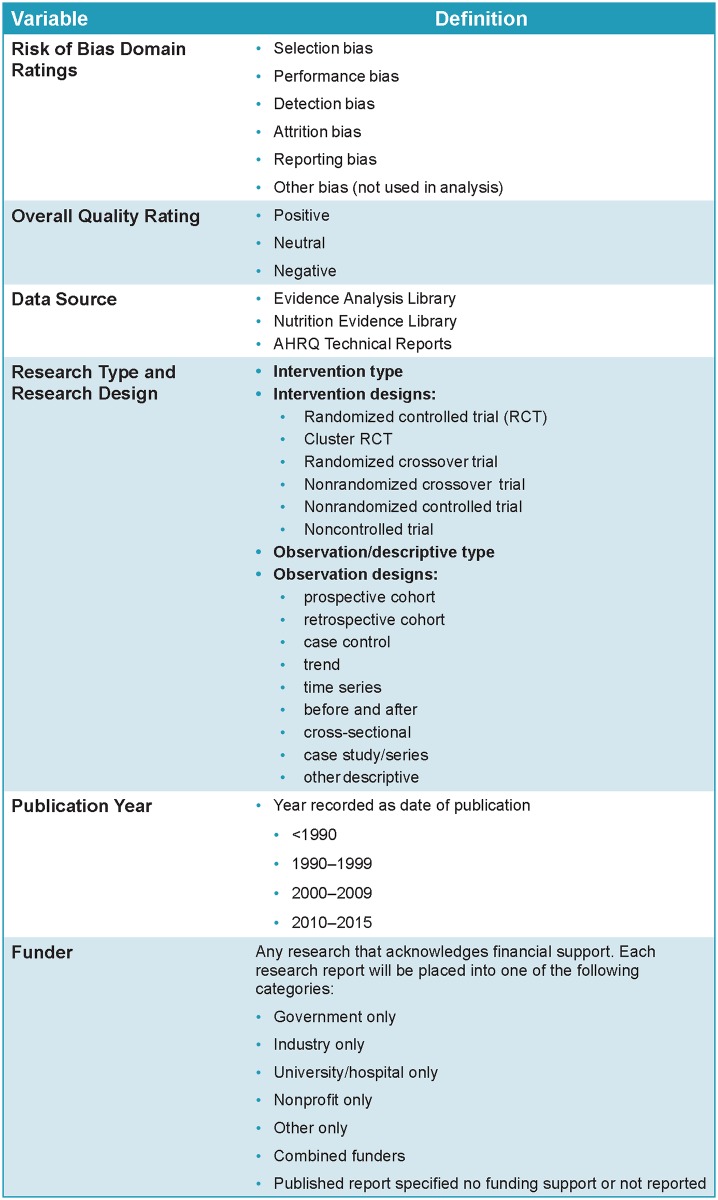
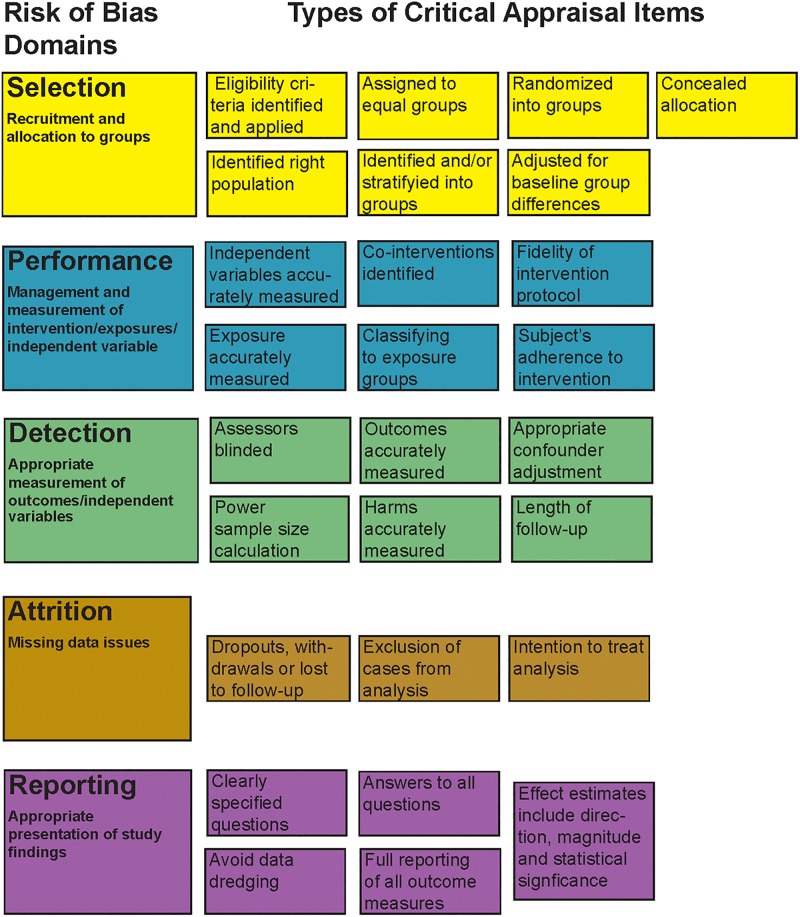
Ratings were extracted from critical appraisal records for 5675 studies used in systematic reviews conducted by three organizations. Variables were as follows: ROB domains defined by the Cochrane Collaboration (Selection, Performance, Detection, Attrition, and Reporting), publication year, research type (intervention or observation) and specific design, funder, and overall quality rating (positive, neutral, or negative). Appraisal instrument questions were mapped to ROB domains. The kappa statistic was used to determine consistency when multiple ROB ratings were available. Binary logistic regression and multinomial logistic regression were used to predict overall quality and ROB domains.
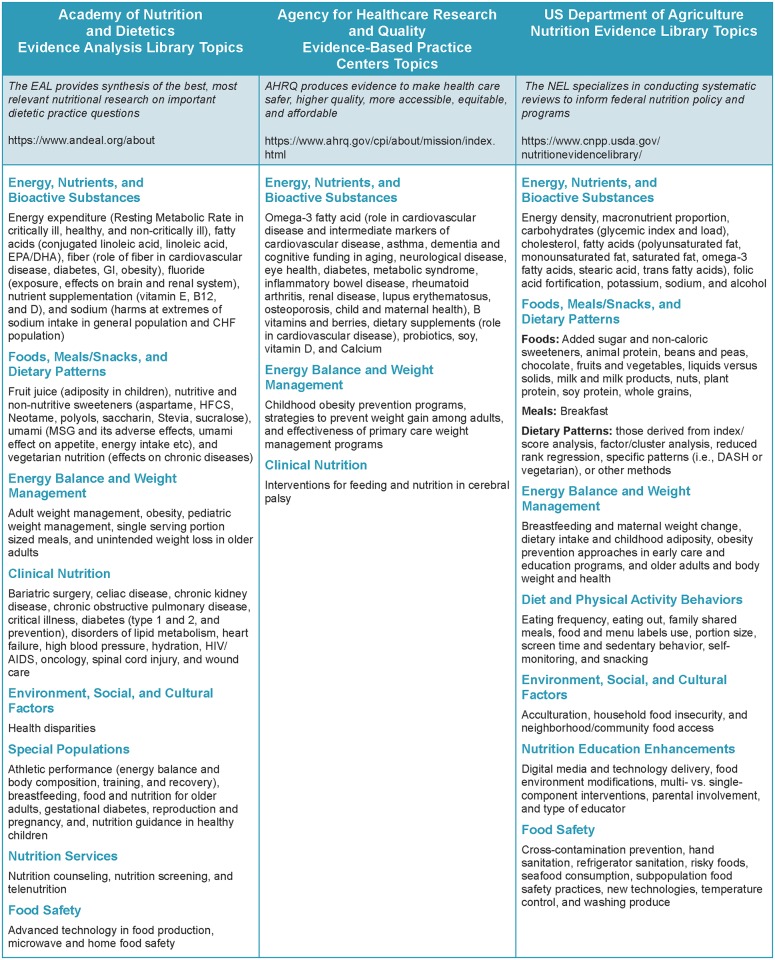
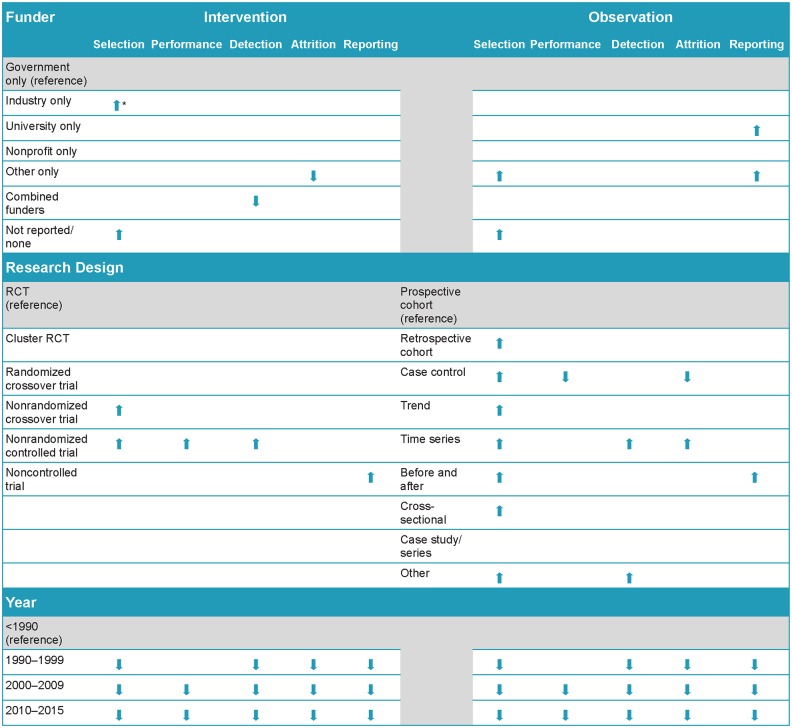
Studies represented a wide variety of research topics (clinical nutrition, food safety, dietary patterns, and dietary supplements) among 15 different research designs with a balance of intervention (49%) and observation (51%) types, published between 1930 and 2015 (64% between 2000-2009). Duplicate ratings (10%) were consistent (κ = 0.86-0.94). Selection and Performance domain criteria were least likely to be met (57.9% to 60.1%). Selection, Detection, and Performance ROB ratings predicted neutral or negative quality compared to positive quality (p<0.001). Funder, year, and research design were significant predictors of ROB. Some sources of funding predicted increased ROB (p<0.001) for Selection (interventional: industry only and none/not reported; observational: other only and none/not reported) and Reporting (observational: university only and other only). Reduced ROB was predicted by combined and other-only funding for intervention research (p<0.005). Performance ROB domain ratings started significantly improving in 2000; others improved after 1990 (p<0.001). Research designs with higher ROB were nonrandomized intervention and time series designs compared to RCT and prospective cohort designs respectively (p<0.001).
Opportunities for improvement in food and nutrition research are in the Selection, Performance, and Detection ROB domains.
本回顾性横断面研究旨在通过检查偏倚风险(ROB)领域,确定改善食物和营养研究的机会。
从三个组织进行的系统评价的关键评价记录中提取了 5675 项研究的评分。变量如下:Cochrane 协作(选择、绩效、检测、失访和报告)定义的 ROB 领域、出版年份、研究类型(干预或观察)和具体设计、资助者以及整体质量评分(阳性、中性或阴性)。评估工具问题映射到 ROB 领域。Kappa 统计用于确定存在多个 ROB 评分时的一致性。二项逻辑回归和多项逻辑回归用于预测整体质量和 ROB 领域。
研究涉及 15 种不同研究设计中的各种研究课题(临床营养、食品安全、饮食模式和膳食补充剂),干预(49%)和观察(51%)类型平衡,发表于 1930 年至 2015 年之间(2000-2009 年之间的 64%)。重复评分(10%)是一致的(κ=0.86-0.94)。选择和绩效领域标准最不可能得到满足(57.9%至 60.1%)。选择、检测和绩效 ROB 评分预测中性或负面质量而不是阳性质量(p<0.001)。资助者、年份和研究设计是 ROB 的重要预测因素。一些资金来源预测选择(干预:仅行业和无/未报告;观察:仅其他和无/未报告)和报告(观察:仅大学和仅其他)的 ROB 增加(p<0.001)。干预研究的联合和其他仅资助预测 ROB 减少(p<0.005)。2000 年开始,绩效 ROB 领域的评分显著提高;其他领域在 1990 年后得到改善(p<0.001)。与 RCT 和前瞻性队列设计相比,ROB 较高的研究设计是非随机干预和时间序列设计(p<0.001)。
食物和营养研究中需要改进的机会在于 ROB 的选择、绩效和检测领域。