State Key Laboratory of Agrobiotechnology, College of Biological Science, China Agricultural University, Beijing, 100193, China.
Center for Reproductive Medicine, Shandong Provincial Hospital Affiliated to Shandong University, Jinan, 250021, China.
BMC Biol. 2018 Jul 5;16(1):73. doi: 10.1186/s12915-018-0541-4.
In mammalian females, progressive activation of dormant primordial follicles in adulthood is crucial for the maintenance of the reproductive lifespan. Misregulated activation of primordial follicles leads to various ovarian diseases, such as premature ovarian insufficiency (POI). Although recent studies have revealed that several functional genes and pathways, such as phosphoinositide 3-kinase (PI3K) signaling, play roles in controlling the activation of primordial follicles, our understanding of the molecular networks regulating the activation progress is still incomplete.
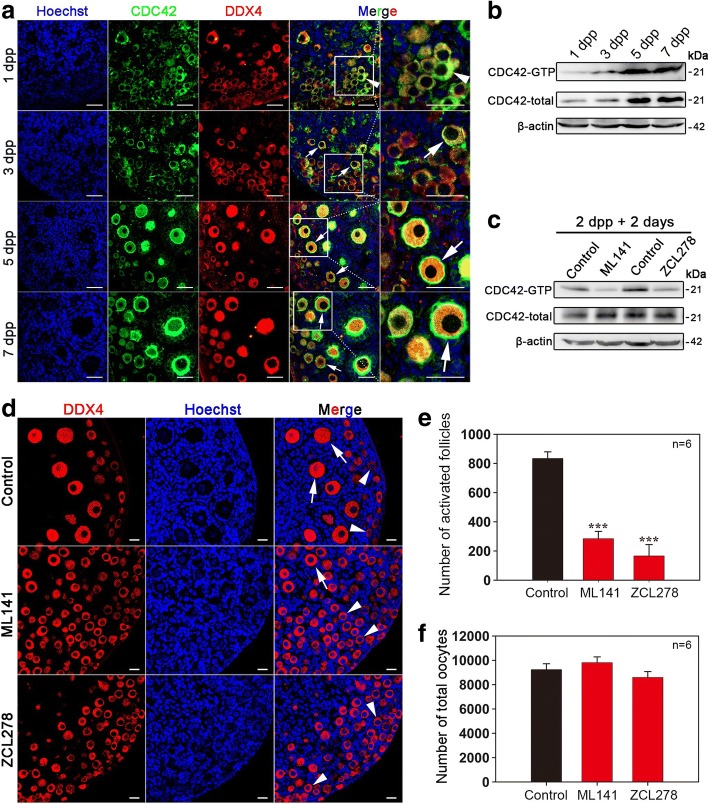
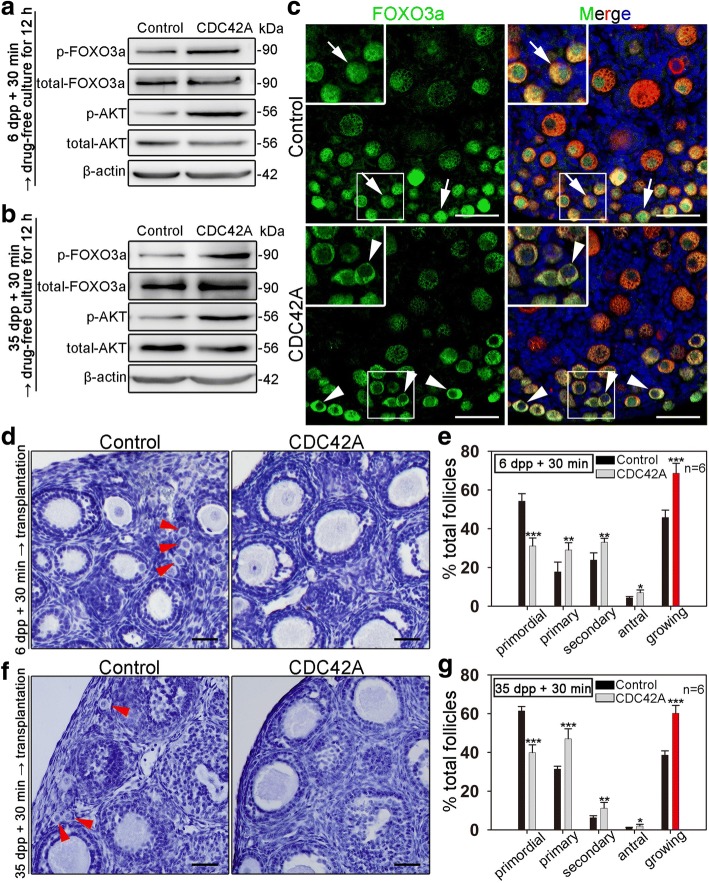
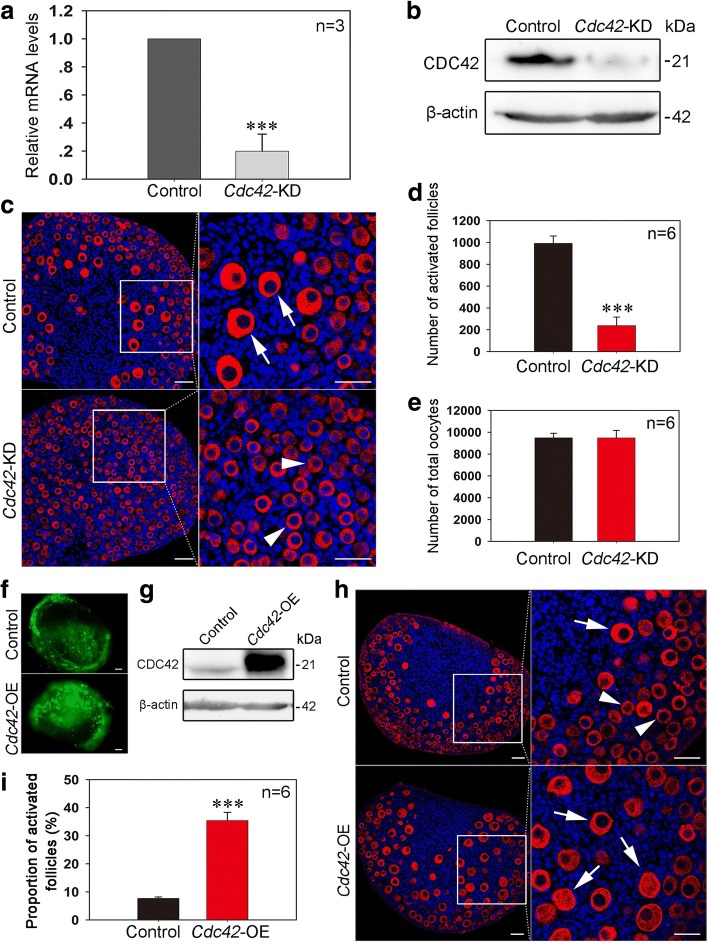
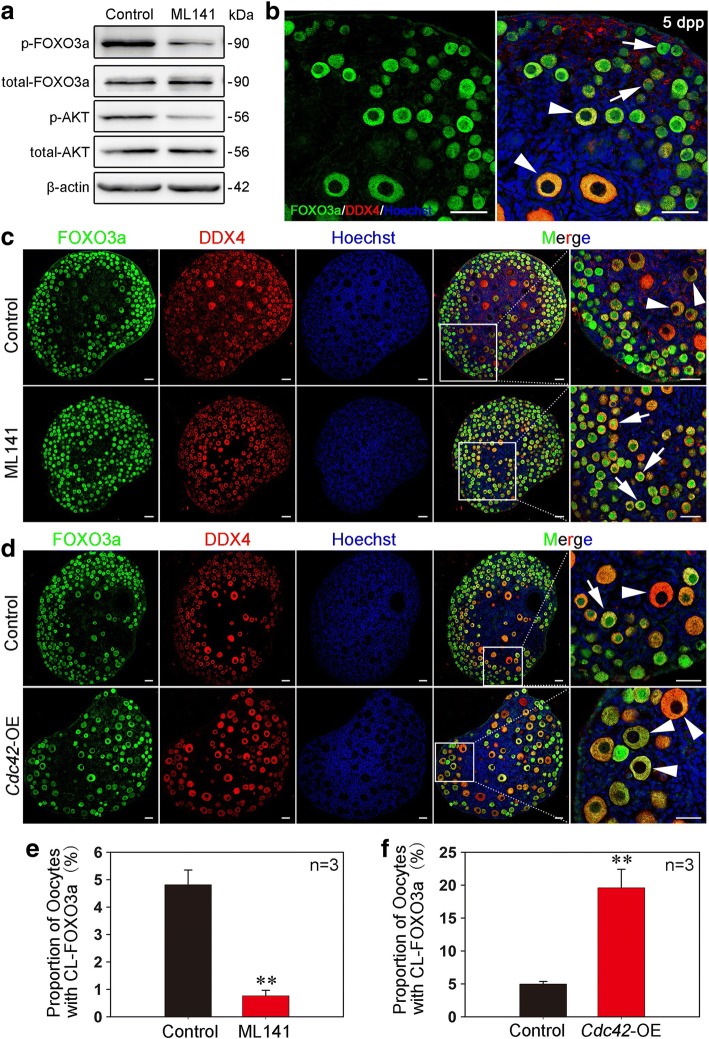
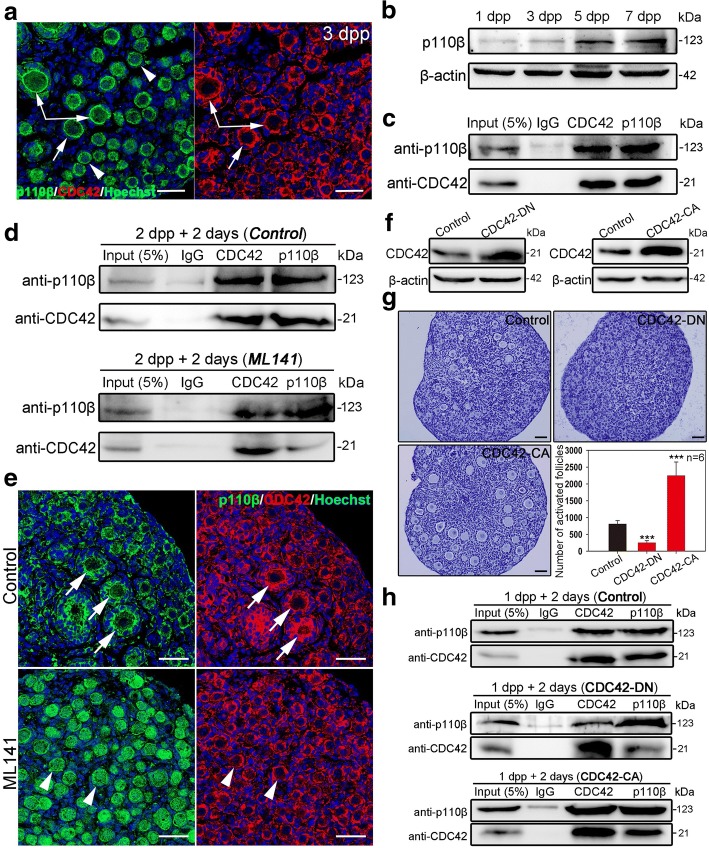
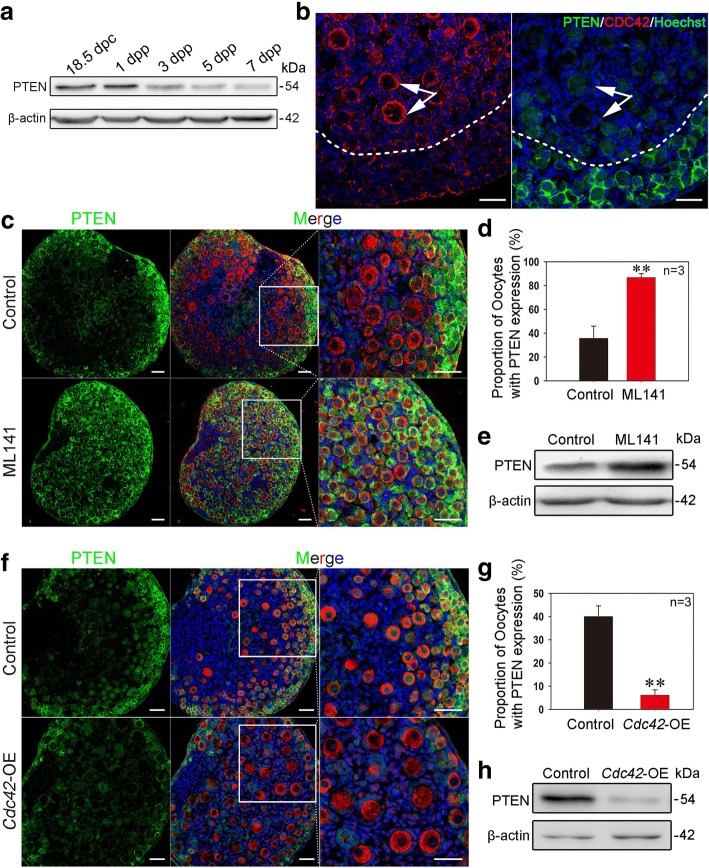
Here, we identify a new role for cell division cycle 42 (CDC42) in regulating the activation of primordial follicles in mice. Our results show that CDC42 expression increases in oocytes during the activation of primordial follicles in the ovary. Disruption of CDC42 activity with specific inhibitors or knockdown of Cdc42 expression significantly suppresses primordial follicle activation in cultured mouse ovaries. Conversely, the follicle activation ratio is remarkably increased by overexpression of CDC42 in ovaries. We further demonstrate that CDC42 governs the process of primordial follicle activation by binding to phosphatidylinositol-4,5-bisphosphate 3-kinase catalytic subunit beta (p110β) and regulating the expression levels of PTEN in oocytes. Finally, we extend our study to potential clinical applications and show that a short-term in vitro treatment with CDC42 activators could significantly increase the activation rates of primordial follicles in both neonatal and adult mouse ovaries.
Our results reveal that CDC42 controls the activation of primordial follicles in the mammalian ovary and that increasing the activity of CDC42 with specific activators might improve the efficiency of in vitro activation approaches, opening avenues for infertility treatments.
在哺乳动物女性中,成年后休眠原始卵泡的逐渐激活对于维持生殖寿命至关重要。原始卵泡的激活失调会导致各种卵巢疾病,如卵巢早衰(POI)。尽管最近的研究揭示了几个功能基因和途径,如磷酸肌醇 3-激酶(PI3K)信号通路,在控制原始卵泡的激活中发挥作用,但我们对调节原始卵泡激活进程的分子网络的理解仍然不完整。
在这里,我们确定了细胞分裂周期 42(CDC42)在调节小鼠原始卵泡激活中的新作用。我们的结果表明,CDC42 在卵巢中原始卵泡激活期间在卵母细胞中的表达增加。用特异性抑制剂破坏 CDC42 活性或敲低 Cdc42 表达显著抑制了培养的小鼠卵巢中原始卵泡的激活。相反,过表达 CDC42 可显著增加卵巢中的卵泡激活率。我们进一步证明,CDC42 通过与磷脂酰肌醇-4,5-二磷酸 3-激酶催化亚基β(p110β)结合并调节卵母细胞中 PTEN 的表达水平来控制原始卵泡激活过程。最后,我们将我们的研究扩展到潜在的临床应用,并表明用 CDC42 激活剂进行短期体外处理可以显著增加新生和成年小鼠卵巢中原始卵泡的激活率。
我们的结果表明,CDC42 控制哺乳动物卵巢中原始卵泡的激活,并且用特定的激活剂增加 CDC42 的活性可能会提高体外激活方法的效率,为不孕治疗开辟了新途径。