Akera Takashi, Chmátal Lukáš, Trimm Emily, Yang Karren, Aonbangkhen Chanat, Chenoweth David M, Janke Carsten, Schultz Richard M, Lampson Michael A
Department of Biology, School of Arts and Sciences, University of Pennsylvania, Philadelphia, PA 19104, USA.
Department of Chemistry, School of Arts and Sciences, University of Pennsylvania, Philadelphia, PA 19104, USA.
Science. 2017 Nov 3;358(6363):668-672. doi: 10.1126/science.aan0092.
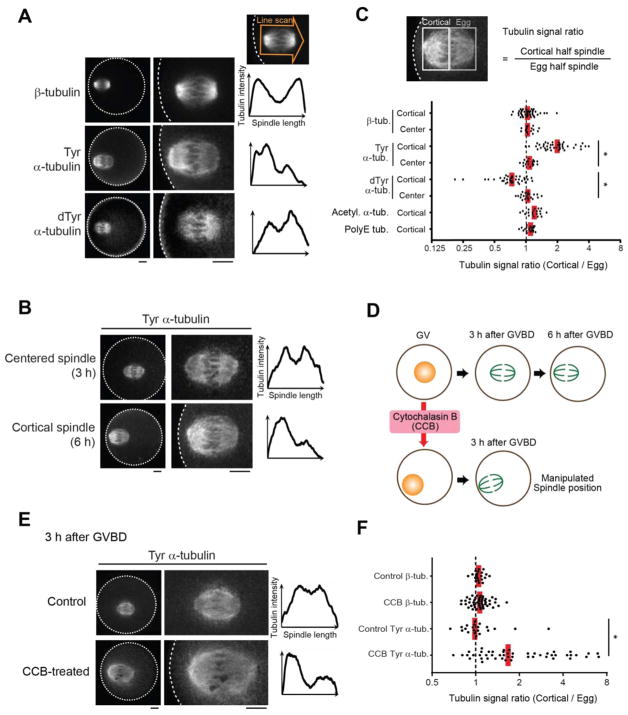
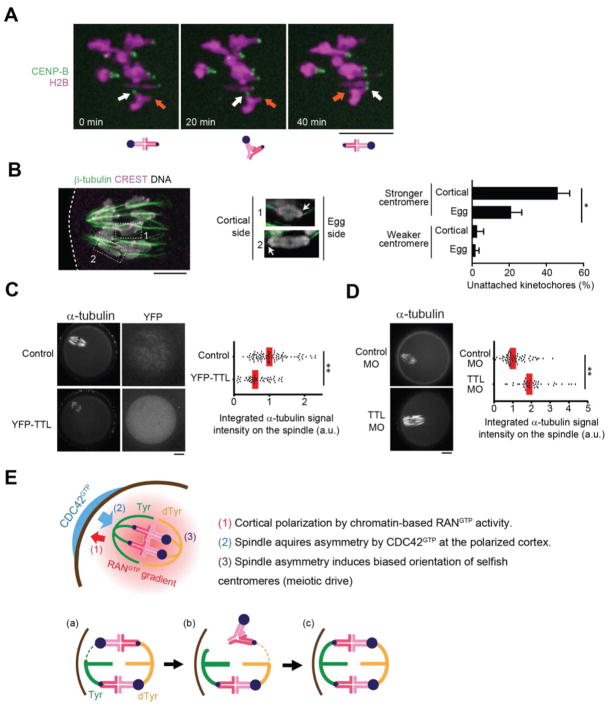
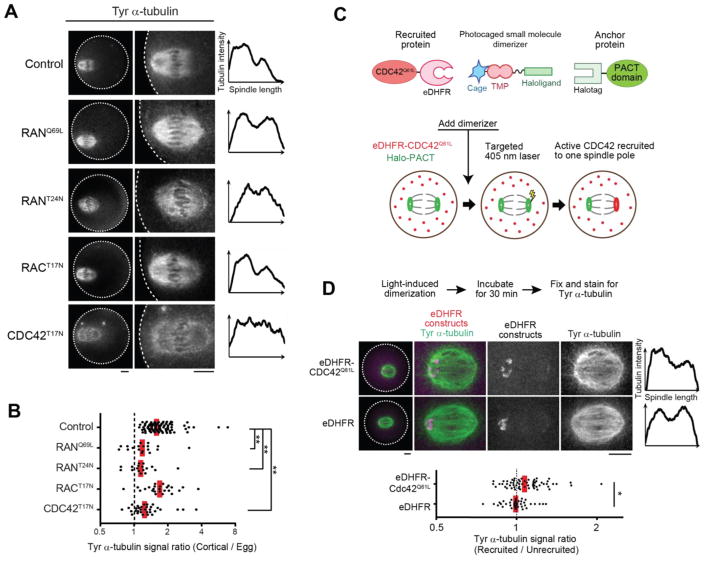
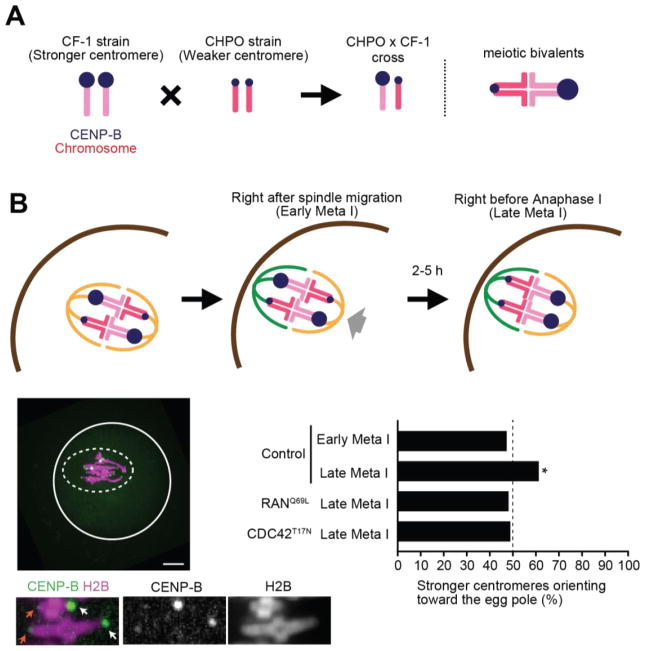
Genetic elements compete for transmission through meiosis, when haploid gametes are created from a diploid parent. Selfish elements can enhance their transmission through a process known as meiotic drive. In female meiosis, selfish elements drive by preferentially attaching to the egg side of the spindle. This implies some asymmetry between the two sides of the spindle, but the molecular mechanisms underlying spindle asymmetry are unknown. Here we found that CDC42 signaling from the cell cortex regulated microtubule tyrosination to induce spindle asymmetry and that non-Mendelian segregation depended on this asymmetry. Cortical CDC42 depends on polarization directed by chromosomes, which are positioned near the cortex to allow the asymmetric cell division. Thus, selfish meiotic drivers exploit the asymmetry inherent in female meiosis to bias their transmission.
在由二倍体亲本产生单倍体配子的减数分裂过程中,遗传元件会竞争传递。自私元件可通过一种称为减数分裂驱动的过程来增强其传递。在雌性减数分裂中,自私元件通过优先附着于纺锤体的卵子一侧来驱动。这意味着纺锤体两侧存在某种不对称性,但纺锤体不对称性背后的分子机制尚不清楚。在这里,我们发现来自细胞皮层的CDC42信号调节微管酪氨酸化以诱导纺锤体不对称,并且非孟德尔分离依赖于这种不对称性。皮层CDC42依赖于由染色体引导的极化,染色体位于皮层附近以允许不对称细胞分裂。因此,自私的减数分裂驱动因子利用雌性减数分裂中固有的不对称性来偏向其传递。