Division of Gastroenterology, Department of Medicine, Department of Genetics, University of Pennsylvania Perelman School of Medicine, Philadelphia, Pennsylvania.
Abramson Cancer Center, University of Pennsylvania Perelman School of Medicine, Philadelphia, Pennsylvania.
Cancer Res. 2018 Sep 1;78(17):4957-4970. doi: 10.1158/0008-5472.CAN-17-2268. Epub 2018 Jul 5.
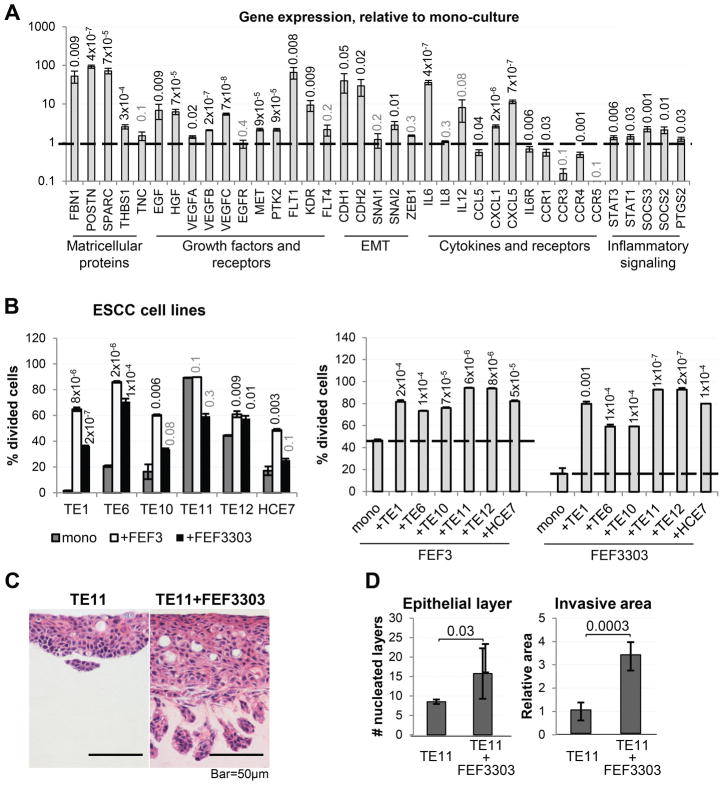
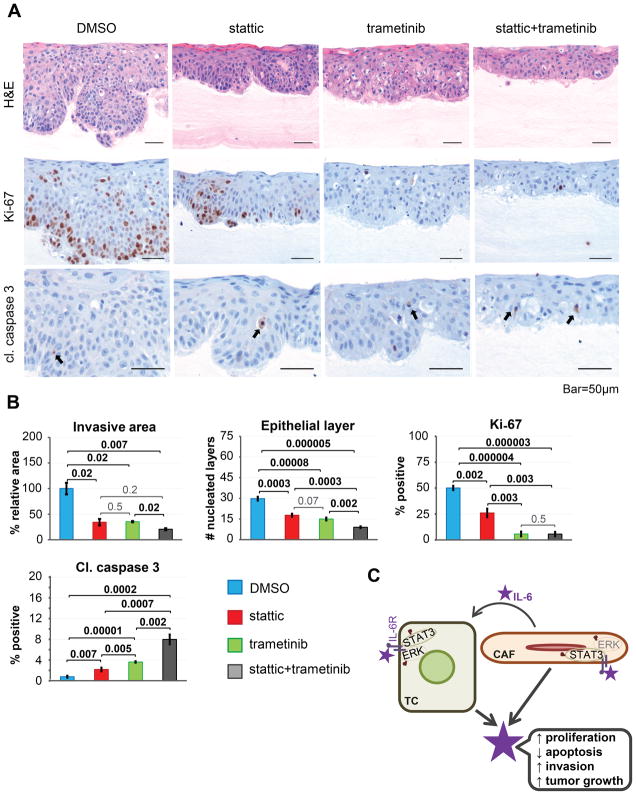
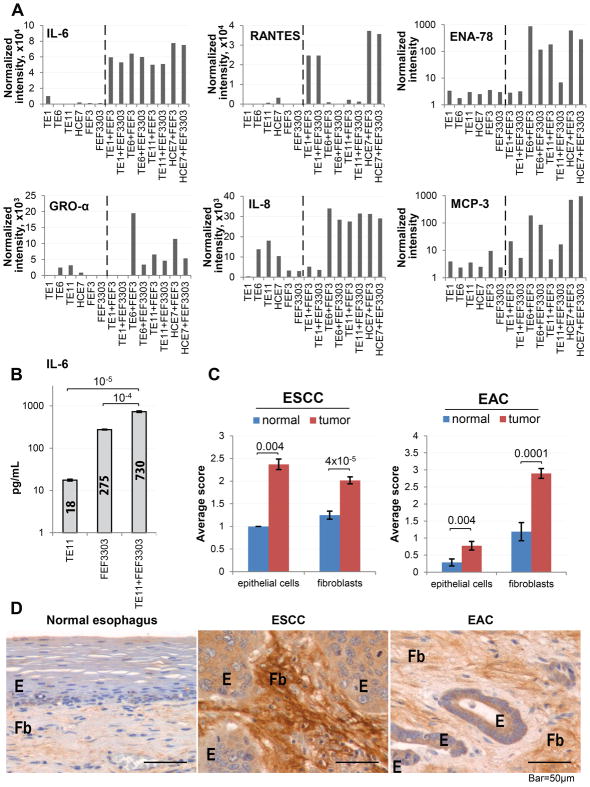
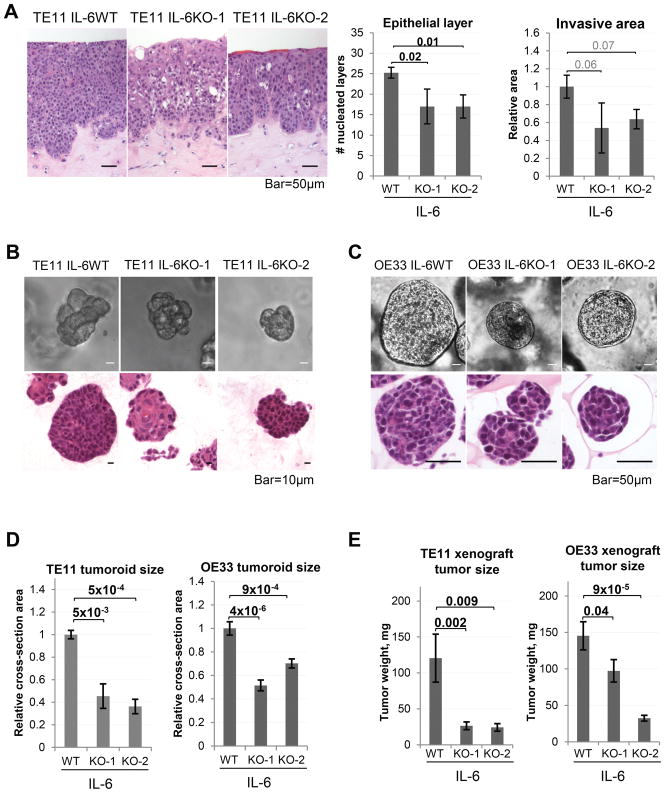
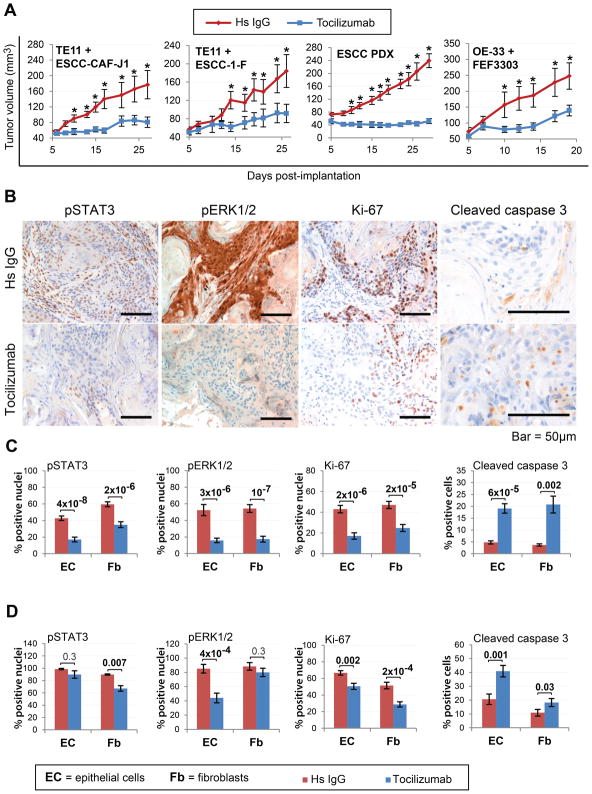
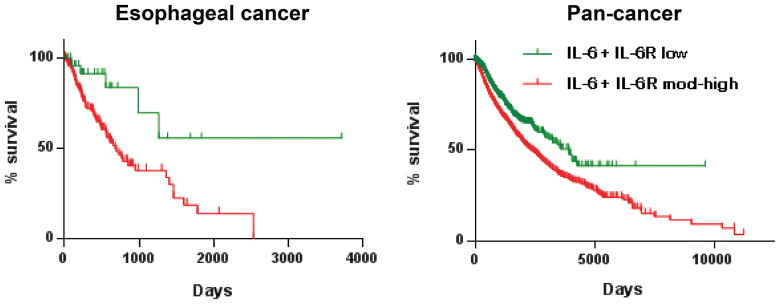
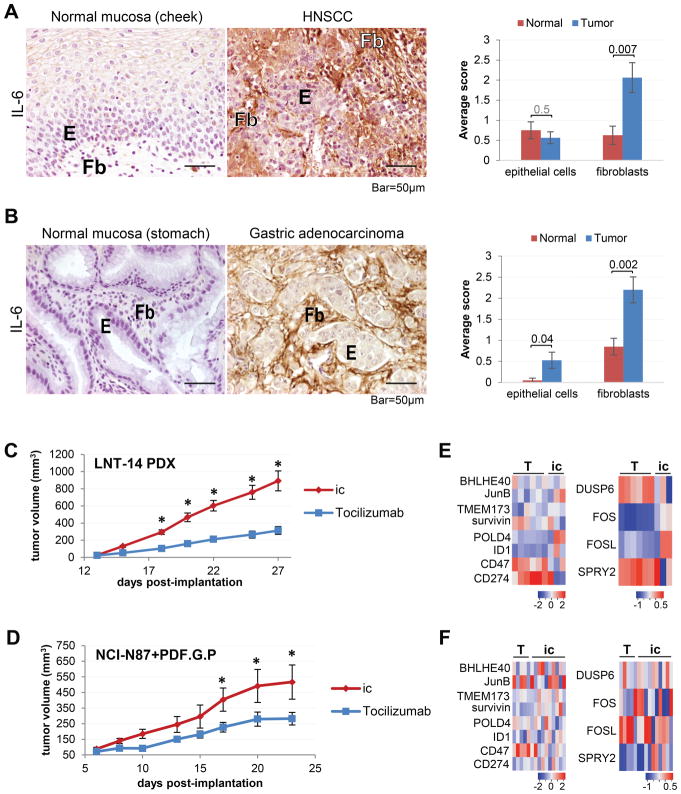
The tumor microenvironment (TME) plays a major role in the pathogenesis of multiple cancer types, including upper-gastrointestinal (GI) cancers that currently lack effective therapeutic options. Cancer-associated fibroblasts (CAF) are an essential component of the TME, contributing to tumorigenesis by secreting growth factors, modifying the extracellular matrix, supporting angiogenesis, and suppressing antitumor immune responses. Through an unbiased approach, we have established that IL-6 mediates cross-talk between tumor cells and CAF not only by supporting tumor cell growth, but also by promoting fibroblast activation. As a result, IL-6 receptor (IL6Rα) and downstream effectors offer opportunities for targeted therapy in upper-GI cancers. IL-6 loss suppressed tumorigenesis in physiologically relevant three-dimensional (3D) organotypic and 3D tumoroid models and murine models of esophageal cancer. Tocilizumab, an anti-IL6Rα antibody, suppressed tumor growth in part via inhibition of STAT3 and MEK/ERK signaling. Analysis of a pan-cancer TCGA dataset revealed an inverse correlation between IL-6 and IL6Rα overexpression and patient survival. Therefore, we expanded evaluation of tocilizumab to head and neck squamous cell carcinoma patient-derived xenografts and gastric adenocarcinoma xenografts, demonstrating suppression of tumor growth and altered STAT3 and ERK1/2 gene signatures. We used small-molecule inhibitors of STAT3 and MEK1/2 signaling to suppress tumorigenesis in the 3D organotypic model of esophageal cancer. We demonstrate that IL6 is a major contributor to the dynamic cross-talk between tumor cells and CAF in the TME. Our findings provide a translational rationale for inhibition of IL6Rα and downstream signaling pathways as a novel targeted therapy in oral-upper-GI cancers. These findings demonstrate the interaction of esophageal cancer and cancer-associated fibroblasts through IL-6 signaling, providing rationale for a novel therapeutic approach to target these cancers. .
肿瘤微环境(TME)在多种癌症类型的发病机制中起着重要作用,包括目前缺乏有效治疗选择的上消化道(GI)癌症。癌相关成纤维细胞(CAF)是 TME 的重要组成部分,通过分泌生长因子、修饰细胞外基质、支持血管生成和抑制抗肿瘤免疫反应来促进肿瘤发生。通过一种无偏方法,我们已经确定 IL-6 通过不仅支持肿瘤细胞生长,而且还促进成纤维细胞激活,介导肿瘤细胞和 CAF 之间的串扰。因此,IL-6 受体(IL6Rα)和下游效应子为上消化道癌症的靶向治疗提供了机会。IL-6 缺失抑制了生理相关的三维(3D)器官型和 3D 类器官模型以及食管癌的小鼠模型中的肿瘤发生。抗 IL-6Rα 抗体托珠单抗在一定程度上通过抑制 STAT3 和 MEK/ERK 信号抑制肿瘤生长。对泛癌症 TCGA 数据集的分析表明,IL-6 和 IL6Rα 过表达与患者生存呈负相关。因此,我们将托珠单抗的评估扩展到头颈部鳞状细胞癌患者来源的异种移植物和胃腺癌异种移植物,证明了其抑制肿瘤生长和改变 STAT3 和 ERK1/2 基因特征的作用。我们使用 STAT3 和 MEK1/2 信号通路的小分子抑制剂在食管癌 3D 器官型模型中抑制肿瘤发生。我们证明 IL6 是肿瘤细胞和 CAF 之间动态串扰的主要贡献者。我们的研究结果为抑制 IL6Rα 和下游信号通路作为口腔上消化道癌症的新型靶向治疗提供了转化依据。这些发现证明了食管癌和癌相关成纤维细胞之间通过 IL-6 信号的相互作用,为靶向这些癌症提供了一种新的治疗方法的依据。