Maertzdorf Jeroen, Tönnies Mario, Lozza Laura, Schommer-Leitner Sandra, Mollenkopf Hans, Bauer Torsten T, Kaufmann Stefan H E
Max Planck Institute for Infection Biology, Berlin, Germany.
Lungenklinik Heckeshorn, HELIOS Klinikum Emil von Behring, Berlin, Germany.
Front Immunol. 2018 Jun 12;9:1346. doi: 10.3389/fimmu.2018.01346. eCollection 2018.
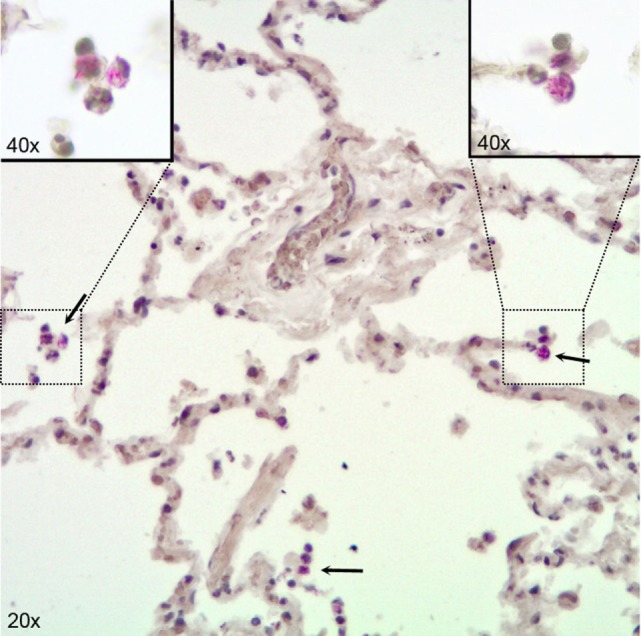
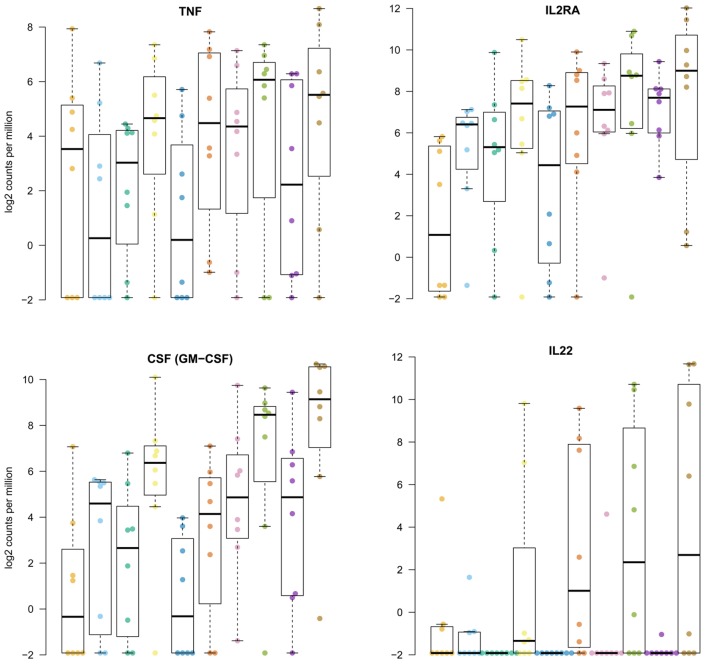
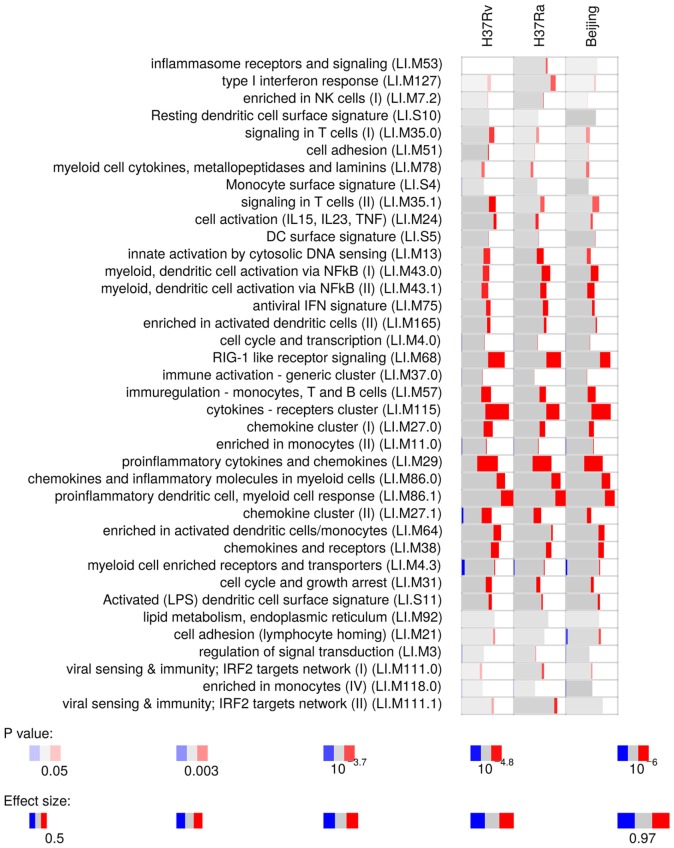
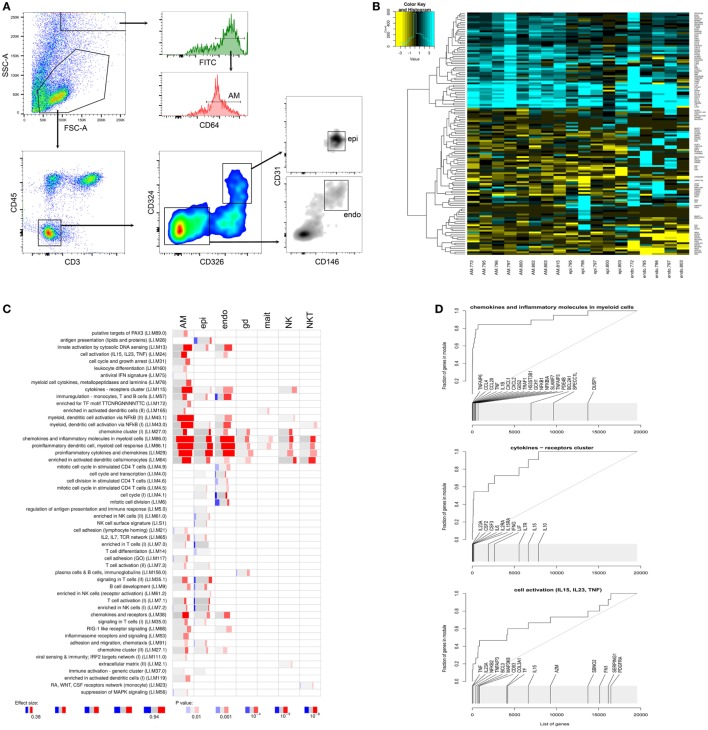
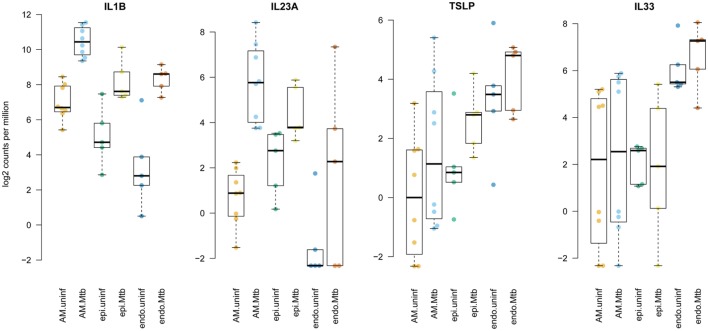
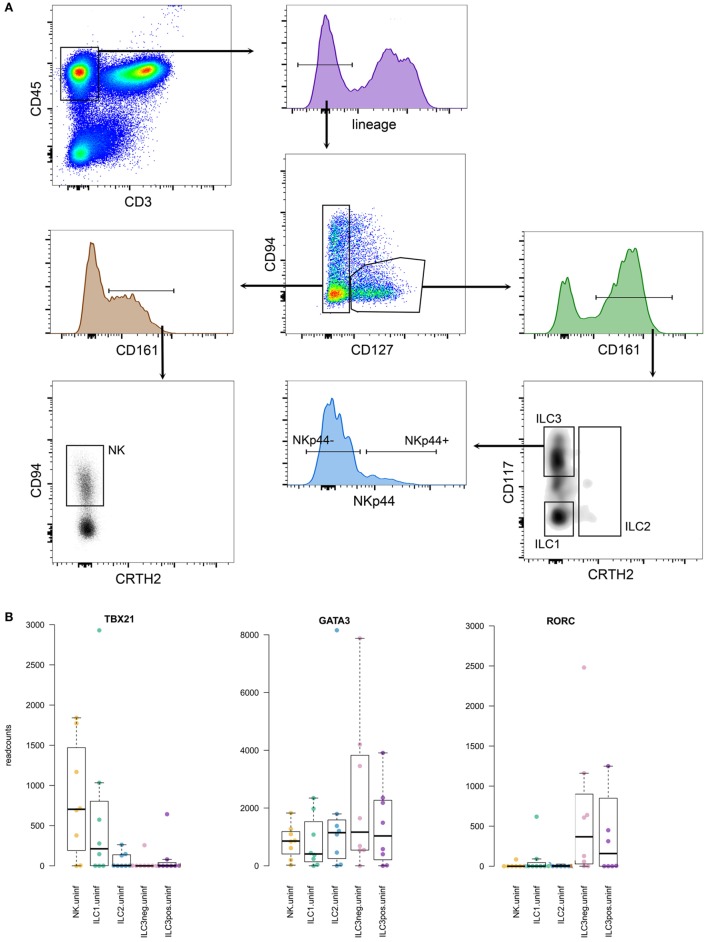
Early immune responses to (Mtb) invasion of the human lung play a decisive role in the outcome of infection, leading to either rapid clearance of the pathogen or stable infection. Despite their critical impact on health and disease, these early host-pathogen interactions at the primary site of infection are still poorly understood. studies cannot fully reflect the complexity of the lung architecture and its impact on host-pathogen interactions, while animal models have their own limitations. In this study, we have investigated the initial responses in human lung tissue explants to Mtb infection, focusing primarily on gene expression patterns in different tissue-resident cell types. As first cell types confronted with pathogens invading the lung, alveolar macrophages, and epithelial cells displayed rapid proinflammatory chemokine and cytokine responses to Mtb infection. Other tissue-resident innate cells like gamma/delta T cells, mucosal associated invariant T cells, and natural killer cells showed partially similar but weaker responses, with a high degree of variability across different donors. Finally, we investigated the responses of tissue-resident innate lymphoid cells to the inflammatory milieu induced by Mtb infection. Our infection model provides a unique approach toward host-pathogen interactions at the natural port of Mtb entry and site of its implantation, i.e., the human lung. Our data provide a first detailed insight into the early responses of different relevant pulmonary cells in the alveolar microenvironment to contact with Mtb. These results can form the basis for the identification of host markers that orchestrate early host defense and provide resistance or susceptibility to stable Mtb infection.
人类肺部对结核分枝杆菌(Mtb)入侵的早期免疫反应在感染结果中起决定性作用,可导致病原体的快速清除或感染的稳定。尽管这些早期宿主与病原体的相互作用对健康和疾病具有关键影响,但在感染的原发部位,这些相互作用仍知之甚少。体外研究无法充分反映肺部结构的复杂性及其对宿主与病原体相互作用的影响,而动物模型也有其自身的局限性。在本研究中,我们调查了人肺组织外植体对Mtb感染的初始反应,主要关注不同组织驻留细胞类型中的基因表达模式。作为首先接触侵入肺部病原体的细胞类型,肺泡巨噬细胞和上皮细胞对Mtb感染表现出快速的促炎趋化因子和细胞因子反应。其他组织驻留固有细胞,如γ/δT细胞、黏膜相关恒定T细胞和自然杀伤细胞,表现出部分相似但较弱的反应,不同供体之间存在高度变异性。最后,我们研究了组织驻留固有淋巴细胞对Mtb感染诱导的炎症环境的反应。我们的感染模型为在Mtb进入和植入的天然部位,即人类肺部,研究宿主与病原体的相互作用提供了独特的方法。我们的数据首次详细洞察了肺泡微环境中不同相关肺细胞与Mtb接触后的早期反应。这些结果可为识别协调早期宿主防御并提供对稳定Mtb感染的抗性或易感性的宿主标志物奠定基础。