Nsibande Duduzile, Loveday Marian, Daniels Karen, Sanders David, Doherty Tanya, Zembe Wanga
Health Systems Research Unit, South African Medical Research Council, Cape Town, South Africa.
School of Public Health, University of the Western Cape, Bellville, South Africa.
Afr Health Sci. 2018 Mar;18(1):188-197. doi: 10.4314/ahs.v18i1.24.
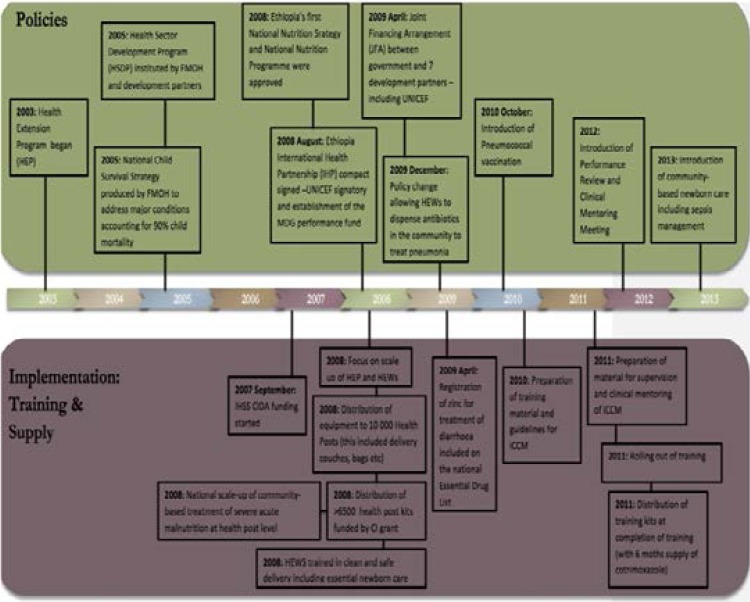
Globally, preventable and treatable childhood conditions such as pneumonia, diarrhoea, malaria, malnutrition and newborn conditions still account for 75% of under-five mortality. To reduce the mortality rate from these conditions, Ethiopia launched an ambitious Health Extension Programme (HEP) in 2003. Trained Community Health Workers (CHWs), named Health Extension Workers (HEWs) were deployed to deliver a package of care which includes integrated Community Case-Management (iCCM) of common childhood diseases.
This qualitative study aimed to explore approaches and strategies used in the HEW training and supervision as part of an evaluation of the Catalytic Initiative to Save a Million Lives.
A qualitative rapid appraisal study using focus group discussions and in-depth interviews was conducted.
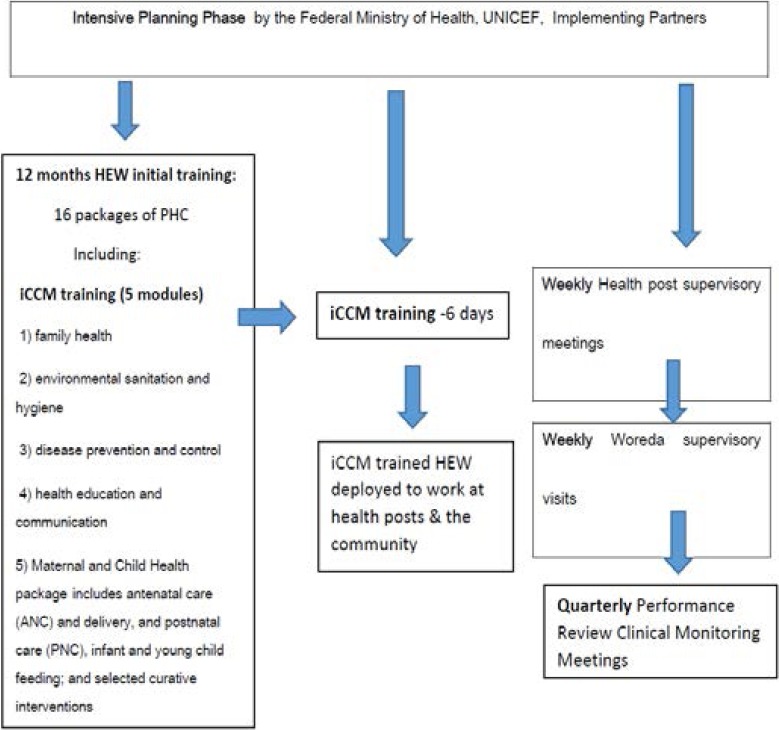
Training of HEWs followed a cascaded training of trainer approach supported by implementing partners under guidance of the Ministry of Health. A comprehensive planning phase enabled good coverage of districts and consistency in training approaches. Training was complemented by on-going supportive supervision. HEW motivation was enhanced through regular review meetings and opportunities for career progression.
These findings describe a thorough approach to training and supervision of HEWs delivering iCCM in rural Ethiopia. Ongoing investments by partners will be critical for long-term sustainability.
在全球范围内,诸如肺炎、腹泻、疟疾、营养不良和新生儿疾病等可预防和可治疗的儿童疾病仍占五岁以下儿童死亡率的75%。为降低这些疾病导致的死亡率,埃塞俄比亚于2003年启动了一项雄心勃勃的健康推广计划(HEP)。经过培训的社区卫生工作者(CHWs),即健康推广工作者(HEWs)被部署去提供一系列护理服务,其中包括对常见儿童疾病的综合社区病例管理(iCCM)。
作为对拯救百万生命催化倡议评估的一部分,这项定性研究旨在探索健康推广工作者培训和监督中所使用的方法和策略。
开展了一项采用焦点小组讨论和深入访谈的定性快速评估研究。
健康推广工作者的培训遵循由实施伙伴在卫生部指导下采用的级联式培训师培训方法。一个全面的规划阶段确保了地区的良好覆盖以及培训方法的一致性。培训辅以持续的支持性监督。通过定期审查会议和职业发展机会,增强了健康推广工作者的积极性。
这些研究结果描述了在埃塞俄比亚农村地区对提供综合社区病例管理的健康推广工作者进行培训和监督的全面方法。伙伴的持续投资对于长期可持续性至关重要。