Department of Biochemistry and Molecular Genetics, University of Illinois at Chicago, Chicago, IL 60607, USA.
Laboratory of Bacteriology, The Rockefeller University, New York, NY 10065, USA.
Mol Cell. 2018 Jul 5;71(1):42-55.e8. doi: 10.1016/j.molcel.2018.06.005.
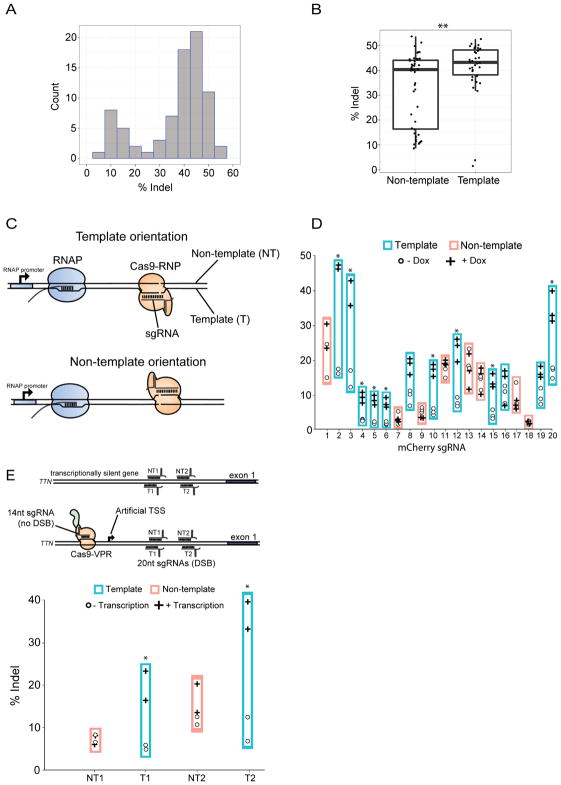
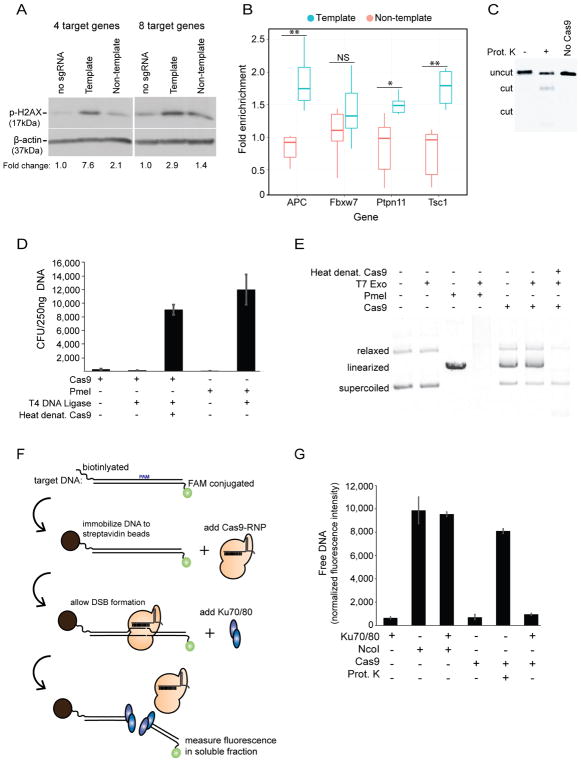
The ability to target the Cas9 nuclease to DNA sequences via Watson-Crick base pairing with a single guide RNA (sgRNA) has provided a dynamic tool for genome editing and an essential component of adaptive immune systems in bacteria. After generating a double-stranded break (DSB), Cas9 remains stably bound to DNA. Here, we show persistent Cas9 binding blocks access to the DSB by repair enzymes, reducing genome editing efficiency. Cas9 can be dislodged by translocating RNA polymerases, but only if the polymerase approaches from one direction toward the Cas9-DSB complex. By exploiting these RNA-polymerase/Cas9 interactions, Cas9 can be conditionally converted into a multi-turnover nuclease, mediating increased mutagenesis frequencies in mammalian cells and enhancing bacterial immunity to bacteriophages. These consequences of a stable Cas9-DSB complex provide insights into the evolution of protospacer adjacent motif (PAM) sequences and a simple method of improving selection of highly active sgRNAs for genome editing.
通过与单引导 RNA(sgRNA)的 Watson-Crick 碱基配对将 Cas9 核酸酶靶向 DNA 序列的能力为基因组编辑提供了一个动态工具,并且是细菌适应性免疫系统的重要组成部分。在产生双链断裂(DSB)之后,Cas9 仍然稳定地与 DNA 结合。在这里,我们表明持续的 Cas9 结合阻止了修复酶对 DSB 的进入,从而降低了基因组编辑的效率。RNA 聚合酶可以通过易位来将 Cas9 置换,但前提是聚合酶从一个方向朝 Cas9-DSB 复合物靠近。通过利用这些 RNA 聚合酶/Cas9 相互作用,可以将 Cas9 条件性地转化为多轮核酸酶,从而在哺乳动物细胞中增加突变频率,并增强细菌对噬菌体的免疫能力。这种稳定的 Cas9-DSB 复合物的后果为研究原间隔基序(PAM)序列的进化以及提高基因组编辑中高度活跃 sgRNA 选择的简单方法提供了线索。