Yang Shuo, Zhao Li Sheng, Cai Chuan, Shi Quan, Wen Ning, Xu Juan
Department of Stomatology, Chinese People's Liberation Army General Hospital, 28 Fuxing Road, Beijing, 100853, China.
BMC Cardiovasc Disord. 2018 Jul 6;18(1):141. doi: 10.1186/s12872-018-0879-0.
Inflammation is a common feature of both peripheral arterial disease (PAD) and periodontitis. Some studies have evaluated the association between PAD and periodontitis. However, there is still no specialized meta-analysis that has quantitatively assessed the strength of the association. Thus, we conducted this meta-analysis to critically assess the strength of the association between PAD and periodontitis.
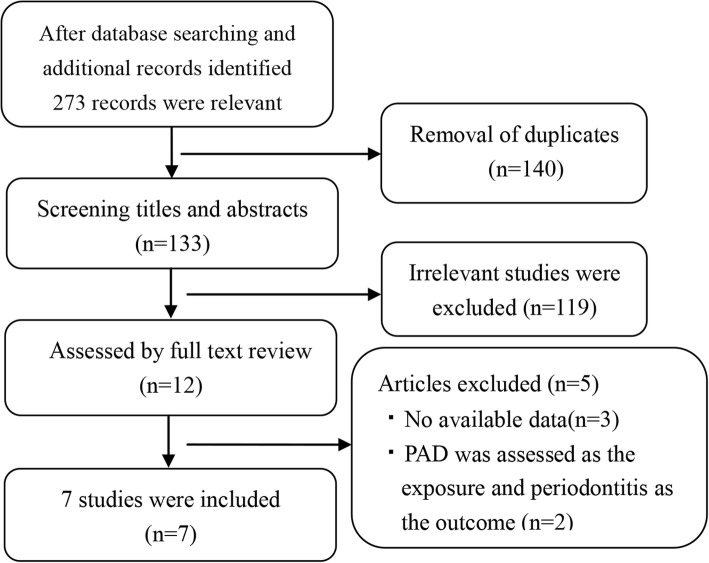
PubMed, Embase, and the Cochrane Library were searched for observational studies of the association between periodontitis and PAD in February 2018. Risk ratios (RRs) and their 95% confidence intervals (CIs) from included studies were pooled to evaluate the strength of the association between periodontitis and PAD. Weighted mean differences (WMDs) and their 95% CIs were pooled to compare the difference in periodontal-related parameters between PAD and non-PAD patients.
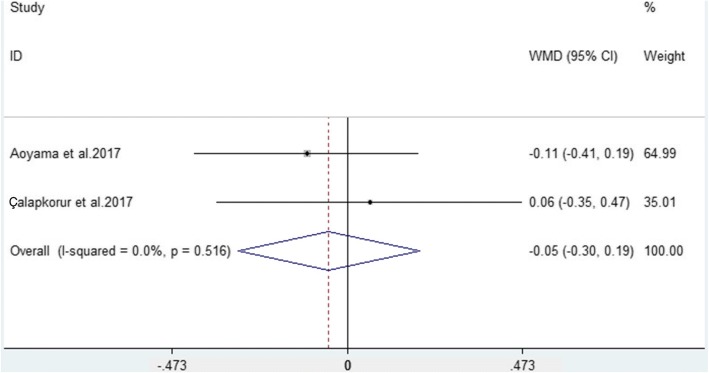
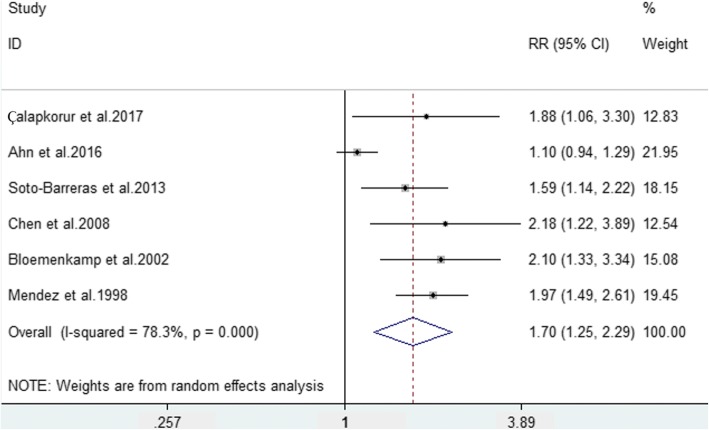
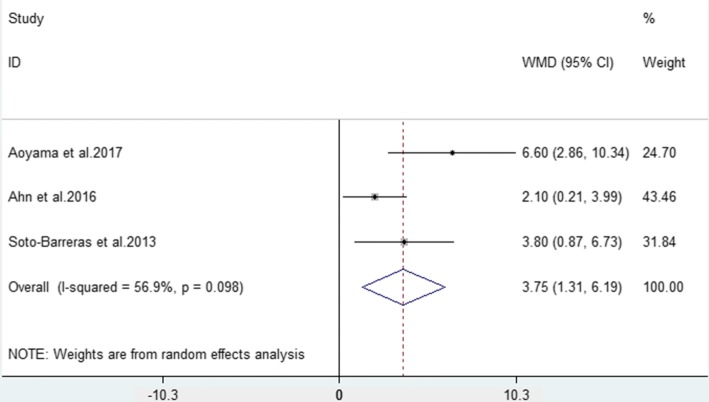
Seven studies including a total of 4307 participants were included in the meta-analysis. The pooled analysis showed that there was a significant difference in the risk of periodontitis between PAD patients and non-PAD participants (RR = 1.70, 95% CI = 1.25-2.29, P = 0.01). There was also a significant difference in number of missing teeth between PAD patients and non-PAD participants (WMD = 3.75, 95% CI = 1.31-6.19, P = 0.003). No significant difference was found in clinical attachment loss between PAD patients and non-PAD participants (WMD = - 0.05, 95% CI = - 0.03-0.19, P = 0.686).
In conclusion, the results of this meta-analysis revealed a significant relationship between periodontitis and PAD. Moreover, our study indicated that PAD patients had more missing teeth than control subjects did. Further high-quality and well-designed studies with specific inclusion and exclusion criteria are required to strengthen the conclusions of this study.
炎症是外周动脉疾病(PAD)和牙周炎的共同特征。一些研究评估了PAD与牙周炎之间的关联。然而,仍没有专门的荟萃分析定量评估这种关联的强度。因此,我们进行了这项荟萃分析,以严格评估PAD与牙周炎之间关联的强度。
2018年2月,检索了PubMed、Embase和Cochrane图书馆,查找有关牙周炎与PAD关联的观察性研究。汇总纳入研究的风险比(RRs)及其95%置信区间(CIs),以评估牙周炎与PAD之间关联的强度。汇总加权平均差(WMDs)及其95% CIs,以比较PAD患者与非PAD患者牙周相关参数的差异。
荟萃分析纳入了7项研究,共4307名参与者。汇总分析显示,PAD患者与非PAD参与者在患牙周炎风险上存在显著差异(RR = 1.70,95% CI = 1.25 - 2.29,P = 0.01)。PAD患者与非PAD参与者在缺失牙数量上也存在显著差异(WMD = 3.75,95% CI = 1.31 - 6.19,P = 0.003)。PAD患者与非PAD参与者在临床附着丧失方面未发现显著差异(WMD = -0.05,95% CI = -0.03 - 0.19,P = 0.686)。
总之,这项荟萃分析的结果揭示了牙周炎与PAD之间存在显著关系。此外,我们的研究表明,PAD患者比对照组有更多的牙齿缺失。需要进一步开展具有特定纳入和排除标准的高质量、精心设计的研究,以强化本研究的结论。