Department of Immunology and Infection, London School of Hygiene and Tropical Medicine, London, UK.
The Roslin Institute and Royal (Dick) School of Veterinary Studies, University of Edinburgh, Easter Bush, Midlothian, EH25 9RG, UK.
Malar J. 2018 Jul 6;17(1):253. doi: 10.1186/s12936-018-2402-6.
The haemolysis associated with clinical episodes of malaria results in the liberation of haem, which activates the enzyme haem oxygenase-1 (HO-1). HO-1 has been shown to reduce neutrophil function and increase susceptibility to invasive bacterial disease. However, the majority of community-associated malaria infections are subclinical, often termed "asymptomatic" and the consequences of low-grade haemolysis during subclinical malaria infection are unknown.
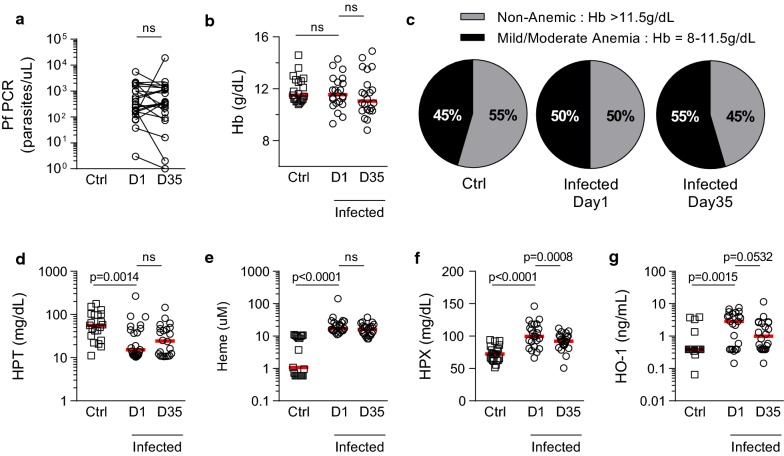
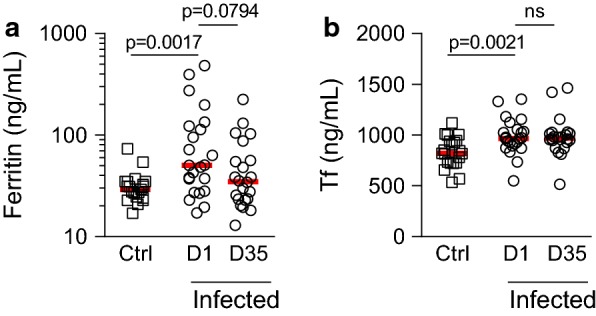
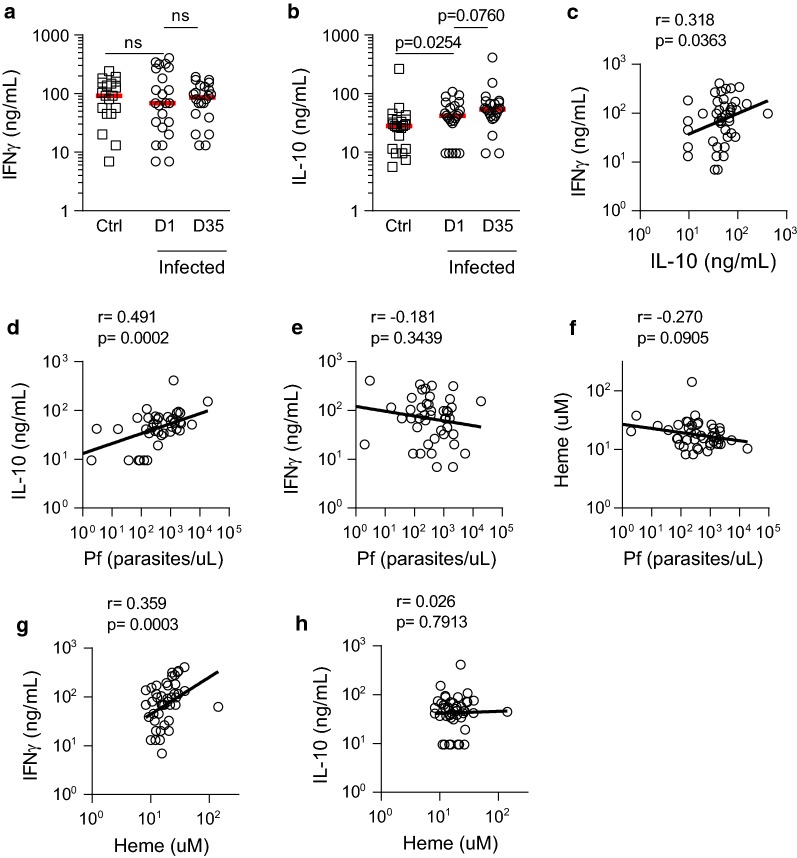
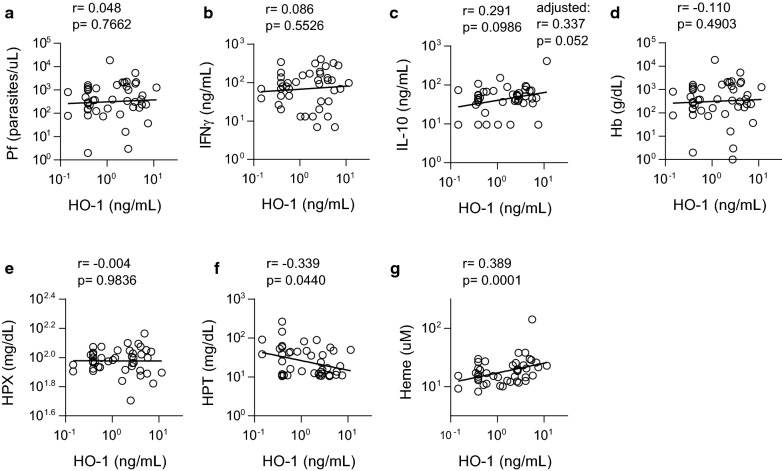
As part of an ongoing study of subclinical malaria in Burkina Faso, 23 children with subclinical Plasmodium falciparum infections (determined by qPCR) were compared with 21 village-matched uninfected control children. Infected children showed evidence of persistent haemolysis over 35 days, with raised plasma haem and HO-1 concentrations. Concentrations of IL-10, which can also directly activate HO-1, were also higher in infected children compared to uninfected children. Regression analysis revealed that HO-1 was associated with haemolysis, but not with parasite density, anaemia or IL-10 concentration.
This study reveals that subclinical P. falciparum malaria infection is associated with sustained haemolysis and the induction of HO-1. Given the association between HO-1, neutrophil dysfunction and increased risk of Salmonella bacteraemia, prolonged HO-1 induction may explain epidemiological associations and geographic overlap between malaria and invasive bacterial disease. Further studies are needed to understand the consequences of persistent subclinical malaria infection, low-grade haemolysis and raised HO-1 on immune cell function and risk of comorbidities.
与疟疾临床发作相关的溶血导致游离血红蛋白释放,从而激活血红素加氧酶-1(HO-1)。已经表明,HO-1 可降低中性粒细胞功能并增加侵袭性细菌性疾病的易感性。然而,大多数社区相关疟疾感染是亚临床的,通常称为“无症状”,亚临床疟疾感染期间低度溶血的后果尚不清楚。
作为布基纳法索亚临床疟疾正在进行的研究的一部分,将 23 名患有亚临床恶性疟原虫感染(通过 qPCR 确定)的儿童与 21 名村庄匹配的未感染对照儿童进行了比较。感染儿童在 35 天内显示出持续溶血的证据,血浆血红蛋白和 HO-1 浓度升高。与未感染儿童相比,感染儿童的白细胞介素 10(也可以直接激活 HO-1)浓度也更高。回归分析显示,HO-1 与溶血有关,但与寄生虫密度、贫血或白细胞介素 10 浓度无关。
本研究表明,亚临床恶性疟原虫感染与持续溶血和 HO-1 的诱导有关。鉴于 HO-1、中性粒细胞功能障碍和沙门氏菌菌血症风险增加之间的关联,延长 HO-1 诱导可能解释疟疾和侵袭性细菌性疾病之间的流行病学关联和地理重叠。需要进一步研究以了解持续亚临床疟疾感染、低度溶血和升高的 HO-1 对免疫细胞功能和合并症风险的影响。