Yale University, 21 Sachem Street, New Haven, CT, 06520-8105, USA.
The Connecticut Agricultural Experiment Station, 123 Huntington Street, New Haven, CT, 06504, USA.
Parasit Vectors. 2018 Jul 6;11(1):396. doi: 10.1186/s13071-018-2933-2.
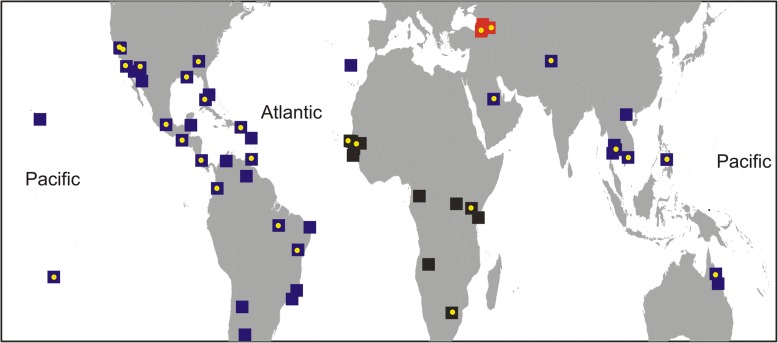
The yellow fever mosquito Aedes aegypti transmits viral diseases that have plagued humans for centuries. Its ancestral home are forests of Africa and ~400-600 years ago it invaded the New World and later Europe and Asia, causing some of the largest epidemics in human history. The species was rarely detected in countries surrounding the Mediterranean Sea after the 1950s, but during the last 16 years it re-appeared in Madeira, Russia and in the eastern coast of the Black Sea. We genotyped Ae. aegypti populations from the Black Sea region to investigate whether this is a recent invasion (and if so, where it came from) or a remnant of pre-eradication populations that extended across the Mediterranean. We also use the Black Sea populations together with a world reference panel of populations to shed more light into the phylogeographical history of this species.
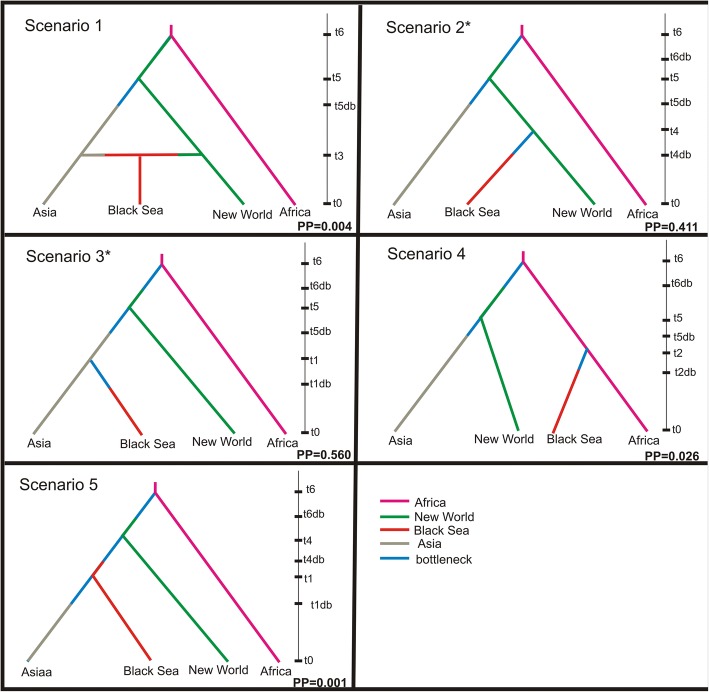
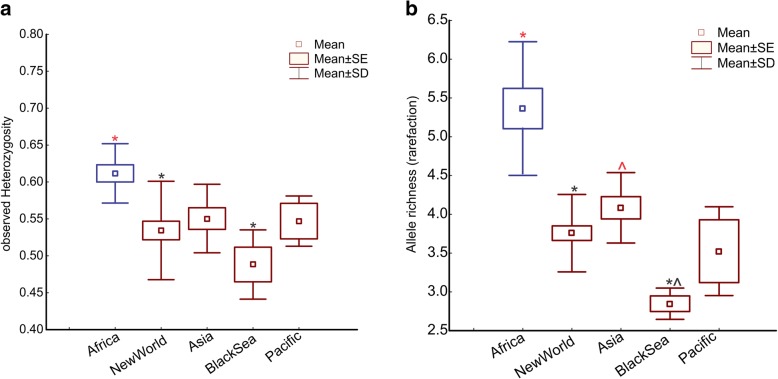
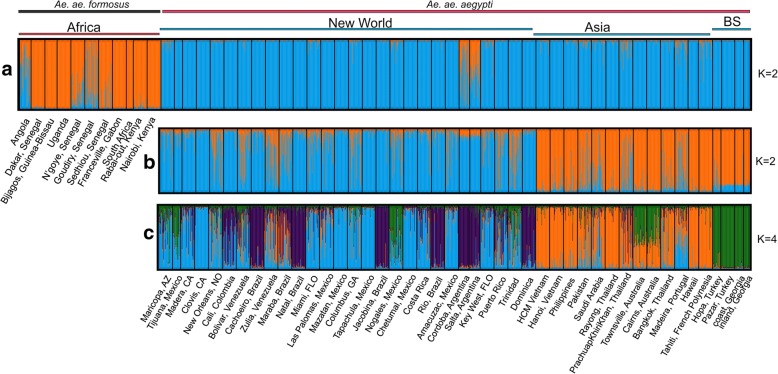
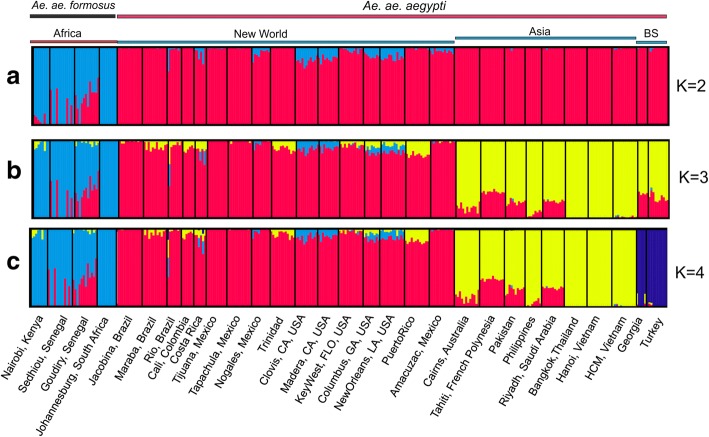
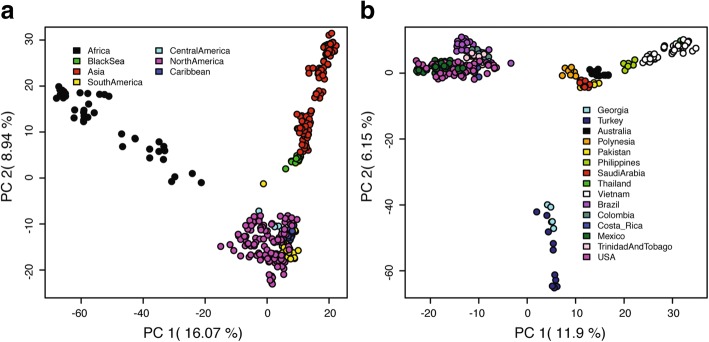
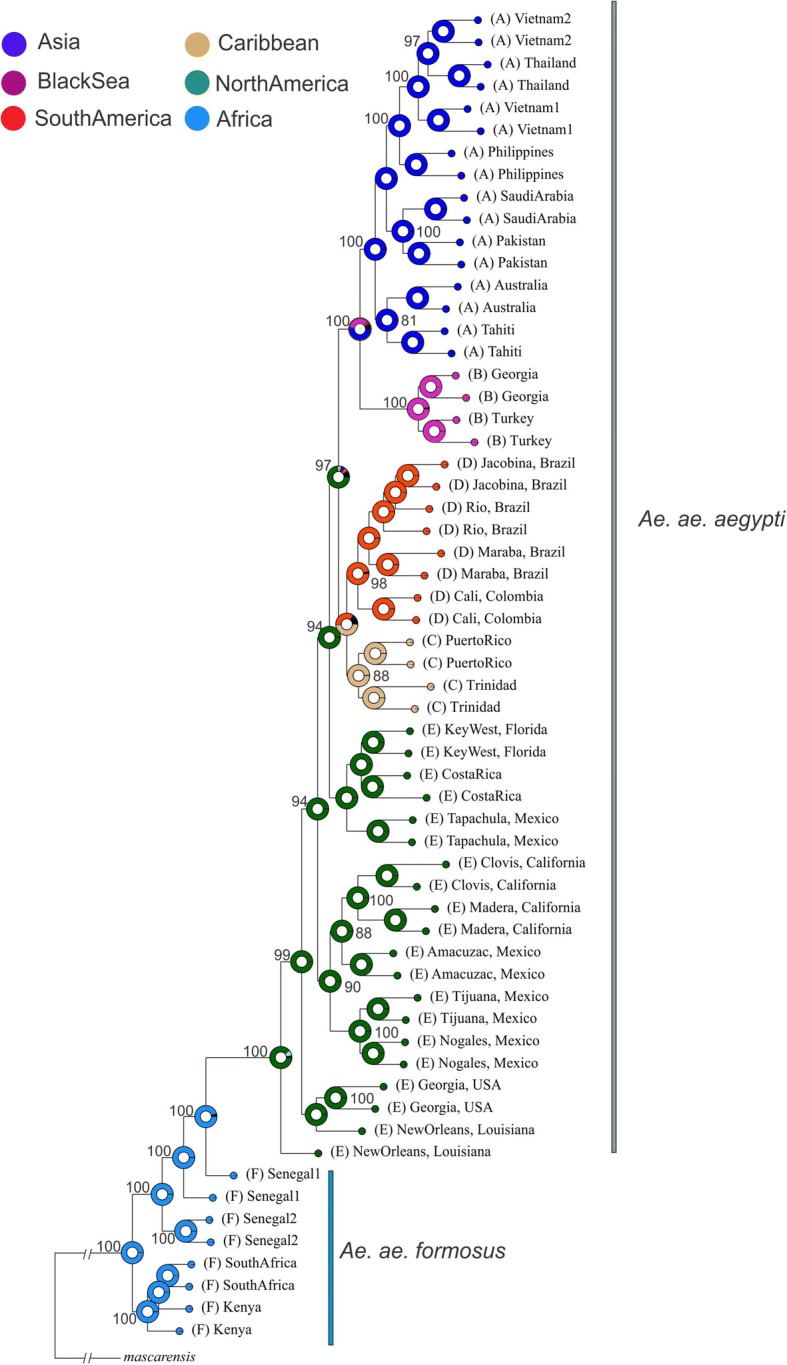
Microsatellites and ~19,000 genome-wide single nucleotide polymorphisms (SNPs) support the monophyletic origin of all populations outside Africa, with the New World as the site of first colonization. Considering the phylogenetic relationships, the Black Sea populations are basal to all Asian populations sampled. Bayesian analyses combined with multivariate analyses on both types of markers suggest that the Black Sea population is a remnant of an older population. Approximate Bayesian Computation Analysis indicates with equal probability, that the origin of Black Sea populations was Asia or New World and assignment tests favor the New World.
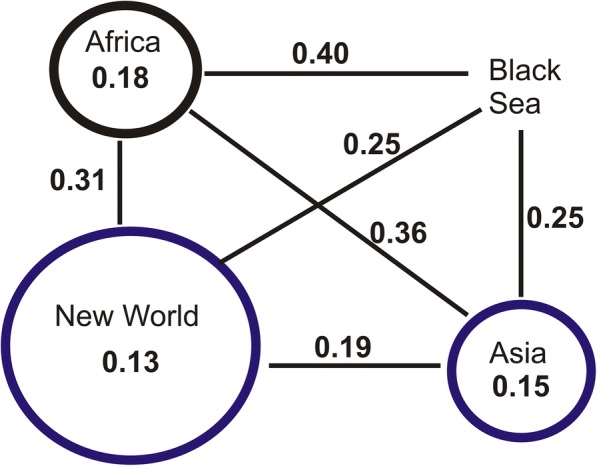
Our results confirmed that Ae. aegypti left Africa and arrived in New World ~500 years ago. The lineage that returned to the Old World and gave rise to present day Asia and the Black Sea populations split from the New World approximately 100-150 years ago. Globally, the Black Sea population is genetically closer to Asia, but still highly differentiated from both New World and Asian populations. This evidence, combined with bottleneck signatures and divergence time estimates, support the hypothesis of present day Black Sea populations being remnants of older populations, likely the now extinct Mediterranean populations that, consistent with the historic epidemiological record, likely represent the original return of Ae. aegypti to the Old World.
黄热病蚊埃及伊蚊传播的病毒性疾病困扰了人类几个世纪。它的祖先是非洲的森林,大约在 400-600 年前,它入侵了新大陆,后来又入侵了欧洲和亚洲,引发了人类历史上一些最大的流行病。自 20 世纪 50 年代以来,在地中海周边国家很少检测到这种蚊子,但在过去的 16 年里,它又重新出现在马德拉岛、俄罗斯和黑海的东海岸。我们对黑海地区的埃及伊蚊种群进行了基因分型,以调查这是一次最近的入侵(如果是这样,它来自哪里)还是灭绝前种群的残余,这些种群曾分布在地中海。我们还利用黑海种群以及一个全球参考面板的种群,更深入地了解该物种的系统地理学历史。
微卫星和大约 19000 个全基因组单核苷酸多态性(SNP)支持所有非洲以外种群的单系起源,新大陆是首次殖民的地点。考虑到系统发育关系,黑海种群是所有采样亚洲种群的基础。贝叶斯分析结合两种类型标记的多元分析表明,黑海种群是一个古老种群的残余。近似贝叶斯计算分析表明,黑海种群的起源有同等的可能性来自亚洲或新大陆,而分配测试则倾向于新大陆。
我们的结果证实,埃及伊蚊离开非洲并在大约 500 年前到达新大陆。返回旧世界并产生当今亚洲和黑海种群的谱系分支与新大陆大约在 100-150 年前分离。在全球范围内,黑海种群在遗传上与亚洲更为接近,但与新大陆和亚洲种群仍有高度分化。这些证据,加上瓶颈特征和分化时间估计,支持了黑海种群是古老种群残余的假说,这些种群可能是现已灭绝的地中海种群,与历史流行病学记录一致,这些种群可能代表埃及伊蚊首次返回旧世界。