Department of Anesthesiology and Perioperative Medicine, University of Alabama at Birmingham, 901 19TH Street South, BMR II 210, Birmingham, AL, 35294, USA.
Mol Brain. 2018 Jul 6;11(1):40. doi: 10.1186/s13041-018-0384-5.
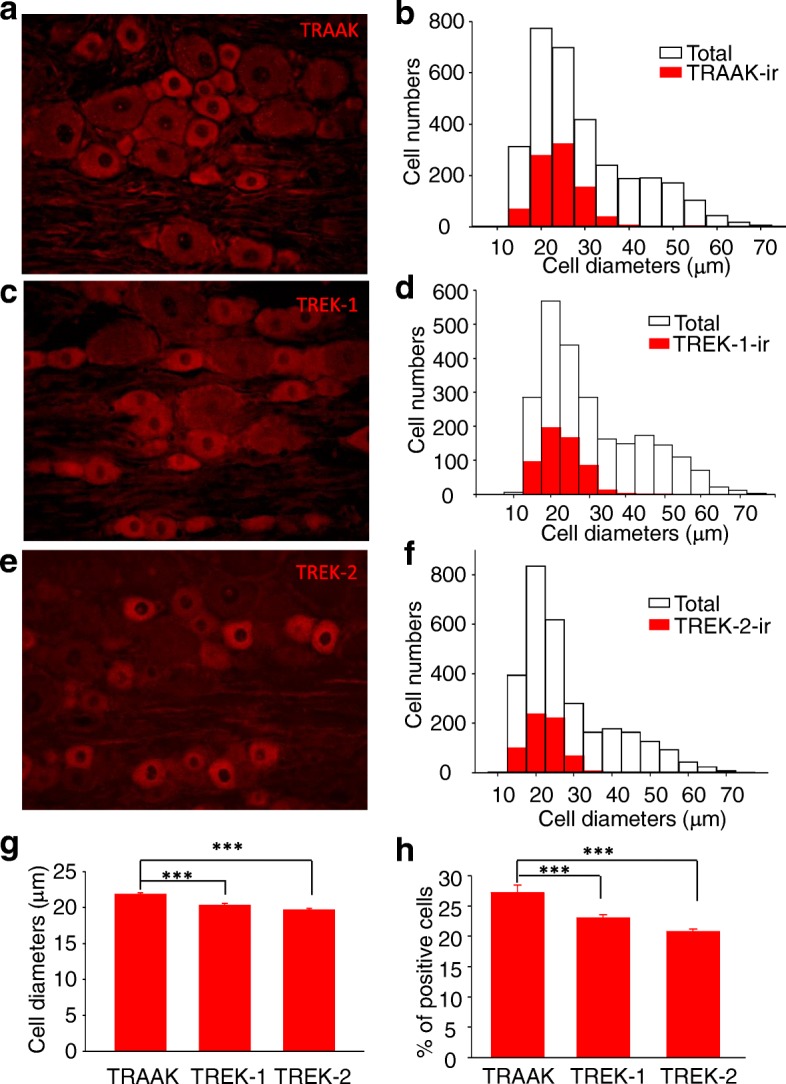
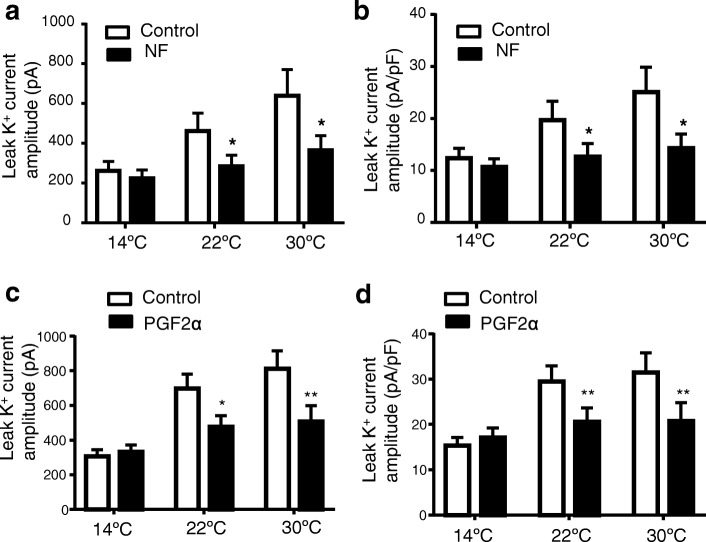
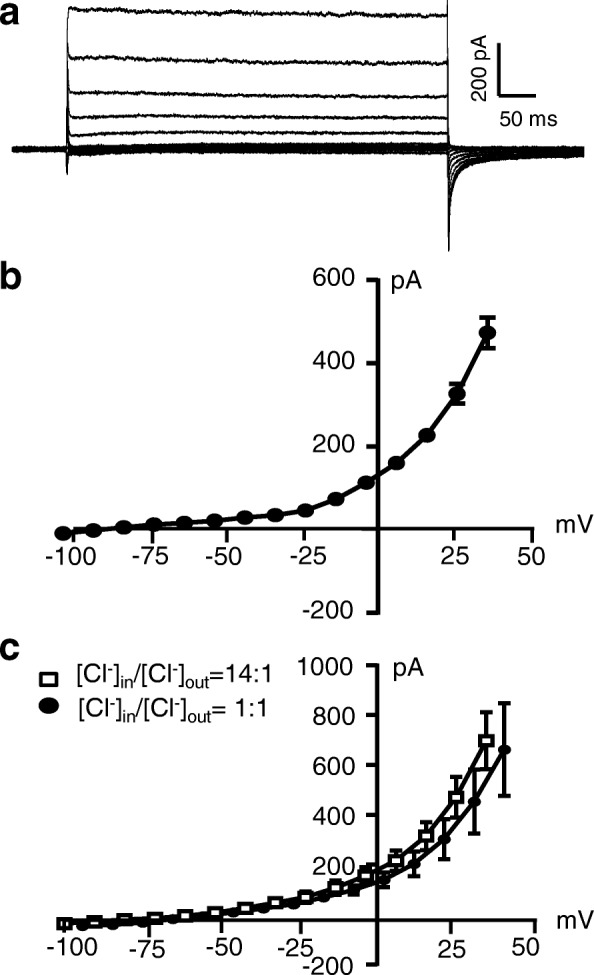
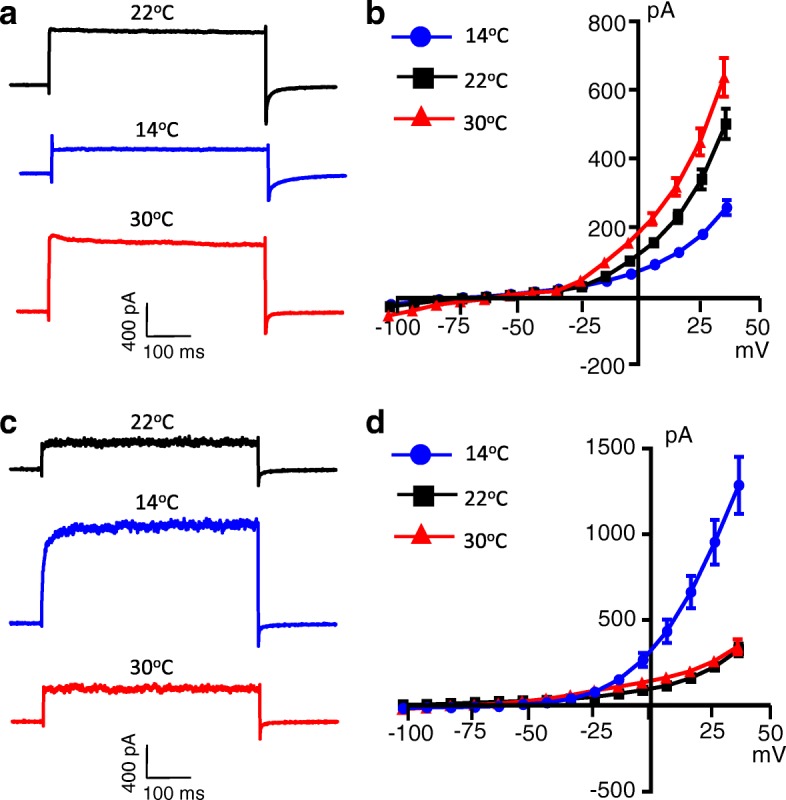
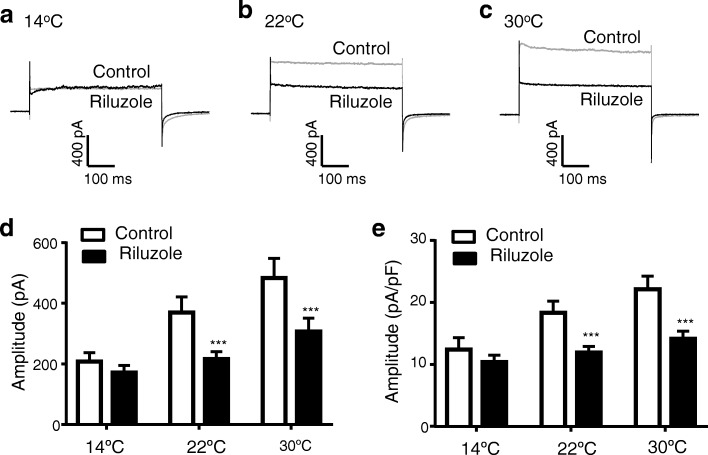
Leak K currents are mediated by two-pore domain K (K2P) channels and are involved in controlling neuronal excitability. Of 15 members of K2P channels cloned so far, TRAAK, TREK-1, and TREK-2 are temperature sensitive. In the present study, we show that strong immunoreactivity of TRAAK, TREK-1 and TREK-2 channels was present mainly in small-sized dorsal root ganglion (DRG) neurons of rats. The percentages of neurons with strong immunoreactivity of TRAAK, TREK-1 and TREK-2 channels were 27, 23, and 20%, respectively. Patch-clamp recordings were performed to examine isolated leak K currents on acutely dissociated small-sized rat DRG neurons at room temperature of 22 °C, cool temperature of 14 °C and warm temperature of 30 °C. In majority of small-sized DRG neurons recorded (76%), large leak K currents were observed at 22 °C and were inhibited at 14 °C and potentiated at 30 °C, suggesting the presence of temperature-sensitive K2P channels in these neurons. In a small population (18%) of small-sized DRG neurons, cool temperature of 14 °C evoked a conductance which was consistent with TRPM8 channel activation in cold-sensing DRG neurons. In these DRG neurons, leak K currents were very small at 22 °C and were not potentiated at 30 °C, suggesting that few temperature-sensitive K2P channels was present in cold-sensing DRG neurons. For DRG neurons with temperature-sensitive leak K currents, riluzole, norfluoxetine and prostaglandin F2α (PGE2α) inhibited the leak K currents at both 30 °C and 22 °C degree, and did not have inhibitory effects at 14 °C. Collectively, the observed temperature-sensitive leak K currents are consistent with the expression of temperature-sensitive K2P channels in small-sized DRG neurons.
漏钾电流由双孔域钾 (K2P) 通道介导,参与控制神经元兴奋性。迄今为止克隆的 15 种 K2P 通道成员中,TRAAK、TREK-1 和 TREK-2 对温度敏感。在本研究中,我们表明,TRAAK、TREK-1 和 TREK-2 通道的强烈免疫反应主要存在于大鼠背根神经节 (DRG) 的小神经元中。具有强免疫反应的 TRAAK、TREK-1 和 TREK-2 通道的神经元百分比分别为 27%、23%和 20%。在 22°C 的室温、14°C 的凉爽温度和 30°C 的温暖温度下,对急性分离的大鼠小 DRG 神经元进行膜片钳记录,以检测分离的漏钾电流。在记录的大多数小 DRG 神经元(76%)中,在 22°C 下观察到大的漏钾电流,在 14°C 下被抑制,在 30°C 下被增强,表明这些神经元中存在温度敏感的 K2P 通道。在一小部分(18%)小 DRG 神经元中,14°C 的凉爽温度会引起与冷感觉 DRG 神经元中 TRPM8 通道激活一致的电导。在这些 DRG 神经元中,22°C 时的漏钾电流非常小,30°C 时不会增强,表明冷感觉 DRG 神经元中存在少量温度敏感的 K2P 通道。对于具有温度敏感漏钾电流的 DRG 神经元,利鲁唑、诺氟西汀和前列腺素 F2α(PGE2α)在 30°C 和 22°C 时均抑制漏钾电流,在 14°C 时无抑制作用。综上所述,观察到的温度敏感漏钾电流与小 DRG 神经元中温度敏感的 K2P 通道表达一致。