Structural Biology and Biocomputing Programme, Spanish National Cancer Research Centre (CNIO), Macromolecular Crystallography Group, c/Melchor Fdez. Almagro 3, 28029, Madrid, Spain.
Structural Biology and Biocomputing Programme, Spanish National Cancer Research Centre (CNIO), Cell Signalling and Adhesion Group, c/Melchor Fdez. Almagro 3, 28029, Madrid, Spain.
Sci Rep. 2018 Jul 6;8(1):10286. doi: 10.1038/s41598-018-28599-0.
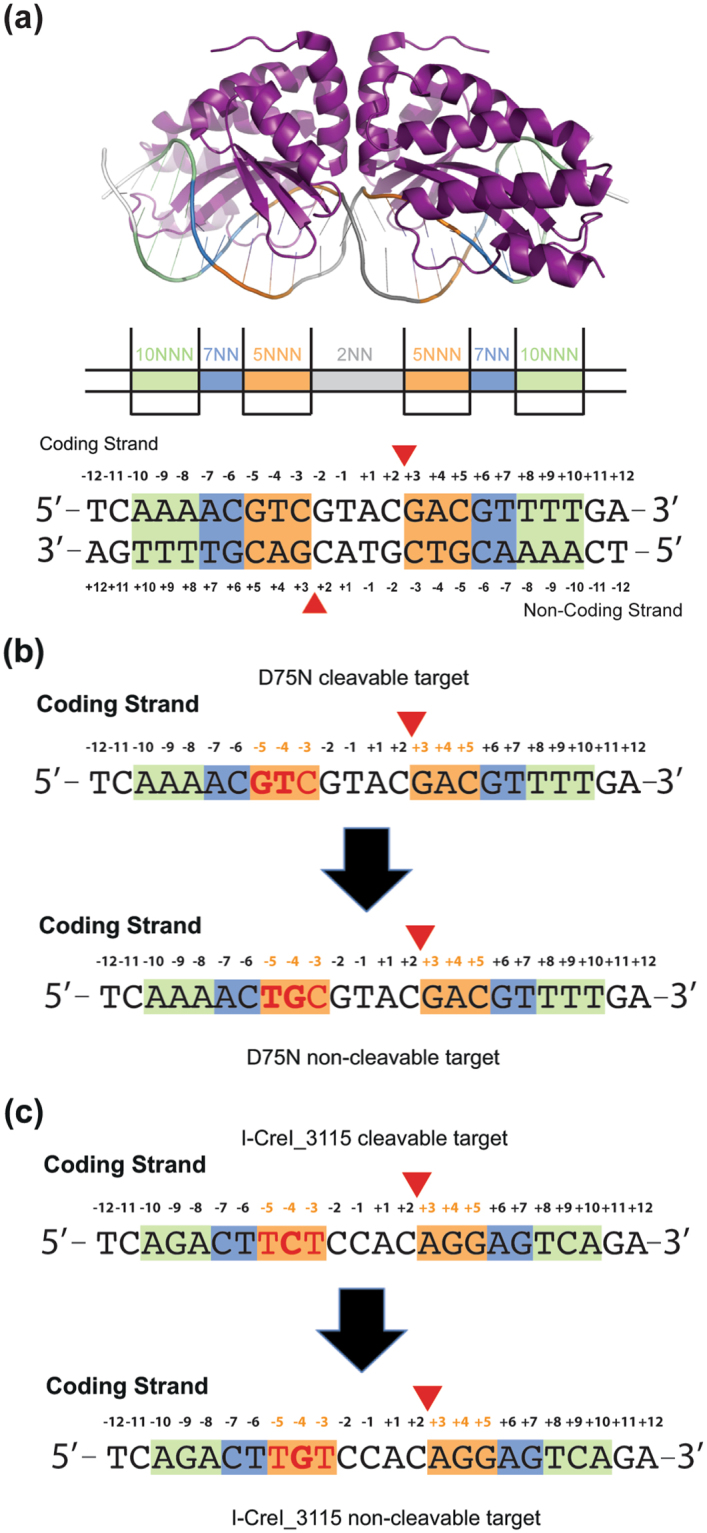
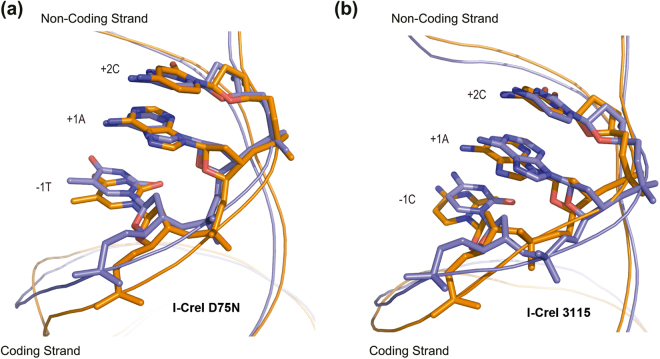
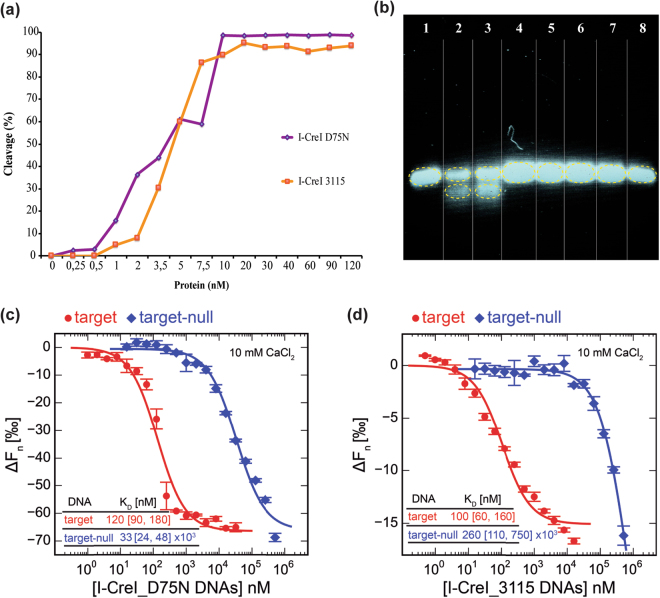
The high DNA specificity of homing endonucleases makes them a powerful protein scaffold to engineer enzymes for genome manipulation. Understanding their molecular recognition of DNA is an important prerequisite to generate engineered enzymes able to cleave DNA in specific desired genome sites. Protein-DNA recognition studies have been mostly focused on specific direct contacts between amino acid side chains and bases to redesign the binding interface. However, the important role of indirect readout in the central region of the target DNA of the homing endonuclease I-CreI suggested that indirect readout may play a key role in the redesign of protein-DNA interactions. The sequences of the I-CreI central substrate region, 2NN, along with the adjacent 5NNN, are key for substrate cleavage. Here, we analyse the mechanism of target discrimination at the 5NNN region by the I-CreI protein, revealing its critical role in the location and occupancy of the catalytic metal ions, which is crucial for cleavage. Our data highlight the importance of indirect readout for target DNA cleavage, thus aiding I-CreI engineering when targeting new DNA sequences.
归巢内切核酸酶具有很高的 DNA 特异性,这使它们成为用于基因组操作的酶工程的强大蛋白质支架。了解它们对 DNA 的分子识别是产生能够在特定所需基因组位点切割 DNA 的工程酶的重要前提。蛋白质-DNA 识别研究主要集中在氨基酸侧链和碱基之间的特定直接接触上,以重新设计结合界面。然而,归巢内切核酸酶 I-CreI 靶 DNA 中央区域的间接读出的重要作用表明,间接读出可能在蛋白质-DNA 相互作用的重新设计中发挥关键作用。I-CreI 中心底物区域 2NN 的序列以及相邻的 5NNN 是底物切割的关键。在这里,我们分析了 I-CreI 蛋白在 5NNN 区域的靶标区分机制,揭示了其在催化金属离子的位置和占据中的关键作用,这对切割至关重要。我们的数据强调了间接读出对靶 DNA 切割的重要性,从而有助于在针对新 DNA 序列时对 I-CreI 进行工程改造。