Department of Veterinary Public Health and Preventive Medicine, University of Jos, PMB 2084, Jos, Nigeria.
Infect Dis Poverty. 2018 Jul 9;7(1):69. doi: 10.1186/s40249-018-0451-2.
Soil transmitted helminth (STH) infections still remain a notable health problem in resource-limited countries due to difficulties in the implementation of control measures. In Nigeria for instance, despite several community-based and provincial reports, national data on prevalence, burdens and risk zones (RZs) for STH infections are lacking.
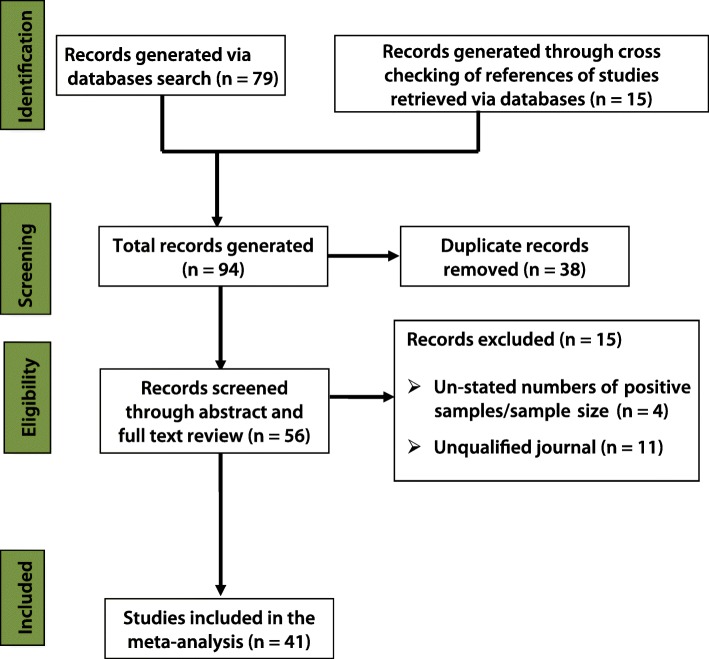
The present study employed the recommendations of the Preferred Reporting Items for Systematic Reviews and Meta-Analyses (PRISMA) to determine the prevalence, distribution and RZs for STH infections among Nigerian children through a meta-analysis of data published between 1980 and 2015. Pooled prevalence estimate (PPE) was determined by the random-effects model while heterogeneity was evaluated using the Cochran's Q-test.
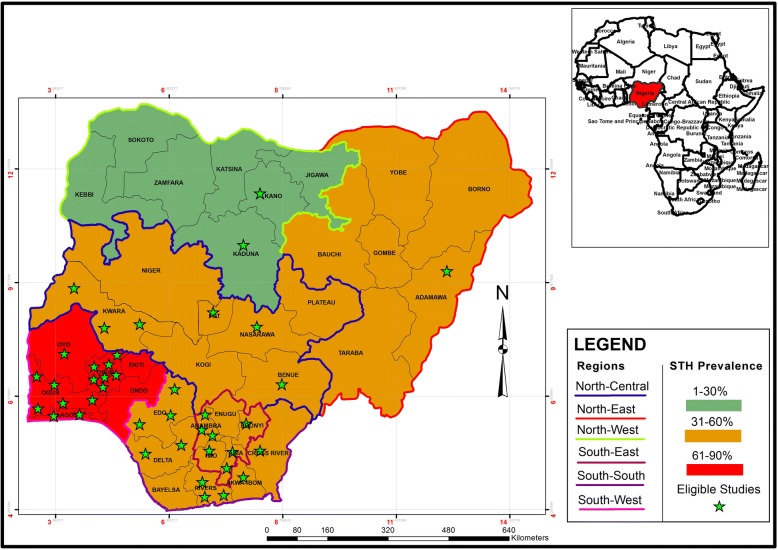
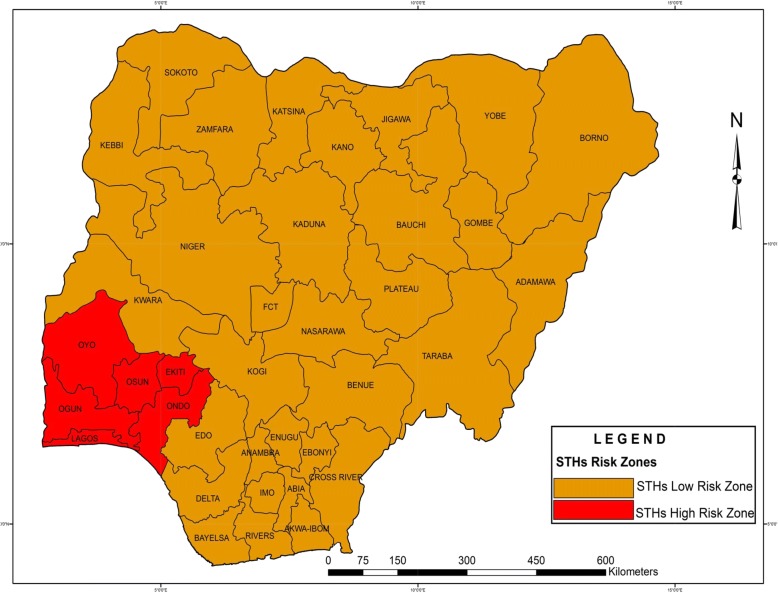
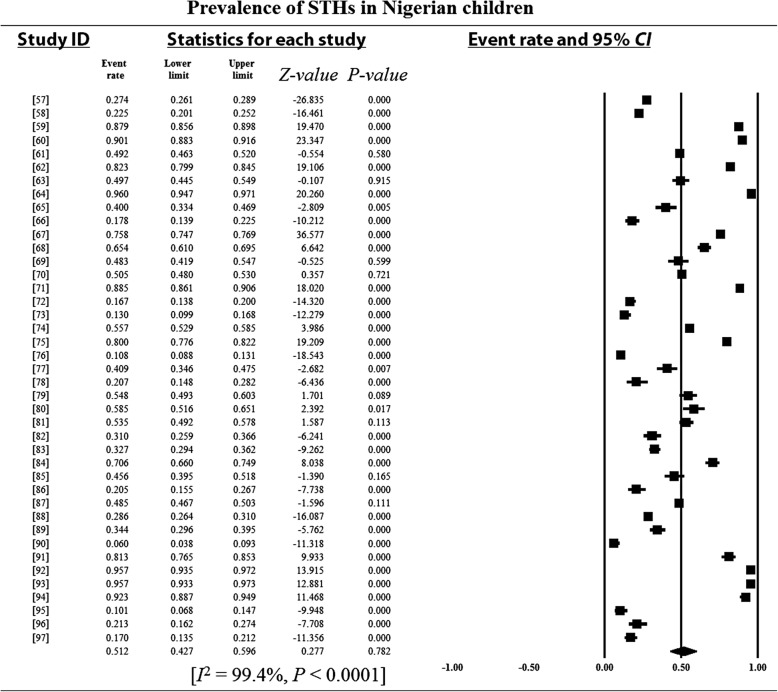
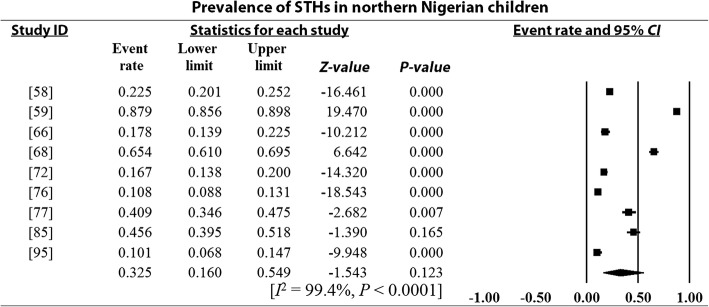
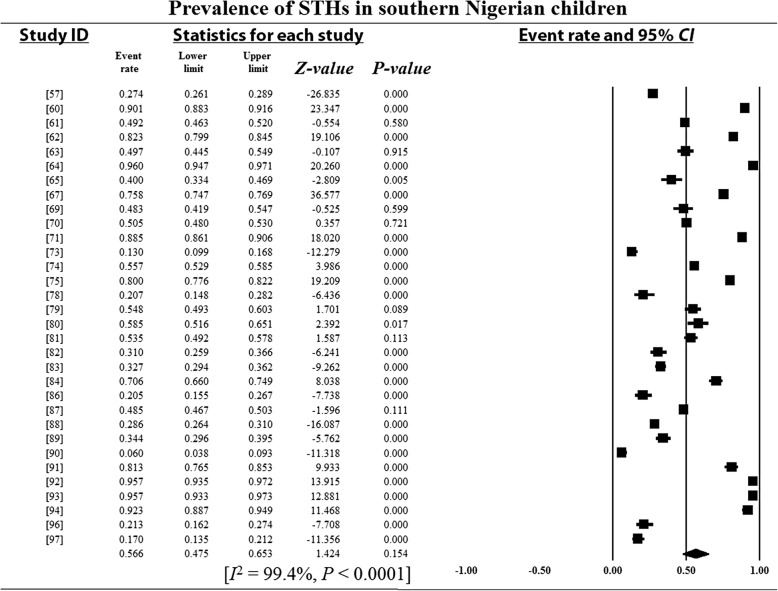
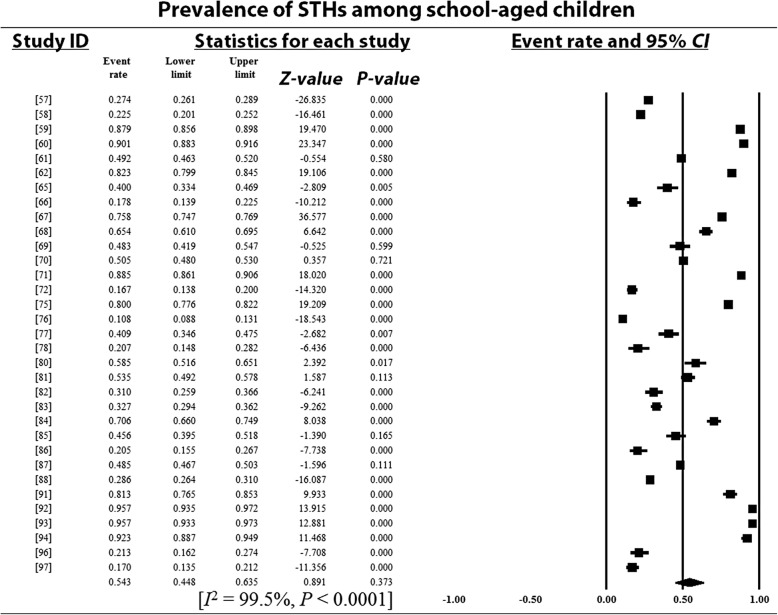
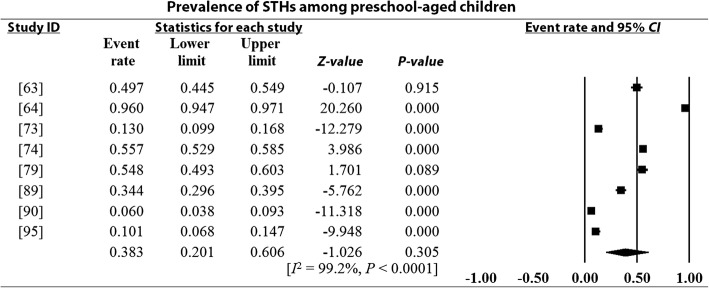
A total of 18 901 of the 34 518 Nigerian children aged 0-17 years examined across 19 Nigerian states during the period under review were infected with one or more species of STHs. The overall PPE for STH infections was 54.8% (95% CI: 54.2-55.3). PPEs for sub-groups ranged between 13.2% (95% CI: 11.5-15.1) and 80.9% (95% CI: 80.0-81.7). Highest PPEs for STH infections were observed among children within community settings (59.0%, 95% CI: 57.7-60.4) and school-aged children (54.9%, 95% CI: 54.3-55.5). Ascaris lumbricoides was the most prevalent species (44.6%, 95% CI: 44.0-45.2). Over 36% (15/41) of the studies were published from south-western Nigeria. South-western region was the only high risk zone (HRZ) for STH infections while the rest of the regions were low risk zones (LRZs).
STH infections involving Ascaris lumbricoides, Strongyloides stercoralis, Trichuris trichiura and hookworms are highly prevalent across Nigeria. Strategic use of anthelmintics, health education and adequate sanitation, taking into account this epidemiologic information will help in the control of these infections in Nigeria.
由于在实施控制措施方面存在困难,土壤传播的蠕虫(STH)感染仍然是资源有限国家的一个显著健康问题。例如,在尼日利亚,尽管有一些社区和省级报告,但缺乏关于 STH 感染的流行率、负担和风险区(RZ)的国家数据。
本研究采用系统评价和荟萃分析的首选报告项目(PRISMA)的建议,通过对 1980 年至 2015 年期间发表的数据进行荟萃分析,确定尼日利亚儿童的 STH 感染的流行率、分布和 RZ。汇总患病率估计值(PPE)通过随机效应模型确定,异质性通过 Cochrane's Q 检验进行评估。
在审查期间,共有 19 个尼日利亚州的 34518 名 0-17 岁的尼日利亚儿童中,有 18901 人被一种或多种 STH 物种感染。STH 感染的总体 PPE 为 54.8%(95%CI:54.2-55.3)。亚组的 PPE 范围在 13.2%(95%CI:11.5-15.1)至 80.9%(95%CI:80.0-81.7)之间。社区环境中儿童的 STH 感染 PPE 最高(59.0%,95%CI:57.7-60.4)和学龄儿童(54.9%,95%CI:54.3-55.5)。感染最普遍的物种是蛔虫(44.6%,95%CI:44.0-45.2)。超过 36%(15/41)的研究来自尼日利亚西南部。西南部地区是唯一的 STH 感染高风险区(HRZ),而其余地区是低风险区(LRZ)。
尼日利亚普遍存在蛔虫、粪类圆线虫、鞭虫和钩虫等 STH 感染。战略性地使用驱虫药、健康教育和充足的卫生设施,并考虑到这些流行病学信息,将有助于控制尼日利亚的这些感染。