Department of Intensive Care Medicine, Radboud University Medical Center, Nijmegen, the Netherlands; Department of Anesthesiology, Radboud University Medical Centre, Nijmegen, the Netherlands; Radboud Center for Infectious Diseases (RCI), Radboud University Medical Center, Nijmegen, the Netherlands.
Heisenberg Research Group, Department of Clinical Pathobiochemistry, Institute for Clinical Chemistry and Laboratory Medicine, Technische Universität Dresden, Dresden, Germany.
EBioMedicine. 2018 Jul;33:144-156. doi: 10.1016/j.ebiom.2018.06.021. Epub 2018 Jul 4.
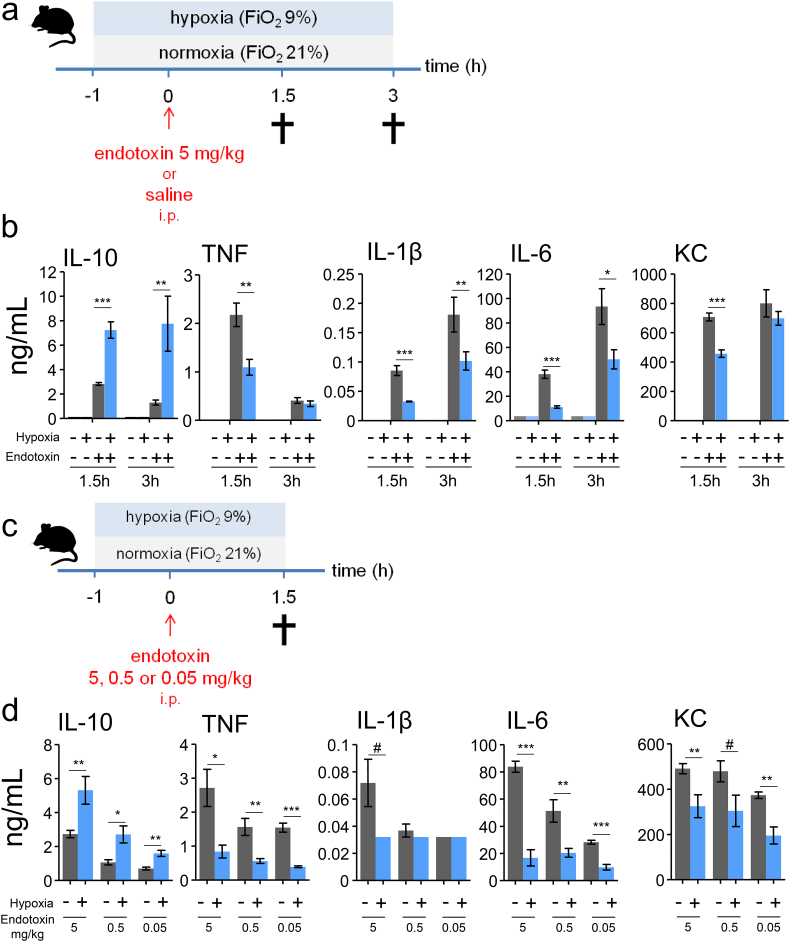
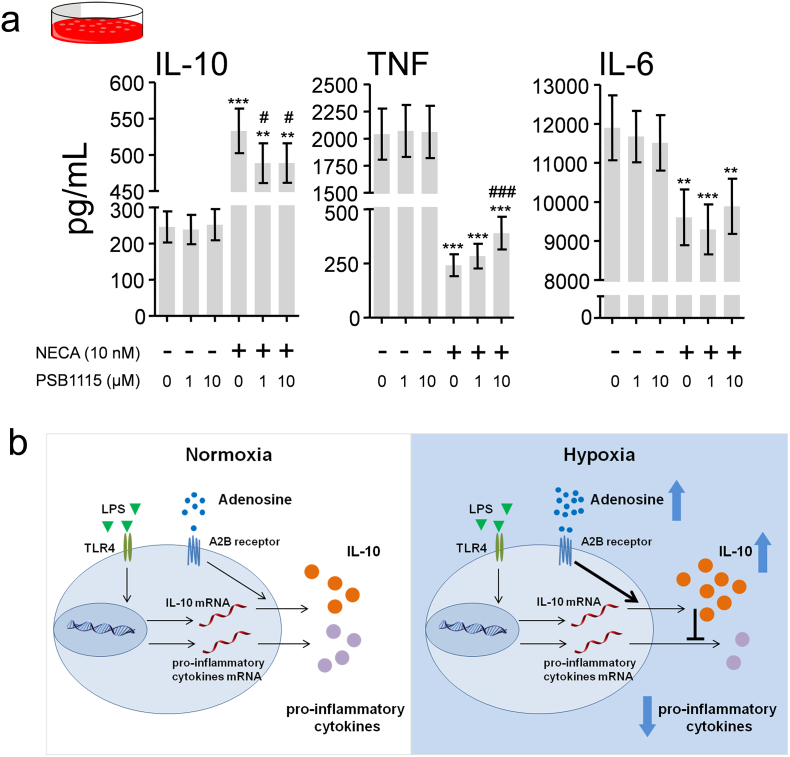
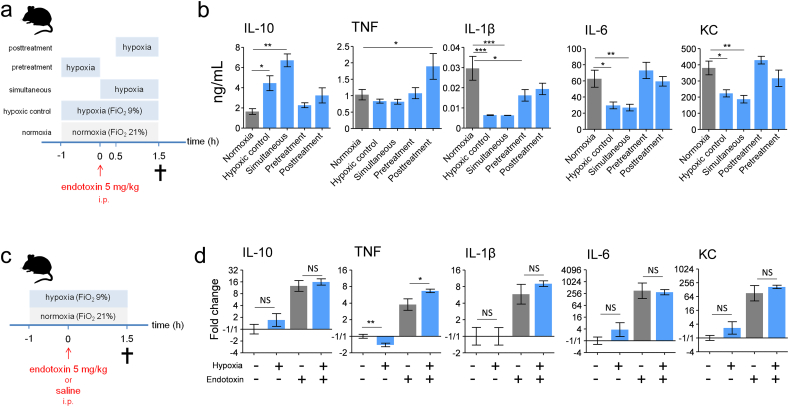
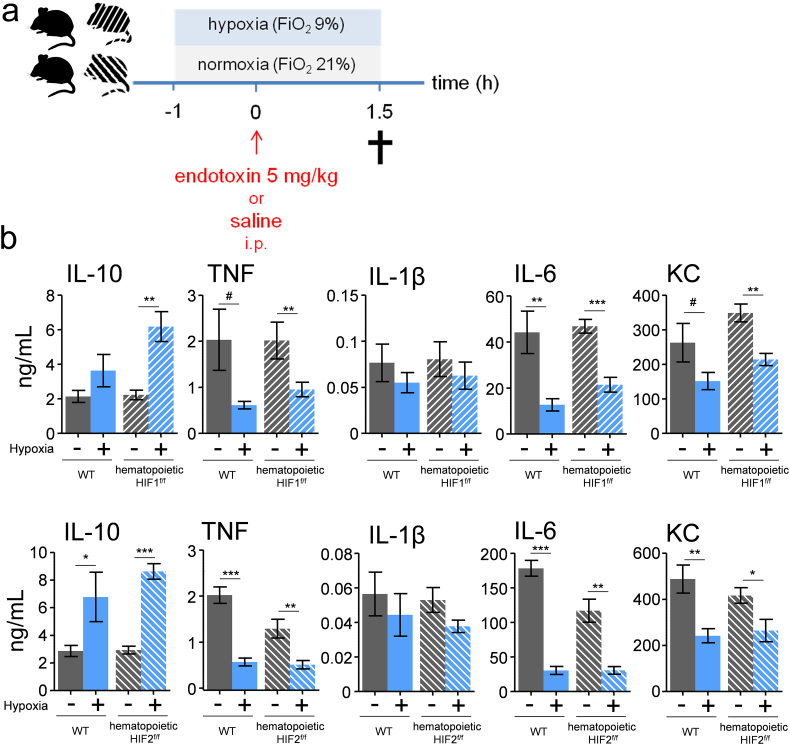
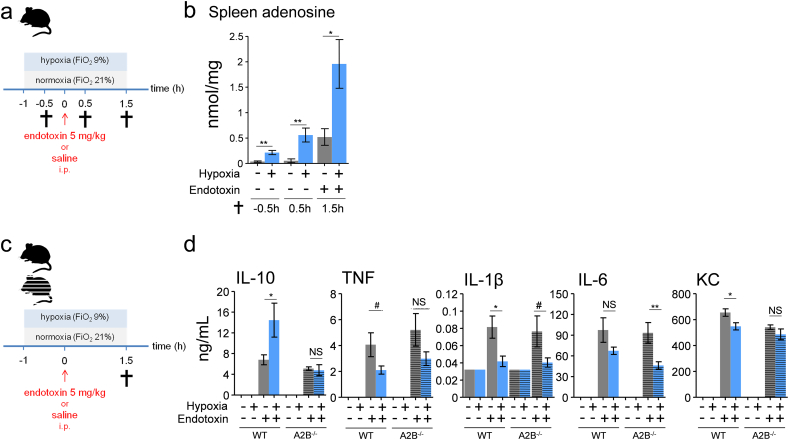
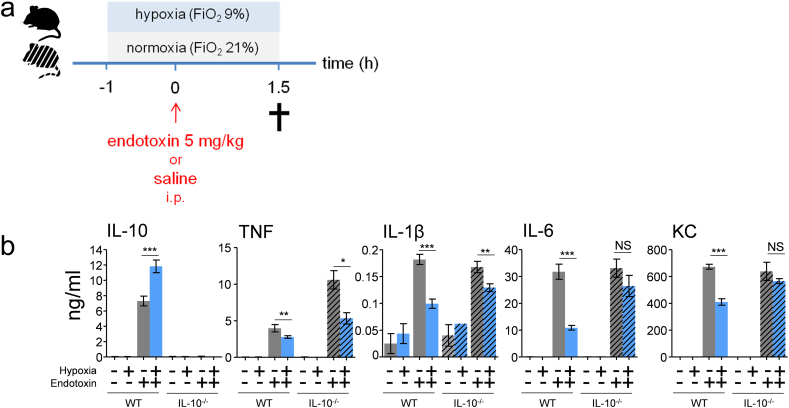
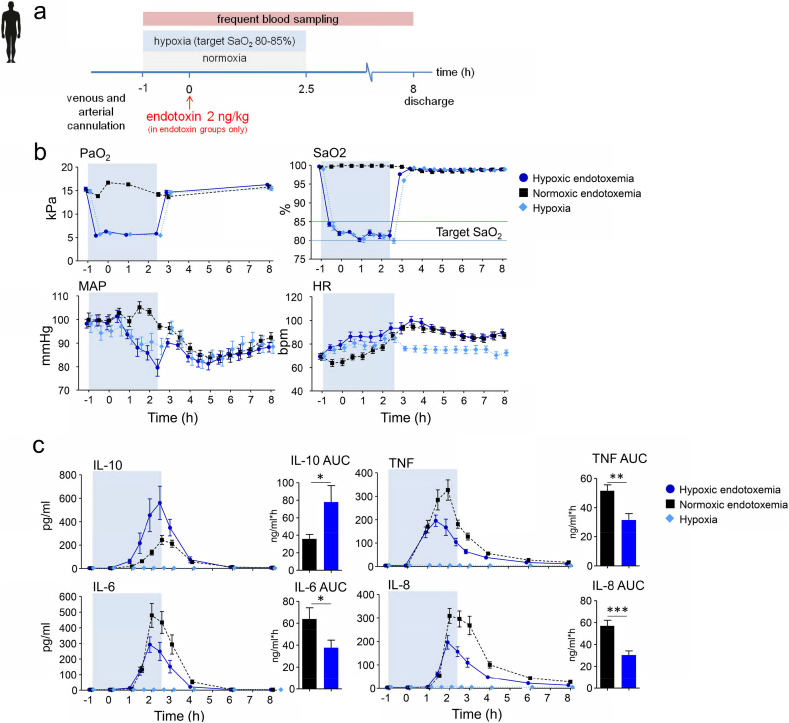
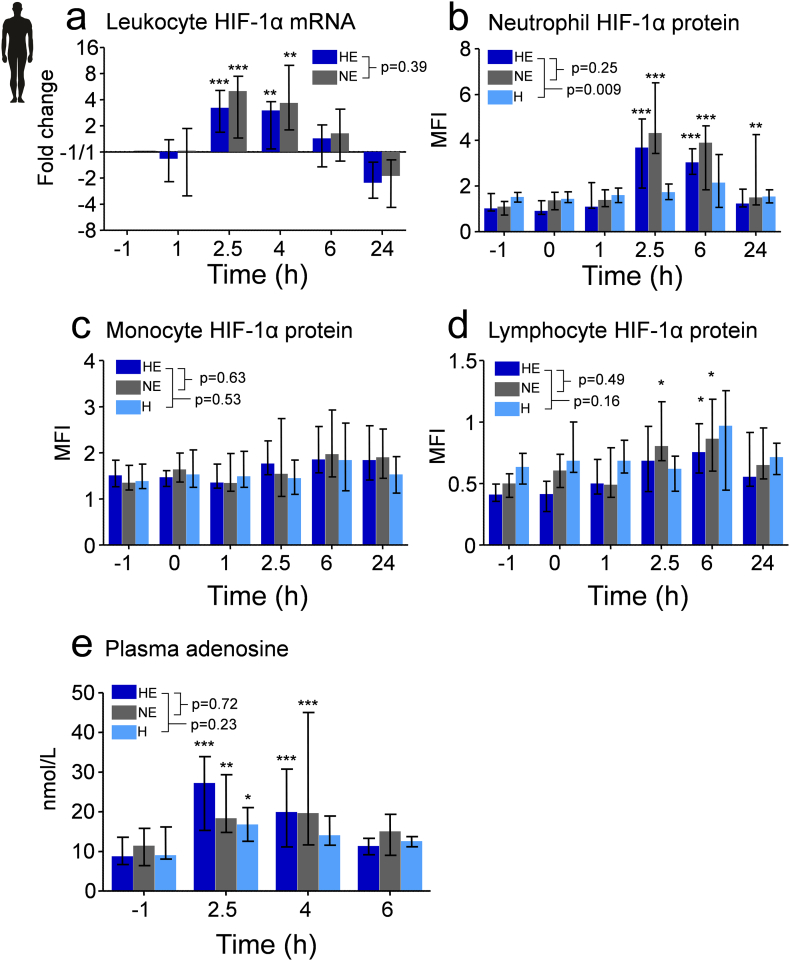
Hypoxia and inflammation are closely intertwined phenomena. Critically ill patients often suffer from systemic inflammatory conditions and concurrently experience short-lived hypoxia. We evaluated the effects of short-term hypoxia on systemic inflammation, and show that it potently attenuates pro-inflammatory cytokine responses during murine endotoxemia. These effects are independent of hypoxia-inducible factors (HIFs), but involve augmented adenosine levels, in turn resulting in an adenosine 2B receptor-mediated post-transcriptional increase of interleukin (IL)-10 production. We translated our findings to humans using the experimental endotoxemia model, where short-term hypoxia resulted in enhanced plasma concentrations of adenosine, augmentation of endotoxin-induced circulating IL-10 levels, and concurrent attenuation of the pro-inflammatory cytokine response. Again, HIFs were shown not to be involved. Taken together, we demonstrate that short-term hypoxia dampens the systemic pro-inflammatory cytokine response through enhanced purinergic signaling in mice and men. These effects may contribute to outcome and provide leads for immunomodulatory treatment strategies for critically ill patients.
缺氧和炎症是密切相关的现象。危重病患者常患有全身性炎症状态,同时经历短暂的缺氧。我们评估了短期缺氧对全身炎症的影响,并表明它在小鼠内毒素血症中强烈减弱促炎细胞因子反应。这些作用不依赖于缺氧诱导因子(HIFs),但涉及增强的腺苷水平,进而导致白细胞介素(IL)-10 产生的腺苷 2B 受体介导的转录后增加。我们使用实验性内毒素血症模型将我们的发现转化为人类,其中短期缺氧导致血浆中腺苷浓度升高,增强内毒素诱导的循环 IL-10 水平,并同时减弱促炎细胞因子反应。同样,没有显示 HIFs 参与。总之,我们证明短期缺氧通过增强小鼠和人类的嘌呤能信号来抑制全身促炎细胞因子反应。这些作用可能有助于预后,并为危重病患者的免疫调节治疗策略提供线索。