Epidemiology Group, University of Aberdeen, UK.
Aberdeen Centre for Arthritis and Musculoskeletal Health, University of Aberdeen, UK.
Eur J Pain. 2019 Jan;23(1):15-30. doi: 10.1002/ejp.1285. Epub 2018 Aug 7.
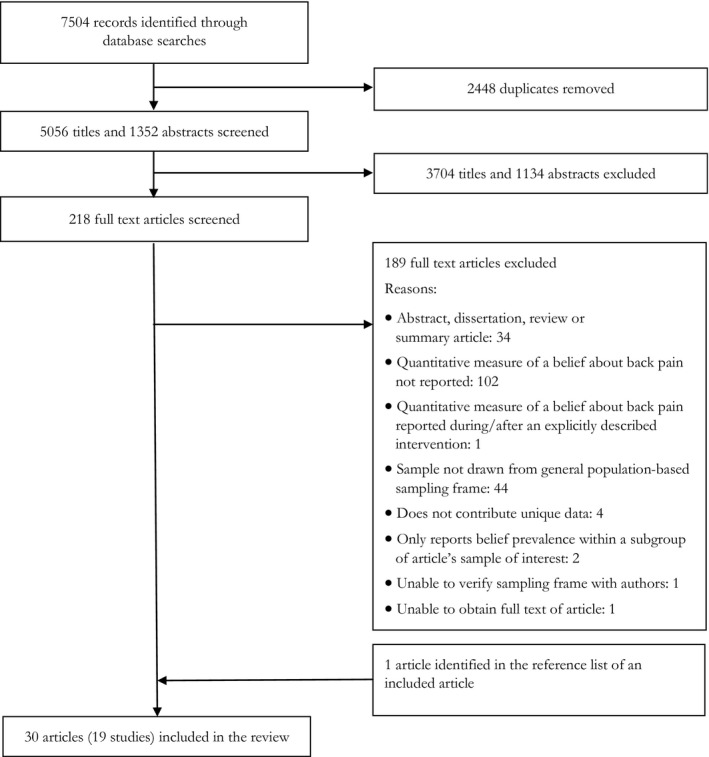
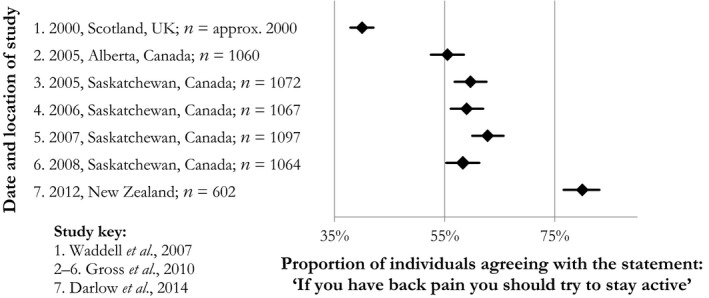
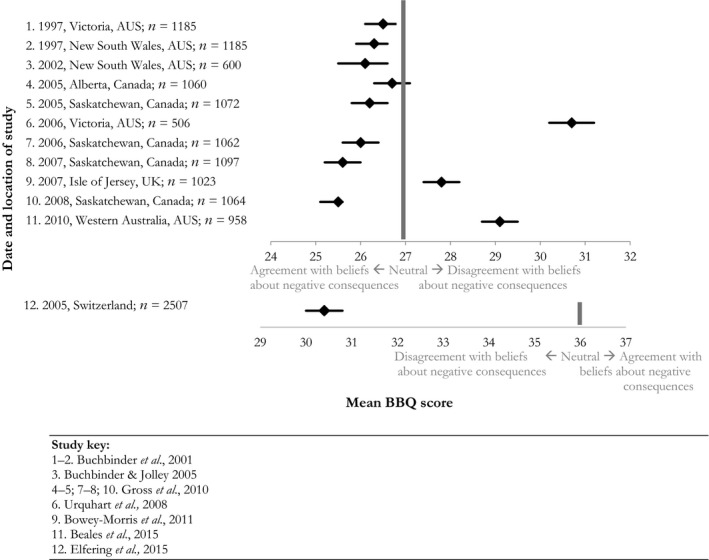
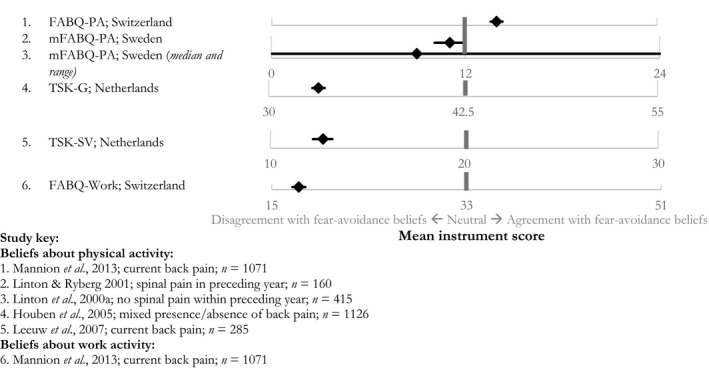
Previous mass media campaigns have aimed to influence how people manage back pain, with mixed success. Campaigns should target beliefs which are related to the behaviours they aim to change. This systematic review brings together research that has measured the prevalence of beliefs about back pain in the general population and factors associated with these beliefs, including future pain-related outcomes. Five databases were searched up until April 2017. Quantitative studies which reported a measure of agreement with a belief about back pain, cross-sectional associations, or associations between beliefs and future outcomes were eligible. Eligibility was assessed and data extracted independently by two authors. Results were tabulated and narratively synthesized. Nineteen studies from 10 countries were eligible (median study n [IQR] = 990.5 [524.75-2387.5]). Beliefs were measured using eight questionnaires and 57 stand-alone items. Beliefs about back pain's negative consequences were common across countries and populations, whereas most samples did not hold fear-avoidance beliefs. Beliefs about back pain's consequences were associated with pain and disability, but only one study investigated this specific relationship prospectively. No studies investigated whether beliefs are associated with future pain management behaviours. Agreement with certain beliefs (e.g. about negative consequences) was associated with sociodemographic characteristics (e.g. older age) and poorer self-rated health. Interventions may benefit from targeting beliefs about the perceived negative consequences of back pain in these populations. However, future research should explore how beliefs prospectively influence the management of back pain. SIGNIFICANCE: This review brings together studies which have assessed the prevalence of beliefs about back pain, and factors associated with holding them. It highlights that whether or not these beliefs represent important determinants of how people manage pain remains unknown.
先前的大众媒体宣传活动旨在影响人们对背痛的管理方式,但效果参差不齐。宣传活动应该针对那些与他们试图改变的行为相关的信念。本系统综述汇集了研究,这些研究测量了一般人群中对背痛的信念的流行程度以及与这些信念相关的因素,包括未来与疼痛相关的结果。从 2017 年 4 月开始,对五个数据库进行了搜索。符合以下条件的定量研究均符合入选标准:报告了对背痛信念的一致性衡量标准、横断面关联或信念与未来结果之间的关联。两名作者独立评估了合格性并提取了数据。结果以表格形式列出并进行了叙述性综合。来自 10 个国家的 19 项研究符合入选标准(中位数研究 n [IQR] = 990.5 [524.75-2387.5])。使用了 8 种问卷和 57 个独立项目来测量背痛信念。各国和各人群普遍存在对背痛负面后果的信念,而大多数样本没有持有恐惧回避信念。对背痛后果的信念与疼痛和残疾有关,但只有一项研究前瞻性地研究了这种特定关系。没有研究调查信念是否与未来的疼痛管理行为有关。对某些信念(例如对负面后果的信念)的一致性与社会人口学特征(例如年龄较大)和较差的自我报告健康状况有关。干预措施可能受益于针对这些人群对背痛负面后果的感知信念。然而,未来的研究应该探索信念如何前瞻性地影响背痛的管理。意义:本综述汇集了评估对背痛的信念的流行程度以及与信念相关的因素的研究。它强调了这些信念是否代表人们管理疼痛的重要决定因素仍不清楚。