Unit of Insect Vector Genetics and Genomics, Department of Parasites and Insect Vectors, Institut Pasteur, Paris, France.
CNRS Unit of Evolutionary Genomics, Modeling, and Health (UMR2000), Institut Pasteur, Paris, France.
BMC Genomics. 2018 Jul 9;19(1):526. doi: 10.1186/s12864-018-4918-0.
Anopheles mosquitoes are efficient vectors of human malaria, but it is unknown why they do not transmit viruses as well as Aedes and Culex mosquitoes. The only arbovirus known to be consistently transmitted by Anopheles mosquitoes is O'nyong nyong virus (ONNV, genus Alphavirus, family Togaviridae). The interaction of Anopheles mosquitoes with RNA viruses has been relatively unexamined.
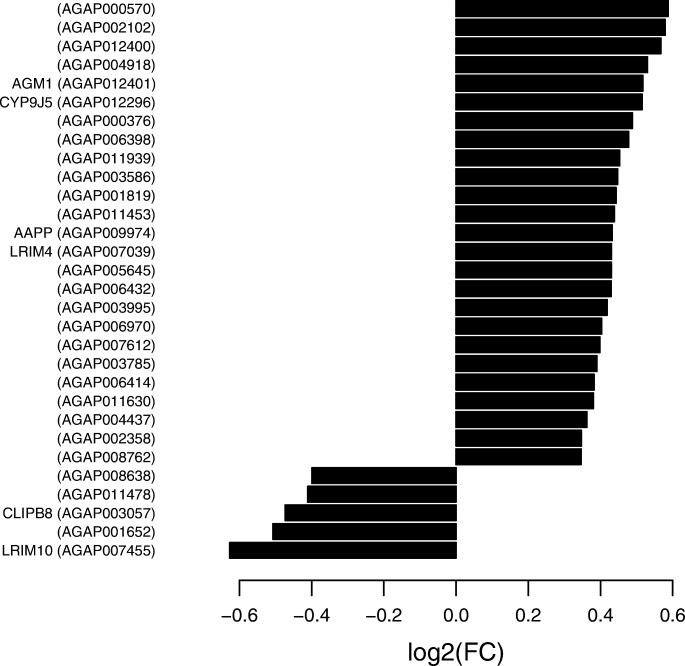
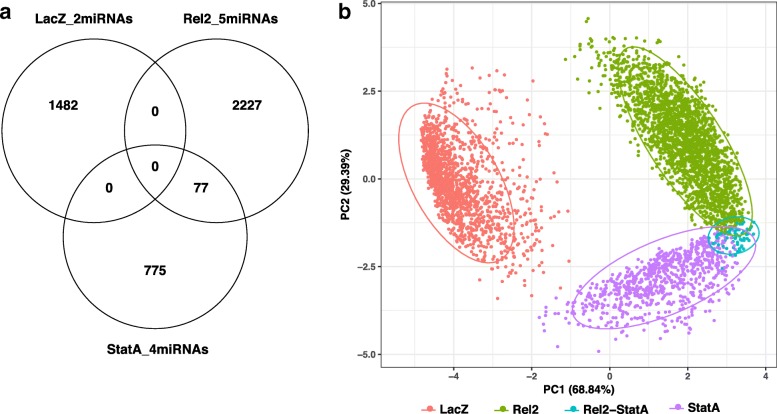
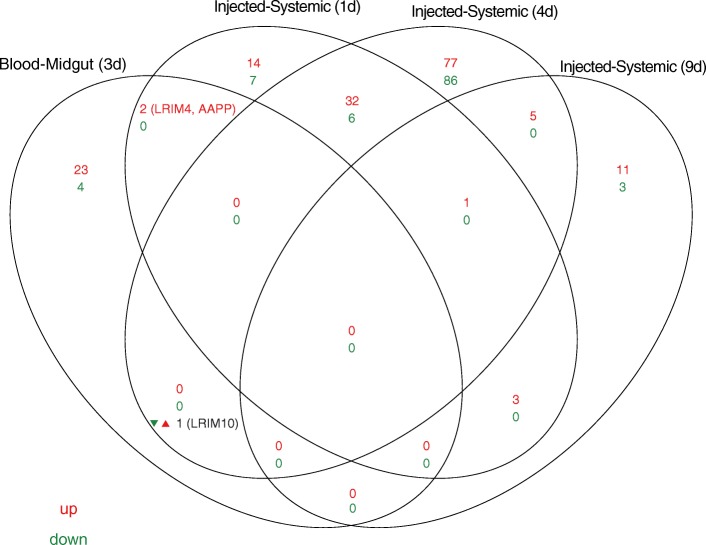
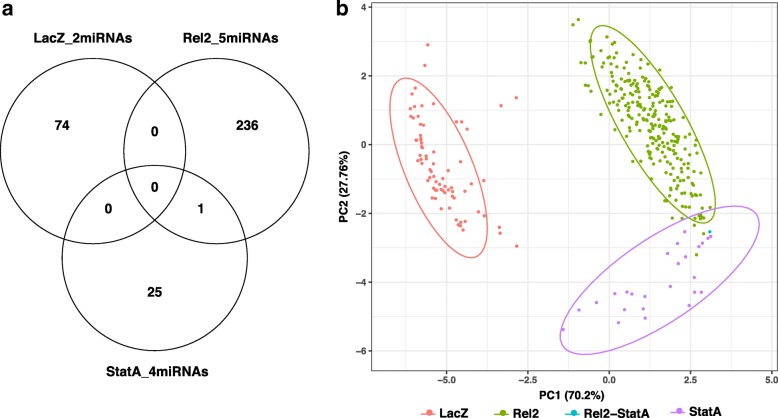
We transcriptionally profiled the African malaria vector, Anopheles coluzzii, infected with ONNV. Mosquitoes were fed on an infectious bloodmeal and were analyzed by Illumina RNAseq at 3 days post-bloodmeal during the primary virus infection of the midgut epithelium, before systemic dissemination. Virus infection triggers transcriptional regulation of just 30 host candidate genes. Most of the regulated candidate genes are novel, without known function. Of the known genes, a significant cluster includes candidates with predicted involvement in carbohydrate metabolism. Two candidate genes encoding leucine-rich repeat immune (LRIM) factors point to possible involvement of immune protein complexes in the mosquito antiviral response. The primary ONNV infection by bloodmeal shares little transcriptional response in common with ONNV infection by intrathoracic injection, nor with midgut infection by the malaria parasites, Plasmodium falciparum or P. berghei. Profiling of A. coluzzii microRNA (miRNA) identified 118 known miRNAs and 182 potential novel miRNA candidates, with just one miRNA regulated by ONNV infection. This miRNA was not regulated by other previously reported treatments, and may be virus specific. Coexpression analysis of miRNA abundance and messenger RNA expression revealed discrete clusters of genes regulated by Imd and JAK/STAT, immune signaling pathways that are protective against ONNV in the primary infection.
ONNV infection of the A. coluzzii midgut triggers a remarkably limited gene regulation program of mostly novel candidate genes, which likely includes host genes deployed for antiviral defense, as well as genes manipulated by the virus to facilitate infection. Functional dissection of the ONNV-response candidate genes is expected to generate novel insight into the mechanisms of virus-vector interaction.
按蚊是人类疟疾的高效传播媒介,但目前尚不清楚为何它们不能像伊蚊和库蚊那样传播病毒。唯一已知由按蚊持续传播的虫媒病毒是奥尼永尼翁病毒(ONNV,属甲病毒科,黄病毒科)。按蚊与 RNA 病毒的相互作用尚未得到充分研究。
我们对感染 ONNV 的非洲疟媒按蚊 Anopheles coluzzii 进行了转录谱分析。这些蚊子在初次感染中肠上皮的病毒感染时,通过吸食感染性血液餐,并在 3 天后通过 Illumina RNAseq 进行分析,在系统传播之前。病毒感染仅触发了 30 个宿主候选基因的转录调控。大多数被调控的候选基因是新的,没有已知的功能。在已知基因中,一个显著的簇包括具有预测参与碳水化合物代谢的候选基因。两个编码富含亮氨酸重复免疫(LRIM)因子的候选基因表明,免疫蛋白复合物可能参与了蚊子的抗病毒反应。通过血液餐初次感染 ONNV 的转录反应与通过胸内注射感染 ONNV 的反应以及疟原虫(恶性疟原虫或伯氏疟原虫)感染中肠的反应很少有共同之处。对 A. coluzzii 微小 RNA(miRNA)的分析确定了 118 个已知 miRNA 和 182 个潜在的新 miRNA 候选物,只有一个 miRNA 受 ONNV 感染调控。这种 miRNA 不受其他先前报道的处理方式的调控,可能是病毒特异性的。miRNA 丰度和信使 RNA 表达的共表达分析显示,受 Imd 和 JAK/STAT 调控的基因簇是离散的,这些免疫信号通路在初次感染中对 ONNV 具有保护作用。
ONNV 感染 A. coluzzii 中肠会引发一个非常有限的基因调控程序,其中大部分是新的候选基因,这些基因可能包括用于抗病毒防御的宿主基因,以及被病毒操纵以促进感染的基因。对 ONNV 反应候选基因的功能剖析有望为病毒-媒介相互作用的机制提供新的见解。