Everett R D
EMBO J. 1985 Aug;4(8):1973-80. doi: 10.1002/j.1460-2075.1985.tb03880.x.
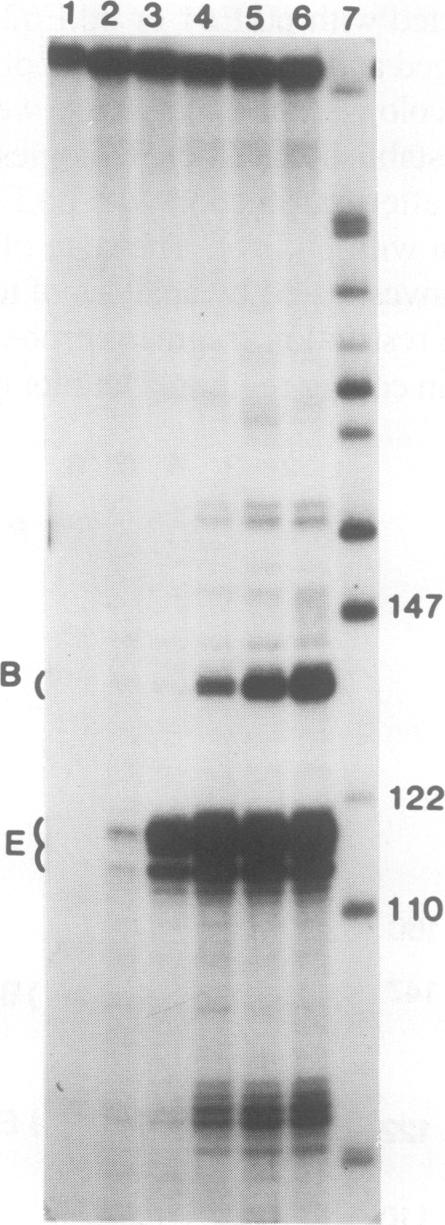
At least two of the immediate-early (IE) products of herpes simplex virus-1 (HSV-1) are responsible for the activation of transcription from viral early promoters. This process appears not to be promoter specific since several unrelated viral and cellular plasmid-borne promoters can also be activated in short-term transfection assays. This paper describes experiments that show that cellular promoters integrated into the host genome can also be activated during viral infection, and that this process is brought about by IE gene products. Biochemically transformed cell lines were isolated following transfection of plasmids containing the human epsilon-globin promoter linked to the herpes thymidine kinase coding region (as selectable marker), and an unselected rabbit beta-globin gene. Infection of some, but not all, such cell lines with HSV-1 resulted in a rapid and considerable stimulation of the integrated epsilon- and beta-globin promoters. Both promoters could also be activated (albeit less efficiently) during pseudorabies virus infection, and after introduction by transfection of plasmids containing HSV IE genes. The implications of these results for viral-host interactions and the mechanism of viral-induced promoter activation are discussed.
单纯疱疹病毒1型(HSV-1)的至少两种立即早期(IE)产物负责激活病毒早期启动子的转录。由于几种不相关的病毒和细胞质粒携带的启动子在短期转染试验中也能被激活,所以这个过程似乎不是启动子特异性的。本文描述的实验表明,整合到宿主基因组中的细胞启动子在病毒感染期间也能被激活,并且这个过程是由IE基因产物引起的。在转染含有与疱疹胸苷激酶编码区(作为选择标记)相连的人ε-珠蛋白启动子的质粒以及一个未选择的兔β-珠蛋白基因后,分离出了生化转化的细胞系。用HSV-1感染其中一些(但不是全部)这样的细胞系,导致整合的ε-和β-珠蛋白启动子迅速且显著地被激活。在伪狂犬病病毒感染期间以及转染含有HSV IE基因的质粒后,这两种启动子也能被激活(尽管效率较低)。讨论了这些结果对病毒-宿主相互作用以及病毒诱导的启动子激活机制的影响。