Svensson C, Akusjärvi G
EMBO J. 1984 Apr;3(4):789-94. doi: 10.1002/j.1460-2075.1984.tb01886.x.
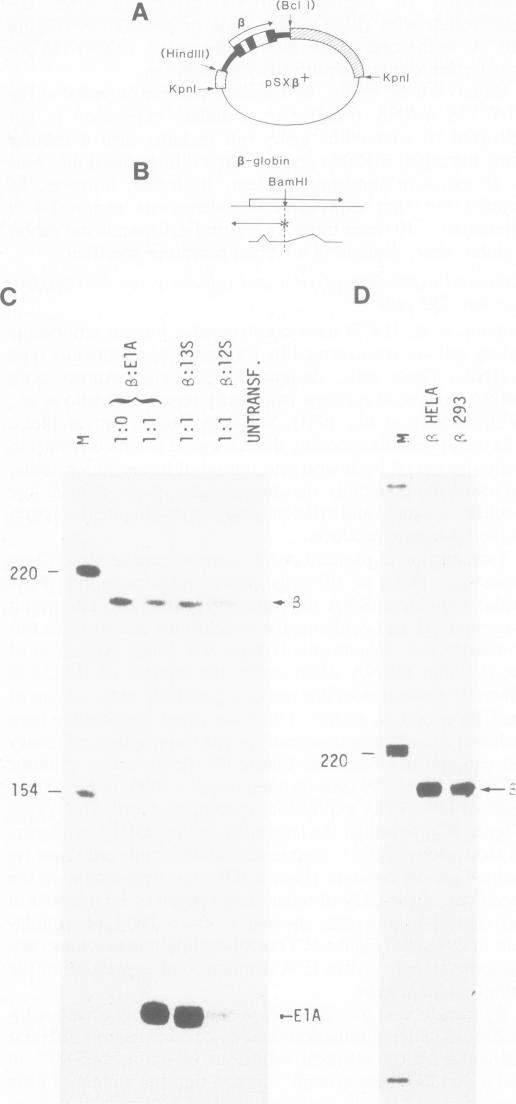
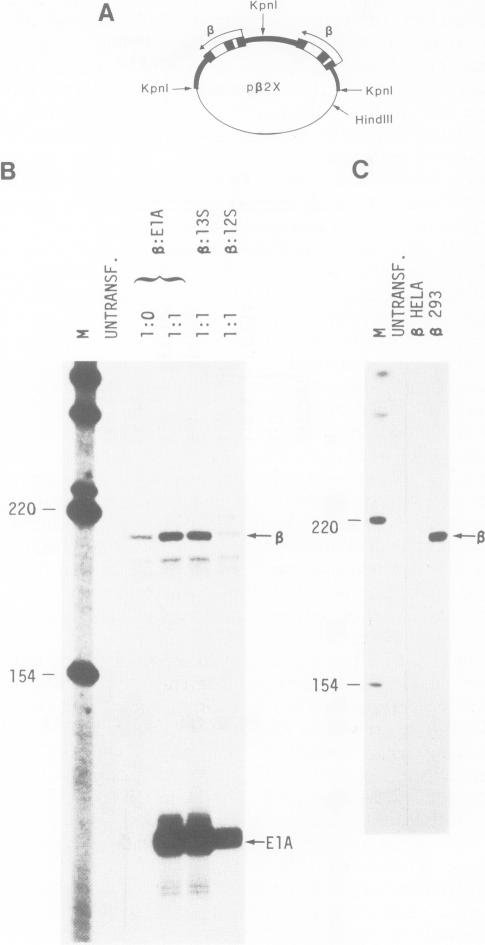
The ability of products from the adenovirus early region 1A to stimulate viral and cellular gene expression has been studied, using a transient expression assay in HeLa cells. We show that the E1A 13S mRNA encodes a diffusible product which is capable of stimulating transcription of adenovirus genes as well as the rabbit beta-globin gene. The E1A 12S mRNA has no detectable stimulatory effect on either cellular or viral genes. Although being able to stimulate both types of genes, we find that the E1A regulatory protein enhances viral gene expression approximately 10 times more than beta-globin gene expression. We also find that when connected to the cis-acting SV40 enhancer element, the beta-globin gene cannot be further stimulated by the trans-acting E1A product. Finally, we find that transfection of either adenovirus or the beta-globin gene into 293 cells, which constitutively expresses the E1A gene products, leads to an enhanced expression which is 10- to 20-fold higher than obtained by co-transfection of HeLa cells. The 293 cells thus provide a simple assay to demonstrate E1A-mediated transcriptional regulation.
利用在HeLa细胞中的瞬时表达分析,对腺病毒早期区域1A的产物刺激病毒和细胞基因表达的能力进行了研究。我们发现,E1A 13S mRNA编码一种可扩散产物,它能够刺激腺病毒基因以及兔β-珠蛋白基因的转录。E1A 12S mRNA对细胞基因或病毒基因均未检测到刺激作用。尽管能够刺激这两种类型的基因,但我们发现E1A调节蛋白增强病毒基因表达的能力比增强β-珠蛋白基因表达的能力大约高10倍。我们还发现,当与顺式作用的SV40增强子元件连接时,β-珠蛋白基因不能被反式作用的E1A产物进一步刺激。最后,我们发现将腺病毒或β-珠蛋白基因转染到组成型表达E1A基因产物的293细胞中,会导致表达增强,比共转染HeLa细胞所获得的表达高10至20倍。因此,293细胞提供了一种简单的分析方法来证明E1A介导的转录调控。