Department of Pathology, Johns Hopkins University School of Medicine, Baltimore, MD, USA.
Sidney Kimmel Comprehensive Cancer Center, Baltimore, MD, USA.
Prostate Cancer Prostatic Dis. 2018 Nov;21(4):539-548. doi: 10.1038/s41391-018-0061-x. Epub 2018 Jul 9.
It is well known that the gastrointestinal (GI) microbiota can influence the metabolism, pharmacokinetics, and toxicity of cancer therapies. Conversely, the effect of cancer treatments on the composition of the GI microbiota is poorly understood. We hypothesized that oral androgen receptor axis-targeted therapies (ATT), including bicalutamide, enzalutamide, and abiraterone acetate, may be associated with compositional differences in the GI microbiota.
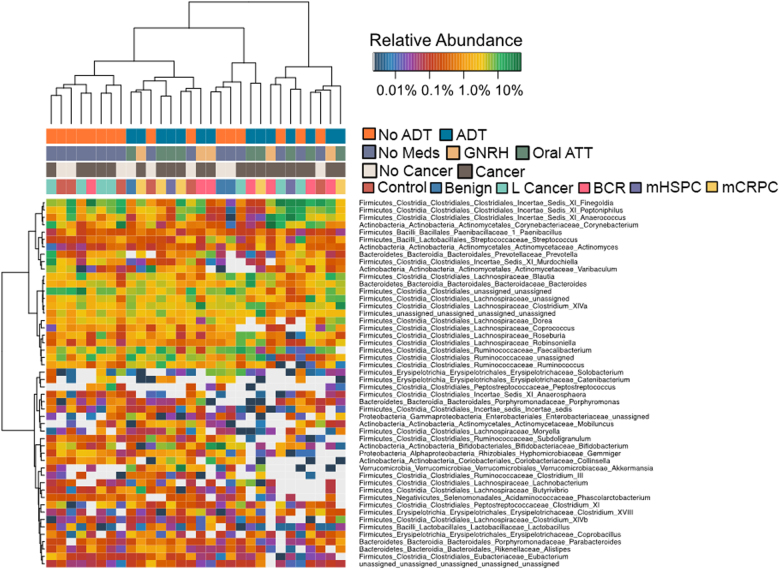
We profiled the fecal microbiota in a cross-sectional study of 30 patients that included healthy male volunteers and men with different clinical states of prostate cancer (i.e., localized, biochemically recurrent, and metastatic disease) using 16S rDNA amplicon sequencing. Functional inference of identified taxa was performed using PICRUSt.
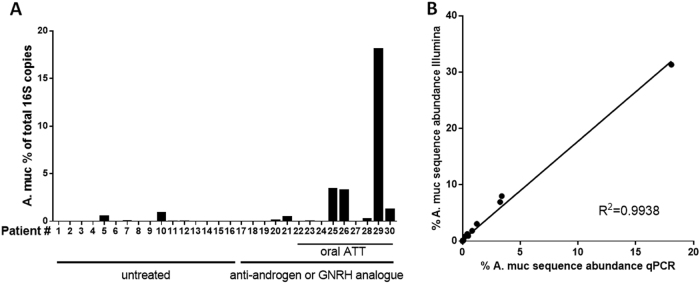
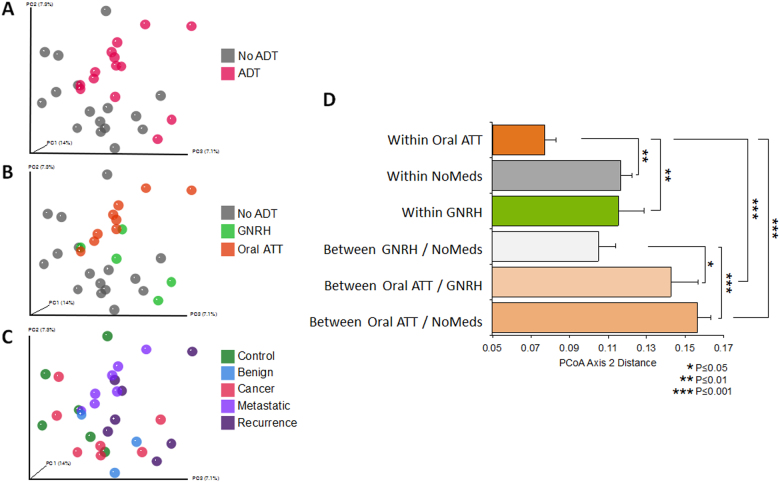
We report a significant difference in alpha diversity in GI microbiota among men with versus without a prostate cancer diagnosis. Further analysis identified significant compositional differences in the GI microbiota of men taking ATT, including a greater abundance of species previously linked to response to anti-PD-1 immunotherapy such as Akkermansia muciniphila and Ruminococcaceae spp. In functional analyses, we found an enriched representation of bacterial gene pathways involved in steroid biosynthesis and steroid hormone biosynthesis in the fecal microbiota of men taking oral ATT.
There are measurable differences in the GI microbiota of men receiving oral ATT. We speculate that oral hormonal therapies for prostate cancer may alter the GI microbiota, influence clinical responses to ATT, and/or potentially modulate the antitumor effects of future therapies including immunotherapy. Given our findings, larger, longitudinal studies are warranted.
众所周知,胃肠道(GI)微生物群可以影响癌症治疗的代谢、药代动力学和毒性。相反,癌症治疗对 GI 微生物群组成的影响知之甚少。我们假设口服雄激素受体轴靶向治疗(ATT),包括比卡鲁胺、恩扎鲁胺和阿比特龙醋酸盐,可能与 GI 微生物群的组成差异有关。
我们使用 16S rDNA 扩增子测序对 30 名患者进行了横断面研究,包括健康男性志愿者和患有不同临床前列腺癌状态(即局限性、生化复发和转移性疾病)的男性,以分析粪便微生物群。使用 PICRUSt 对鉴定出的分类群进行功能推断。
我们报告了前列腺癌诊断男性与无前列腺癌诊断男性 GI 微生物群 alpha 多样性的显著差异。进一步的分析确定了接受 ATT 的男性 GI 微生物群的显著组成差异,包括先前与抗 PD-1 免疫治疗反应相关的物种丰度增加,如 Akkermansia muciniphila 和 Ruminococcaceae spp。在功能分析中,我们发现接受口服 ATT 的男性粪便微生物群中与类固醇生物合成和类固醇激素生物合成相关的细菌基因途径的表达丰富。
接受口服 ATT 的男性 GI 微生物群存在可测量的差异。我们推测,用于治疗前列腺癌的口服激素治疗可能会改变 GI 微生物群,影响对 ATT 的临床反应,并且/或者可能调节未来包括免疫治疗在内的抗肿瘤治疗的效果。鉴于我们的发现,需要进行更大规模的纵向研究。