Li Lei, Sun Pengfei, Zhang Chengsheng, Li Zongchao, Cui Kai, Zhou Wuyuan
1Department of Hepatobiliary Surgery, Shandong Cancer Hospital Affiliated to Shandong University, Shandong Academy of Medical Sciences, Jinan, 250117 Shandong China.
Department of Hepatobiliary and Pancreatic Surgery, Xuzhou Cancer Hospital, No. 131 Huancheng Road, Gulou District, Xuzhou, 221000 Jiangsu China.
Cancer Cell Int. 2018 Jul 6;18:95. doi: 10.1186/s12935-018-0590-3. eCollection 2018.
Tumor-associated macrophages (TAMs) are generally recognized as a promoter of tumor progression. miR-98 has been shown to suppress the proliferation, migration, invasion and epithelial-mesenchymal transition (EMT) of hepatocellular carcinoma (HCC) cells. Here, we aim to investigate the role of miR-98-mediated macrophage polarization in HCC progression.
Human blood monocytes were isolated from healthy male donors and incubated with culture medium collected from HepG2 cells for 7 days. The phenotype of the macrophages was detected. The protein expression was detected by Western blot. Levels of cytokines secreted in culture medium were measured using the specific enzyme-linked immunosorbent assay kits. To explore the role of miR-98 in HCC-conditioned TAMs, HCC cells HepG2 and SMMC7721 were cultured with conditioned medium from HCC-conditioned TAMs that had been transfected with miR-98 mimic/inhibitor. Cell proliferation, migration and invasion assays were performed.
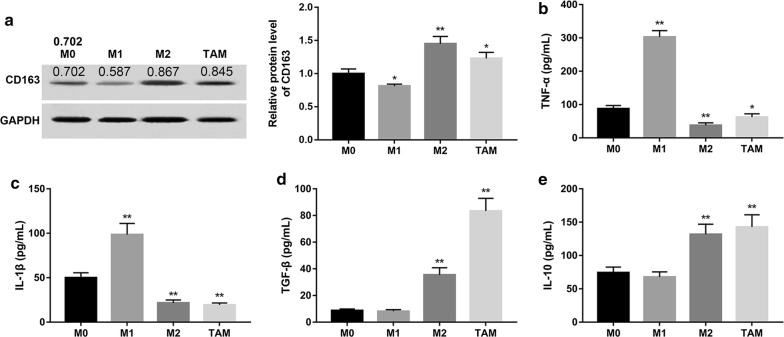
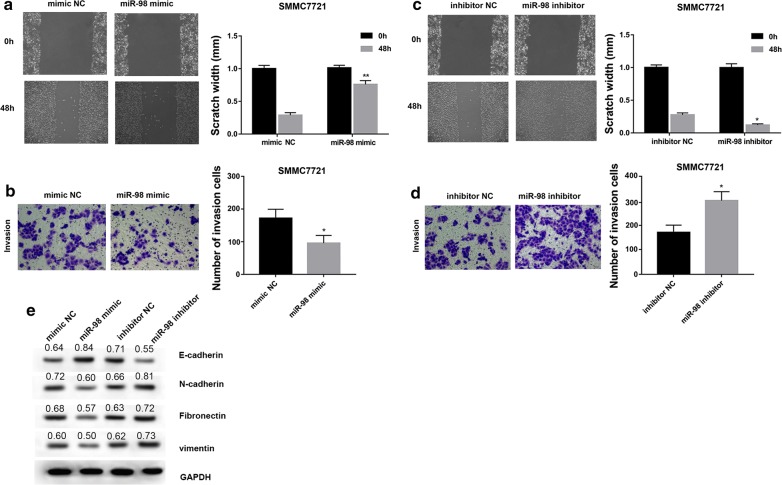
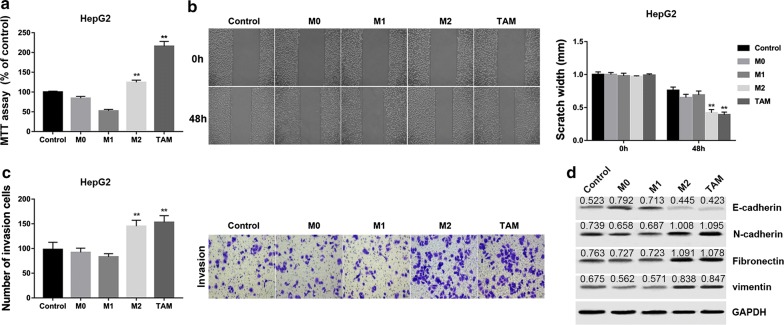
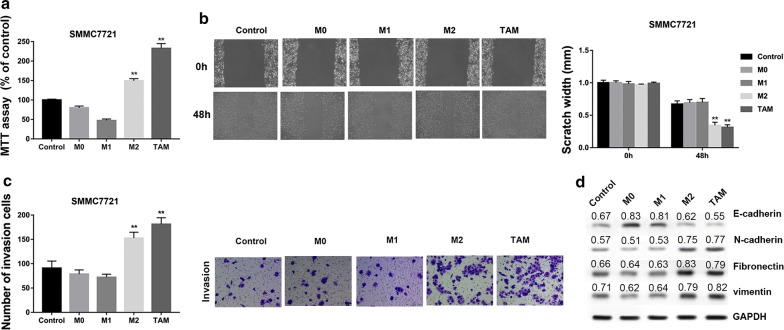
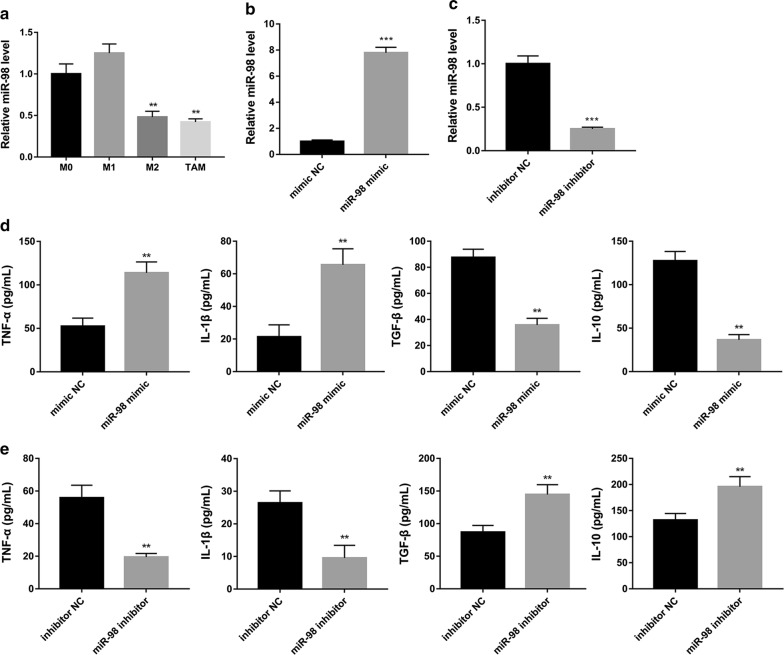
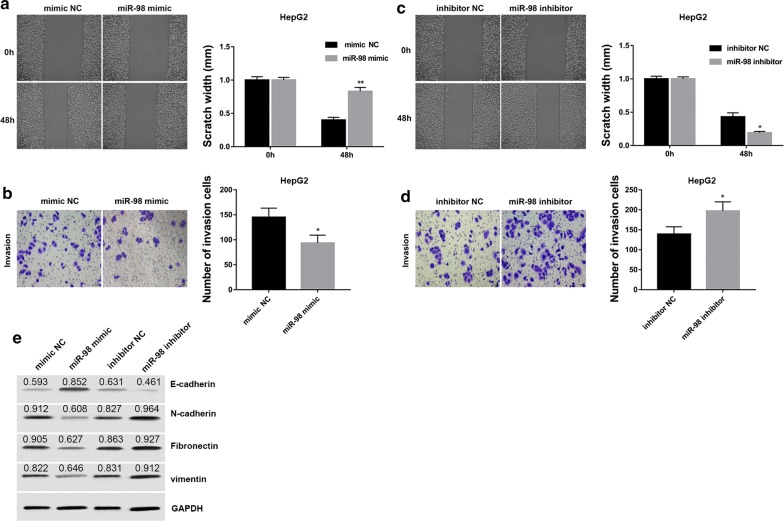
HCC-conditioned TAMs possessed M2-like phenotype, including increased protein expression of CD163 and TNF-α, IL-1β, TGF-β and IL-10 phenotype. HCC-conditioned TAMs also promoted proliferation, migration, invasion and EMT of HepG2 and SMMC7721 cells. Furthermore, miR-98 modulated macrophage polarization from M2 to M1 in HCC-conditioned TAMs, as evidenced by the alteration of M1- or M2-related cytokines. Moreover, miR-98 mimic significantly suppressed the HCC-conditioned TAMs-mediated promotion of cell migration, invasion and EMT in HepG2 and SMMC7721 cells compared with negative control, whereas miR-98 inhibitor exerted reversed effects.
miR-98 may play a vital role in regulating macrophage polarization, thereby suppressing the TAMs-mediated promotion of invasion and EMT in HCC.
肿瘤相关巨噬细胞(TAM)通常被认为是肿瘤进展的促进因子。已有研究表明,miR-98可抑制肝癌(HCC)细胞的增殖、迁移、侵袭及上皮-间质转化(EMT)。在此,我们旨在研究miR-98介导的巨噬细胞极化在HCC进展中的作用。
从健康男性供体中分离人血单核细胞,并与从HepG2细胞收集的培养基共培养7天。检测巨噬细胞的表型。通过蛋白质印迹法检测蛋白质表达。使用特异性酶联免疫吸附测定试剂盒测量培养基中分泌的细胞因子水平。为了探究miR-98在HCC条件性TAM中的作用,将HCC细胞HepG2和SMMC7721与经miR-98模拟物/抑制剂转染的HCC条件性TAM的条件培养基一起培养。进行细胞增殖、迁移和侵袭实验。
HCC条件性TAM具有M2样表型,包括CD163以及TNF-α、IL-1β、TGF-β和IL-10表型的蛋白质表达增加。HCC条件性TAM还促进了HepG2和SMMC7721细胞的增殖、迁移、侵袭及EMT。此外,miR-98调节HCC条件性TAM中巨噬细胞从M2向M1的极化,这通过M1或M2相关细胞因子的改变得以证明。此外,与阴性对照相比,miR-98模拟物显著抑制了HCC条件性TAM介导的HepG2和SMMC7721细胞的迁移、侵袭及EMT促进作用,而miR-98抑制剂则产生相反的效果。
miR-98可能在调节巨噬细胞极化中起关键作用,从而抑制TAM介导的HCC侵袭和EMT促进作用。