Key Laboratory of Vegetation Restoration and Management of Degraded Ecosystems, South China Botanical Garden, Chinese Academy of Sciences, Guangzhou, 510650, China.
College of Resources and Environment, University of Chinese Academy of Sciences, Beijing, 100049, China.
Sci Rep. 2018 Jul 11;8(1):10455. doi: 10.1038/s41598-018-28800-4.
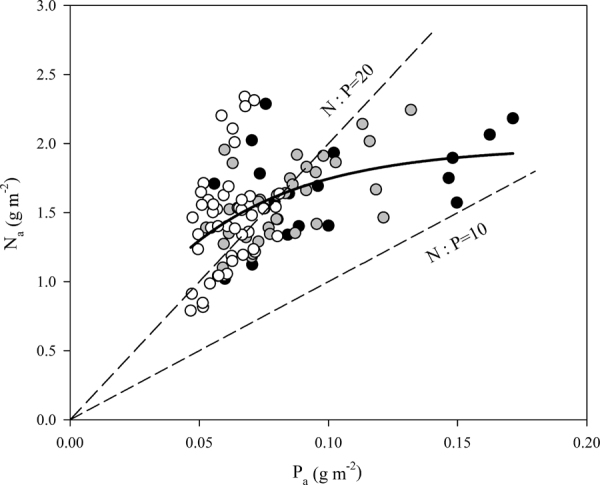
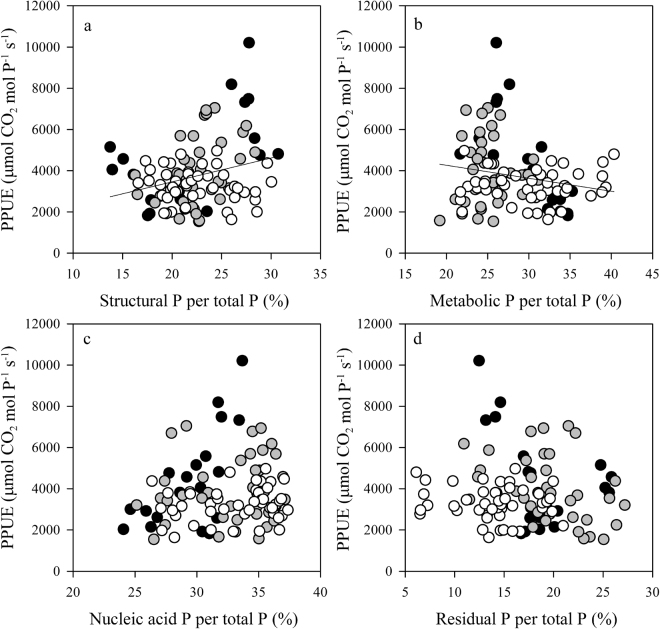
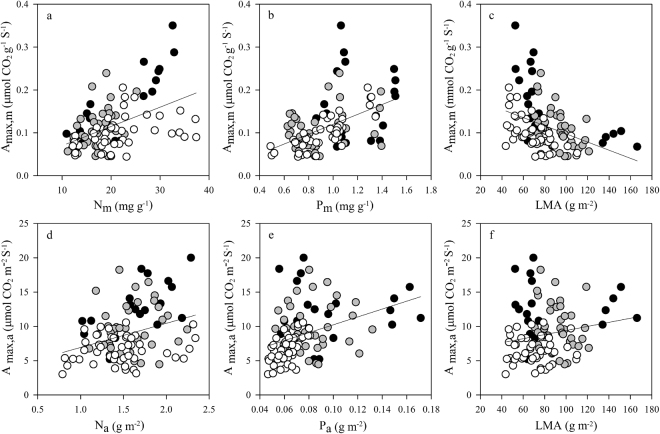
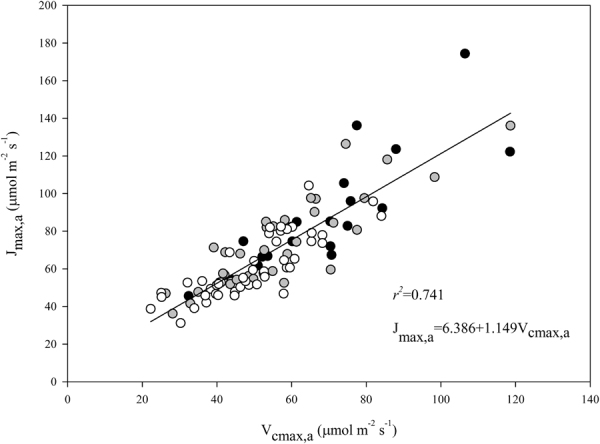
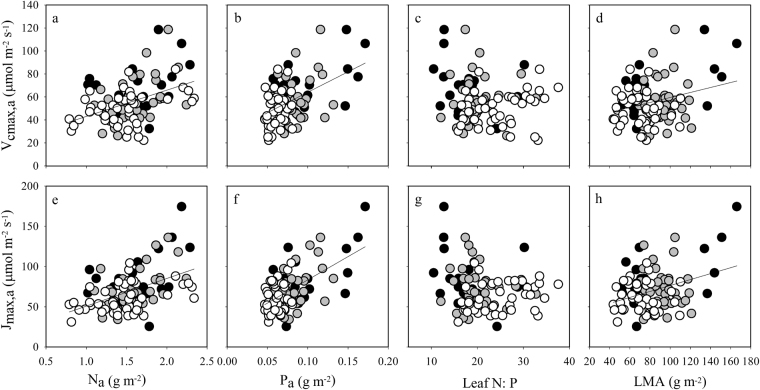
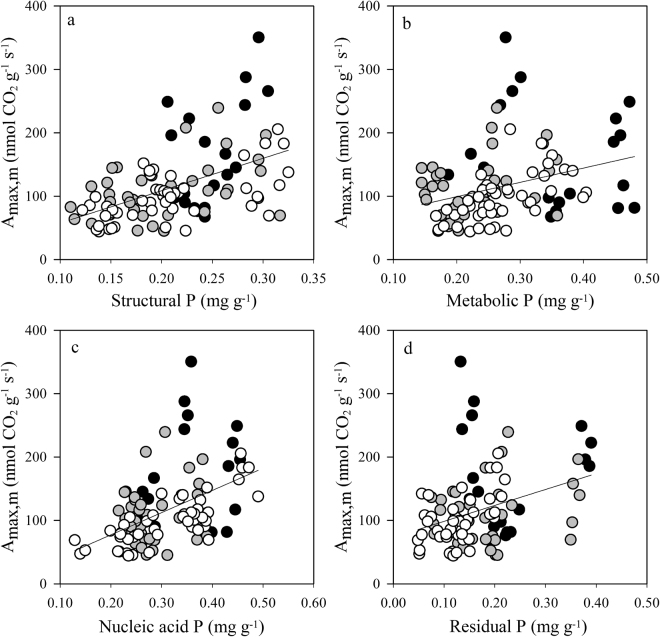
The ecophysiological linkages of leaf nutrients to photosynthesis in subtropical forests along succession remain elusive. We measured photosynthetic parameters (A, V, J, PPUE), leaf phosphorus (P) and nitrogen (N), foliar P fractions and LMA from 24 species (pioneer, generalist, and climax). A was significantly related to N and P for the pooled data, while significant relationship between A and P was only found in climax species. The mixed-effect model including variables (N, P, and SLA or LMA) for predicting V and J best fitted but varied remarkably across succession. Climax species had higher N: P ratios, indicating an increasing P limitation at later succession stage; photosynthesis, however, did not show stronger P than N limitations across all species. Nevertheless, climax species appeared to increase nucleic acid P allocation and residual P utilization for growth, thereby reducing the overall demand for P. Our results indicate that the scaling of photosynthesis with other functional traits could not be uniform across succession, growth variables (e.g. photosynthesis) and species trait identity (e.g. successional strategy) should be considered in combination with N: P ratio when we investigate P limitation in subtropical forests, and variations in P allocation state further influencing photosynthetic rates and P-use efficiency.
亚热带森林演替过程中叶片养分与光合作用之间的生态生理学联系仍不清楚。我们从 24 个物种(先锋种、广适种和顶极种)中测量了光合作用参数(A、V、J、PPUE)、叶片磷(P)和氮(N)、叶磷分数和 LMA。汇总数据的 A 与 N 和 P 显著相关,而 A 与 P 之间的显著关系仅在顶极种中发现。包括变量(N、P、SLA 或 LMA)的混合效应模型最适合预测 V 和 J,但在演替过程中差异显著。顶极种具有更高的 N:P 比值,表明在后期演替阶段 P 限制增加;然而,在所有物种中,光合作用并没有表现出比 N 更强的 P 限制。尽管如此,顶极种似乎增加了核酸 P 的分配和残余 P 的利用来促进生长,从而减少了对 P 的总体需求。我们的结果表明,光合作用与其他功能特征的比例在演替过程中不可能是统一的,在研究亚热带森林中的 P 限制时,应结合 N:P 比考虑生长变量(如光合作用)和物种特征身份(如演替策略),P 分配状态的变化进一步影响光合作用速率和 P 利用效率。