Department of Biochemistry and Molecular Medicine, Department of Psychiatry and Behavioral Sciences, University of California, Davis, Davis, CA, USA.
Bradley Department of Electrical and Computer Engineering, Virginia Polytechnic Institute and State University, Blacksburg, VA, USA.
Cell Rep. 2018 Jul 10;24(2):355-365. doi: 10.1016/j.celrep.2018.06.033.
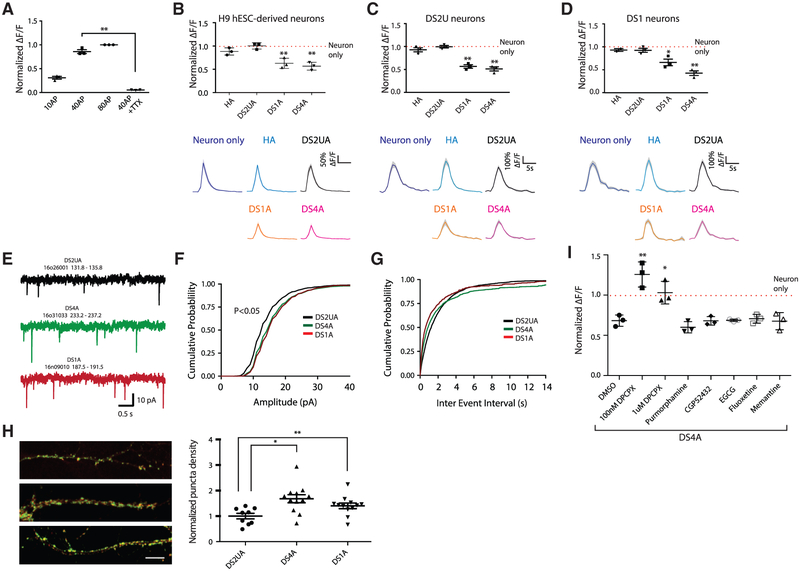
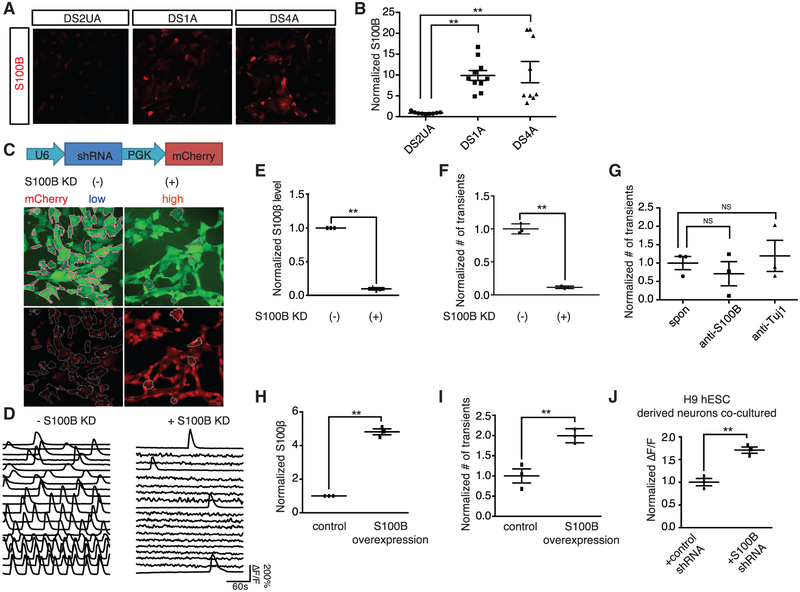
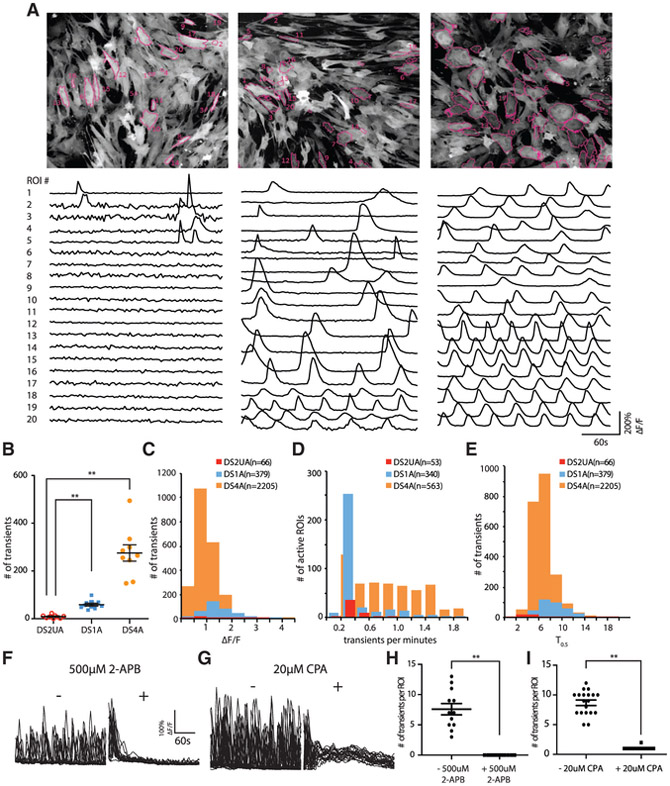
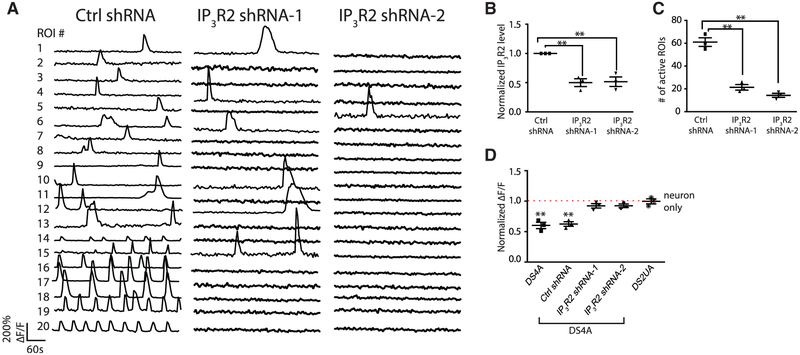
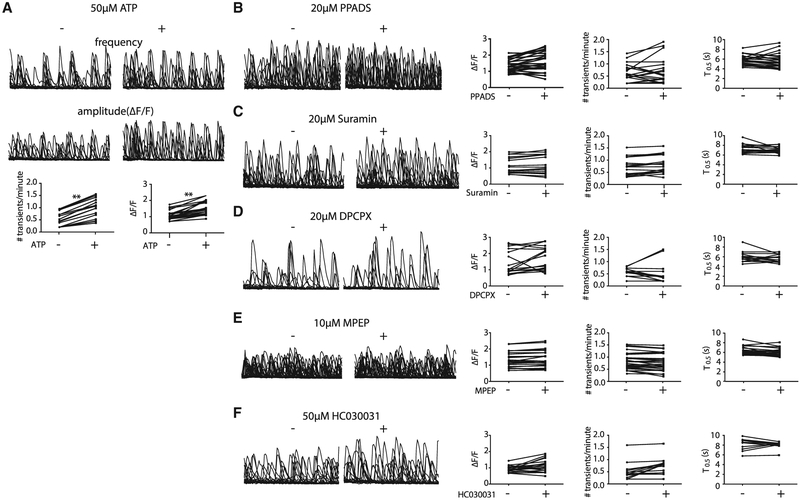
Down syndrome (DS) is a genetic disorder that causes cognitive impairment. The staggering effects associated with an extra copy of human chromosome 21 (HSA21) complicates mechanistic understanding of DS pathophysiology. We examined the neuron-astrocyte interplay in a fully recapitulated HSA21 trisomy cellular model differentiated from DS-patient-derived induced pluripotent stem cells (iPSCs). By combining calcium imaging with genetic approaches, we discovered the functional defects of DS astroglia and their effects on neuronal excitability. Compared with control isogenic astroglia, DS astroglia exhibited more-frequent spontaneous calcium fluctuations, which reduced the excitability of co-cultured neurons. Furthermore, suppressed neuronal activity could be rescued by abolishing astrocytic spontaneous calcium activity either chemically by blocking adenosine-mediated signaling or genetically by knockdown of inositol triphosphate (IP) receptors or S100B, a calcium binding protein coded on HSA21. Our results suggest a mechanism by which DS alters the function of astrocytes, which subsequently disturbs neuronal excitability.
唐氏综合征(DS)是一种遗传疾病,会导致认知障碍。人类 21 号染色体(HSA21)的额外拷贝所带来的惊人影响,使得对 DS 病理生理学的机制理解变得复杂。我们在从 DS 患者来源的诱导多能干细胞(iPSC)分化而来的完全重现的 HSA21 三体细胞模型中研究了神经元-星形胶质细胞相互作用。通过钙成像与遗传方法相结合,我们发现了 DS 星形胶质细胞的功能缺陷及其对神经元兴奋性的影响。与对照同基因星形胶质细胞相比,DS 星形胶质细胞表现出更频繁的自发性钙波动,从而降低了共培养神经元的兴奋性。此外,通过化学方法阻断腺苷介导的信号转导或通过敲低 IP 受体或 S100B(HSA21 编码的钙结合蛋白)来抑制星形胶质细胞的自发性钙活动,可以挽救抑制神经元活性。我们的研究结果表明,DS 通过改变星形胶质细胞的功能,从而扰乱神经元兴奋性,从而改变其功能的一种机制。