Yan Yuan-Wei, Qian Eddie S, Woodard Lauren E, Bejoy Julie
Waisman Center, University of Wisconsin-Madison, Madison, WI 53705, United States.
Nephrology and Hypertension, Vanderbilt University Medical Center, Nashville, TN 37232, United States.
World J Stem Cells. 2023 Jun 26;15(6):530-547. doi: 10.4252/wjsc.v15.i6.530.
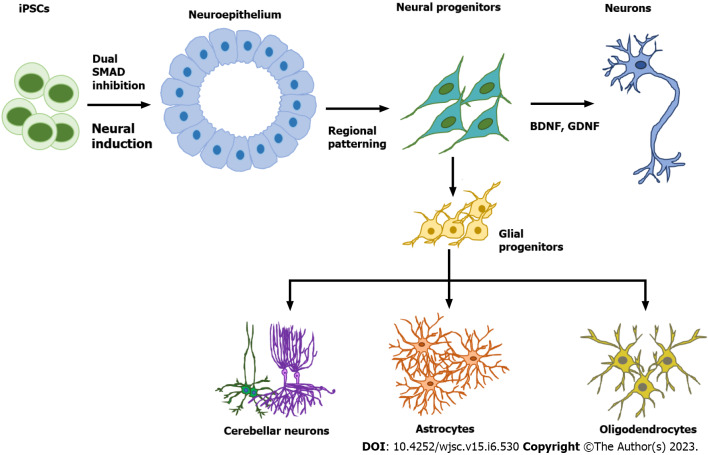
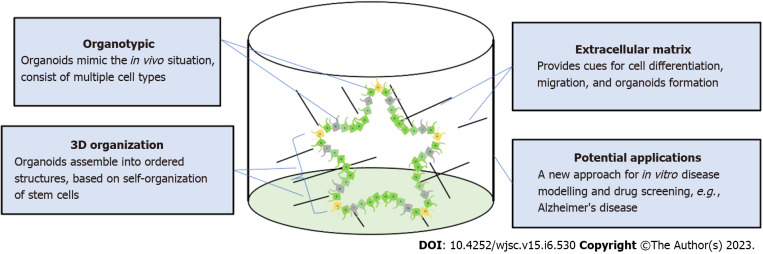
Brain diseases affect 1 in 6 people worldwide. These diseases range from acute neurological conditions such as stroke to chronic neurodegenerative disorders such as Alzheimer's disease. Recent advancements in tissue-engineered brain disease models have overcome many of the different shortcomings associated with the various animal models, tissue culture models, and epidemiologic patient data that are commonly used to study brain disease. One innovative method by which to model human neurological disease is the directed differentiation of human pluripotent stem cells (hPSCs) to neural lineages including neurons, astrocytes, and oligodendrocytes. Three-dimensional models such as brain organoids have also been derived from hPSCs, offering more physiological relevance due to their incorporation of various cell types. As such, brain organoids can better model the pathophysiology of neural diseases observed in patients. In this review, we will emphasize recent developments in hPSC-based tissue culture models of neurological disorders and how they are being used to create neural disease models.
脑部疾病影响着全球六分之一的人口。这些疾病涵盖了从急性神经系统疾病(如中风)到慢性神经退行性疾病(如阿尔茨海默病)等多种类型。组织工程化脑部疾病模型的最新进展克服了许多与常用于研究脑部疾病的各种动物模型、组织培养模型和流行病学患者数据相关的不同缺点。一种模拟人类神经疾病的创新方法是将人类多能干细胞(hPSC)定向分化为神经谱系,包括神经元、星形胶质细胞和少突胶质细胞。诸如脑类器官等三维模型也已从hPSC中衍生出来,由于它们包含了多种细胞类型,因而具有更高的生理相关性。因此,脑类器官能够更好地模拟患者中观察到的神经疾病的病理生理学。在这篇综述中,我们将重点介绍基于hPSC的神经系统疾病组织培养模型的最新进展,以及它们如何被用于创建神经疾病模型。