Kunda Nitesh K, Price Dominique N, Muttil Pavan
Department of Pharmaceutical Sciences, College of Pharmacy, University of New Mexico Health Sciences Center, Albuquerque, NM 87102, USA.
Vaccines (Basel). 2018 Jul 10;6(3):41. doi: 10.3390/vaccines6030041.
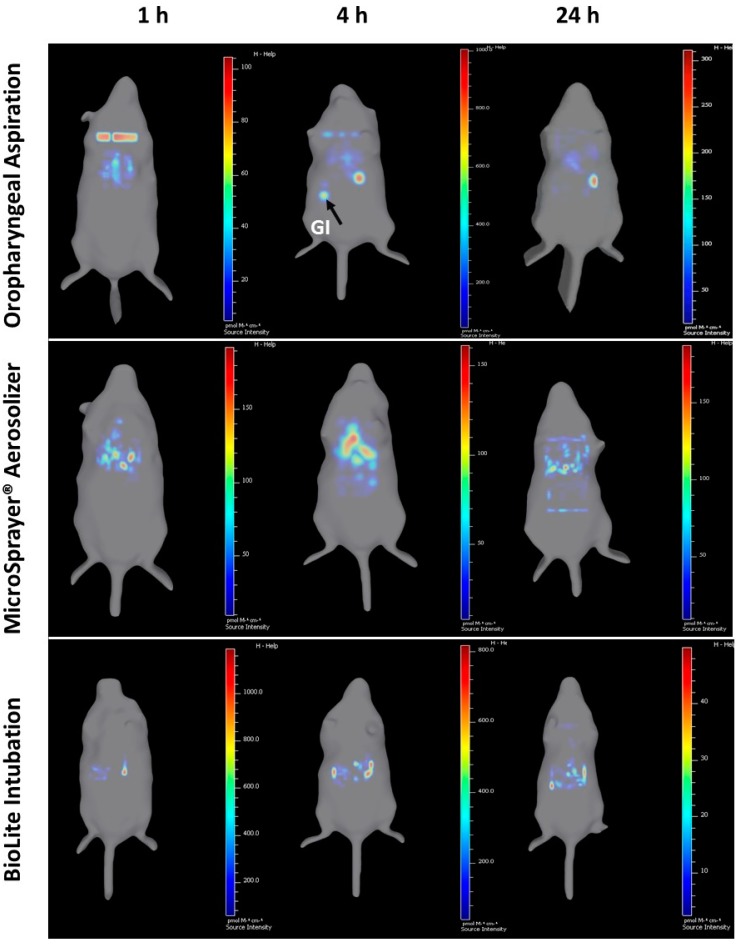
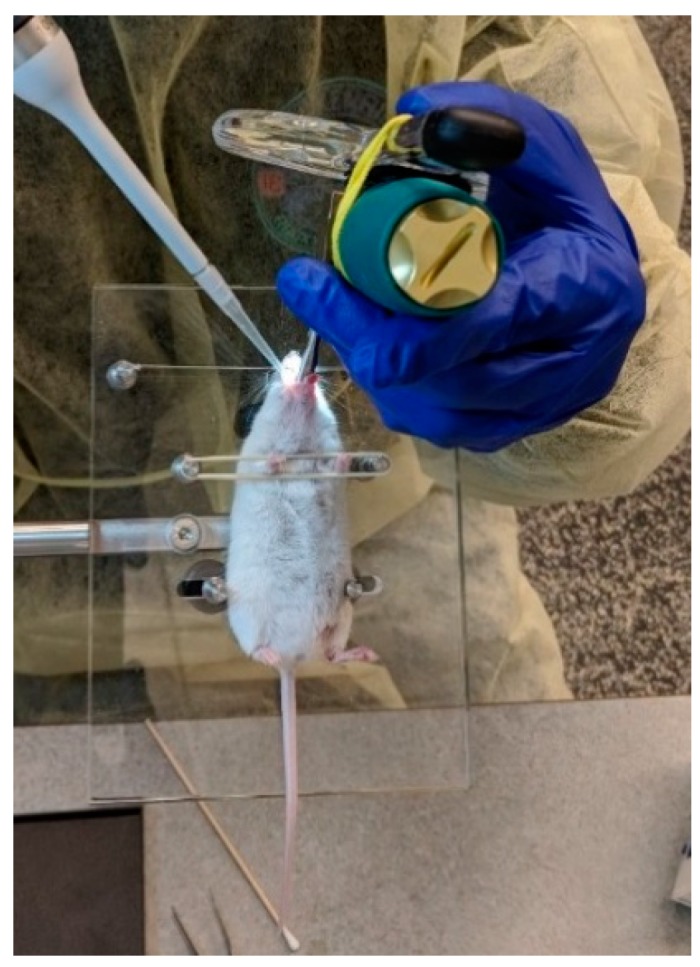
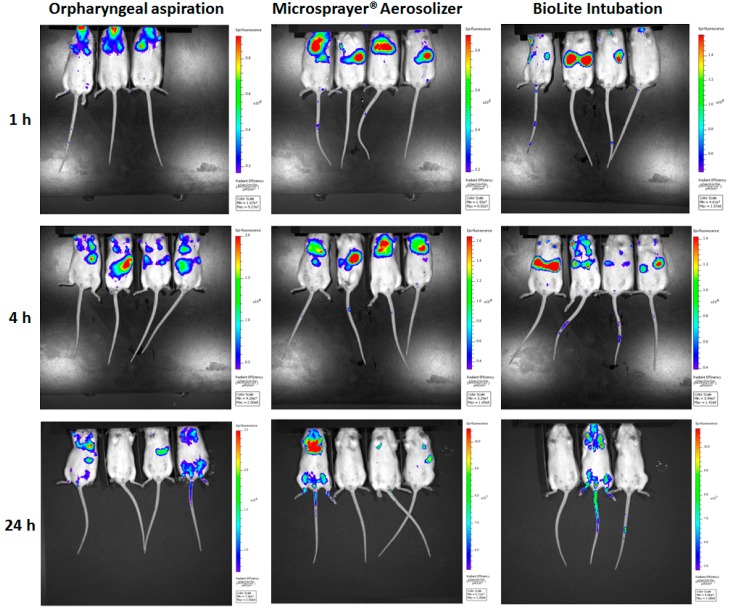
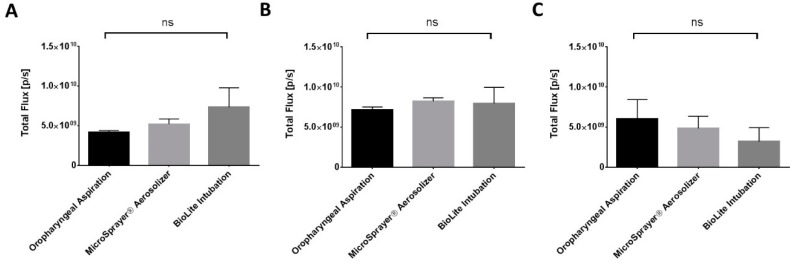
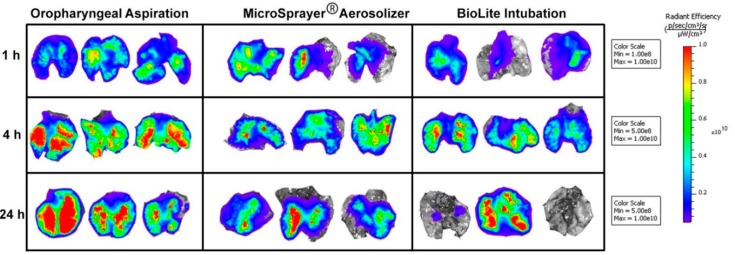
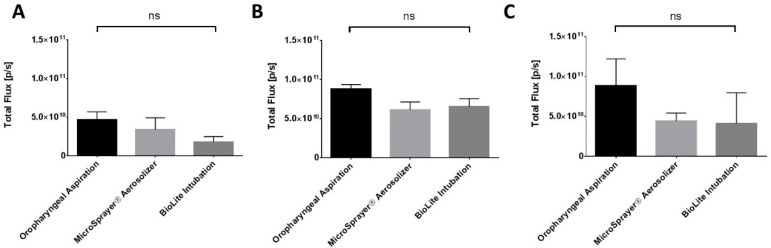
Pulmonary delivery of drugs and vaccines is an established route of administration, with particulate-based carriers becoming an attractive strategy to enhance the benefits of pulmonary therapeutic delivery. Despite the increasing number of publications using the pulmonary route of delivery, the lack of effective and uniform administration techniques in preclinical models generally results in poor translational success. In this study, we used the IVIS Spectrum small-animal in vivo imaging system to compare the respiratory tract deposition and distribution pattern of a microsphere suspension (5 µm) in mice after 1, 4, and 24 h when delivered by oropharyngeal aspiration, the Microsprayer Aerosolizer, and the BioLite Intubation System, three-widely reported preclinical inhalation techniques. We saw no significant differences in microsphere deposition in whole body images and excised lungs (at 1, 4, and 24 h); however, the three-dimensional (3D) images showed more localized deposition in the lungs with the MicroSprayer and BioLite delivery techniques. Further, oropharyngeal aspiration (at 1 h) showed microsphere deposition in the oral cavity, in contrast to the MicroSprayer and BioLite systems. The studies shown here will allow researchers to choose the appropriate pulmonary delivery method in animal models based on their study requirements.
药物和疫苗的肺部给药是一种既定的给药途径,基于颗粒的载体正成为增强肺部治疗给药益处的一种有吸引力的策略。尽管使用肺部给药途径的出版物数量不断增加,但临床前模型中缺乏有效且统一的给药技术通常导致转化成功率较低。在本研究中,我们使用IVIS Spectrum小动物体内成像系统,比较了通过口咽抽吸、微型喷雾器雾化器和BioLite插管系统(三种广泛报道的临床前吸入技术)给药后,微球悬浮液(5μm)在小鼠1小时、4小时和24小时后的呼吸道沉积和分布模式。我们在全身图像和切除的肺中(1小时、4小时和24小时)未观察到微球沉积有显著差异;然而,三维(3D)图像显示,使用微型喷雾器和BioLite给药技术时,肺部的沉积更局限。此外,与微型喷雾器和BioLite系统相比,口咽抽吸(1小时时)显示微球沉积在口腔中。此处所示的研究将使研究人员能够根据其研究需求在动物模型中选择合适的肺部给药方法。