Department of Chemistry, King's College London, Britannia House, Trinity Street, London, SE1 1DB, UK.
European Molecular Biology Laboratory, Hamburg Outstation, Notkestrasse 85, 22603, Hamburg, Germany.
BMC Biol. 2018 Jul 11;16(1):76. doi: 10.1186/s12915-018-0542-3.
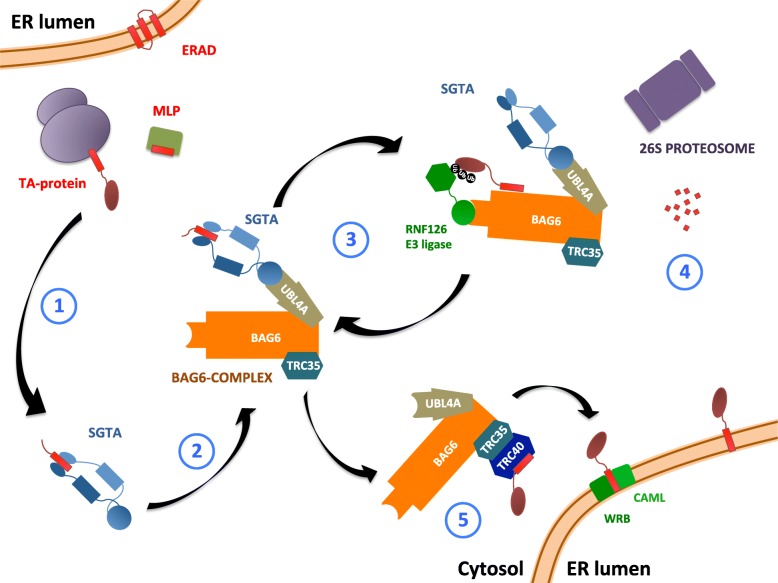
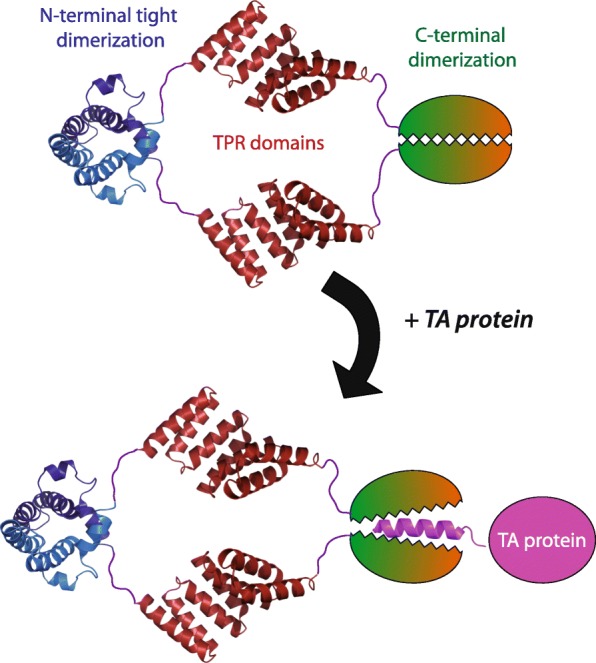
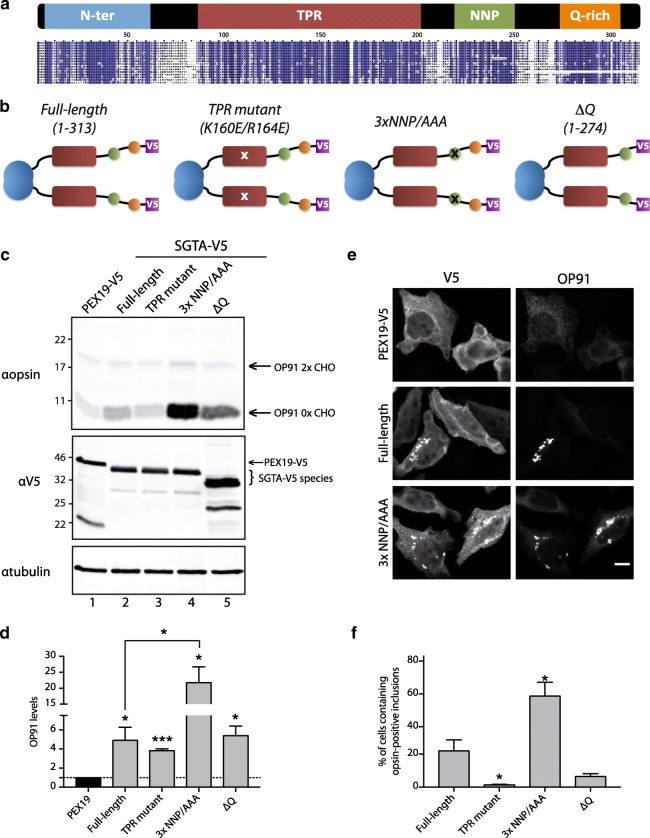
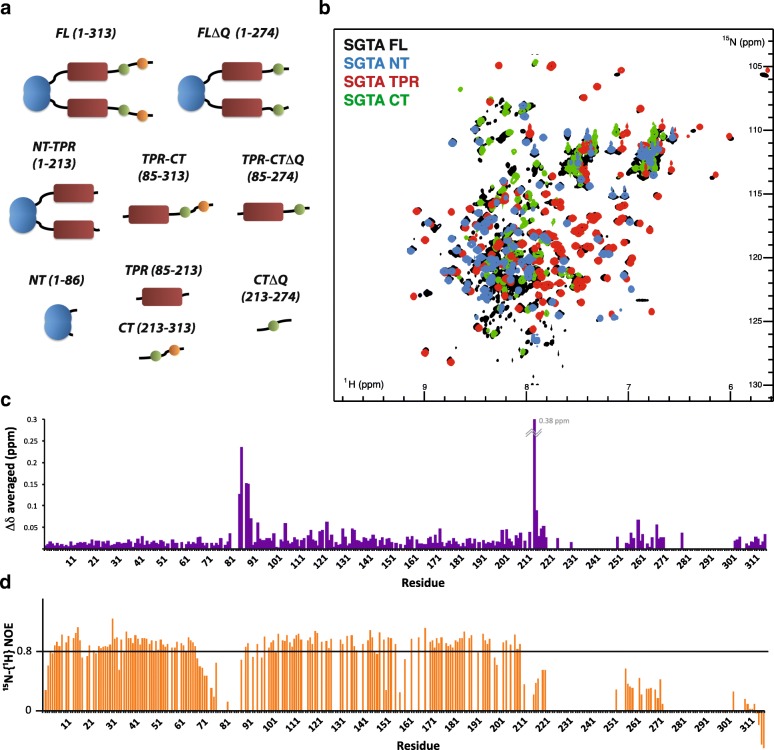
Protein quality control mechanisms are essential for cell health and involve delivery of proteins to specific cellular compartments for recycling or degradation. In particular, stray hydrophobic proteins are captured in the aqueous cytosol by a co-chaperone, the small glutamine-rich, tetratricopeptide repeat-containing protein alpha (SGTA), which facilitates the correct targeting of tail-anchored membrane proteins, as well as the sorting of membrane and secretory proteins that mislocalize to the cytosol and endoplasmic reticulum-associated degradation. Full-length SGTA has an unusual elongated dimeric structure that has, until now, evaded detailed structural analysis. The C-terminal region of SGTA plays a key role in binding a broad range of hydrophobic substrates, yet in contrast to the well-characterized N-terminal and TPR domains, there is a lack of structural information on the C-terminal domain. In this study, we present new insights into the conformation and organization of distinct domains of SGTA and show that the C-terminal domain possesses a conserved region essential for substrate processing in vivo.
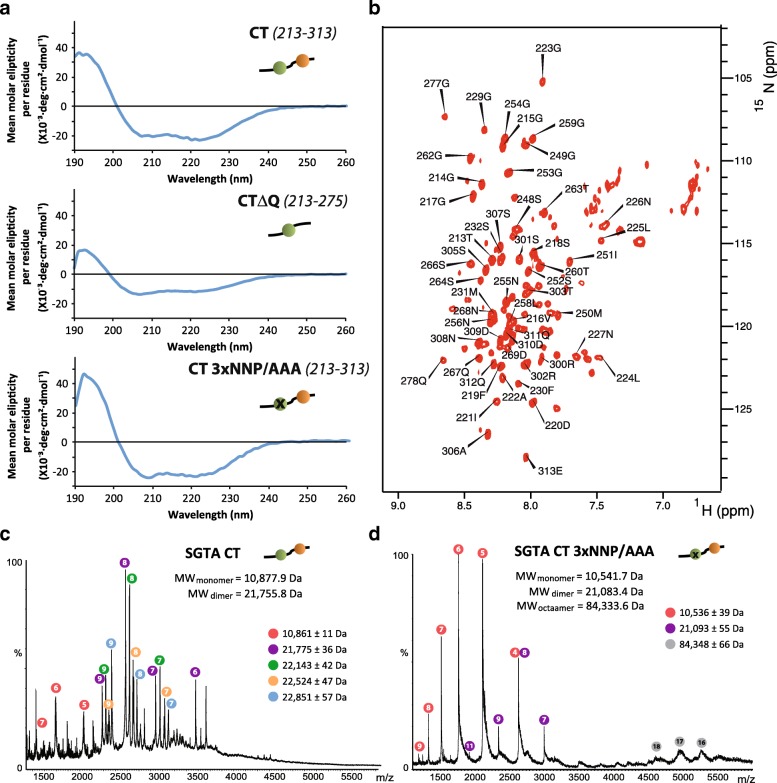
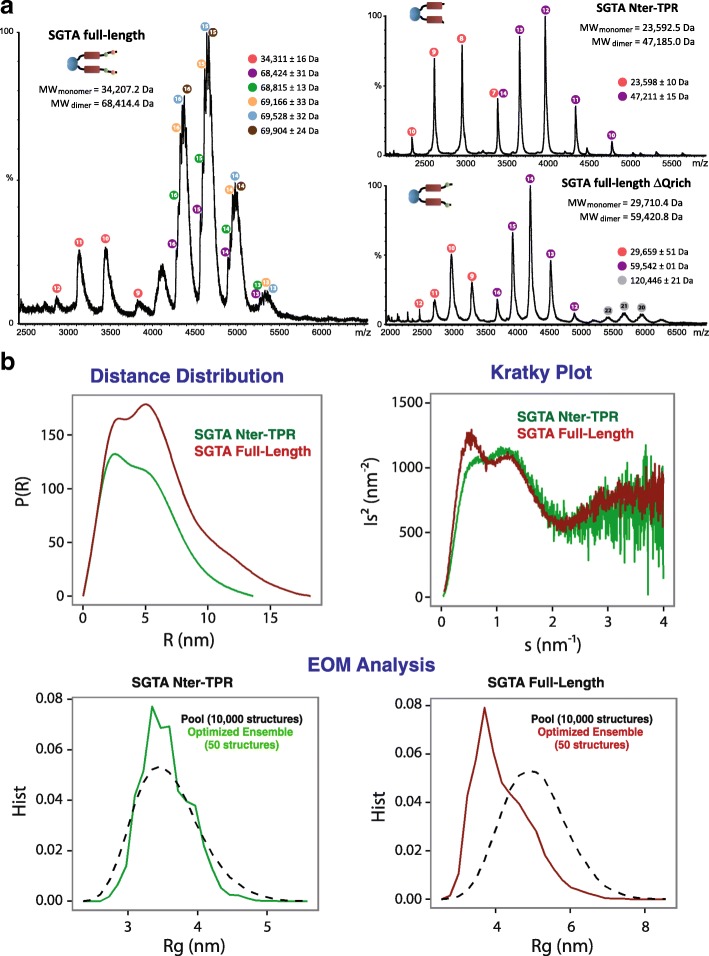
We show that the C-terminal domain region is characterized by α-helical propensity and an intrinsic ability to dimerize independently of the N-terminal domain. Based on the properties of different regions of SGTA that are revealed using cell biology, NMR, SAXS, Native MS, and EPR, we observe that its C-terminal domain can dimerize in the full-length protein and propose that this reflects a closed conformation of the substrate-binding domain.
Our results provide novel insights into the structural complexity of SGTA and provide a new basis for mechanistic studies of substrate binding and release at the C-terminal region.
蛋白质质量控制机制对于细胞健康至关重要,涉及将蛋白质递送到特定的细胞区室进行回收或降解。特别是,疏水性游离蛋白质被一种伴侣蛋白,即小谷氨酰胺丰富的四肽重复蛋白α(SGTA)捕获到水相细胞质中,这有利于正确靶向尾部锚定的膜蛋白,以及对错误定位于细胞质和内质网相关降解的膜和分泌蛋白进行分拣。全长 SGTA 具有不寻常的拉长二聚体结构,直到现在,这种结构仍未进行详细的结构分析。SGTA 的 C 端区域在结合广泛的疏水性底物方面发挥着关键作用,但与特征明确的 N 端和 TPR 结构域相比,C 端结构域缺乏结构信息。在这项研究中,我们提供了关于 SGTA 不同结构域构象和组织的新见解,并表明 C 端结构域具有保守区域,对于体内底物加工至关重要。
我们表明,C 端结构域区域的特征是 α-螺旋倾向,并且具有独立于 N 端结构域二聚化的内在能力。基于使用细胞生物学、NMR、SAXS、Native MS 和 EPR 揭示的 SGTA 不同区域的特性,我们观察到其 C 端结构域可以在全长蛋白中二聚化,并提出这反映了底物结合域的封闭构象。
我们的结果为 SGTA 的结构复杂性提供了新的见解,并为 C 端区域底物结合和释放的机制研究提供了新的基础。