Department of Medicine, Center for Molecular Medicine, Karolinska University Hospital (A.G., M.L.K., K.A.P., R.K.W.M., D.F.J.K., G.K.H.), Karolinska Institutet, Stockholm, Sweden.
Department of Immunotechnology, Lund University, Sweden (M.L.K.).
Circulation. 2018 Nov 27;138(22):2513-2526. doi: 10.1161/CIRCULATIONAHA.118.034076.
Atherosclerotic cardiovascular disease is a chronic inflammatory process initiated when cholesterol-carrying low-density lipoprotein (LDL) is retained in the arterial wall. CD4 T cells, some of which recognize peptide components of LDL as antigen, are recruited to the forming lesion, resulting in T-cell activation. Although these T cells are thought to be proatherogenic, LDL immunization reduces disease in experimental animals. These seemingly contradictory findings have hampered the development of immune-based cardiovascular therapy. The present study was designed to clarify how activation of LDL-reactive T cells impacts on metabolism and vascular pathobiology.
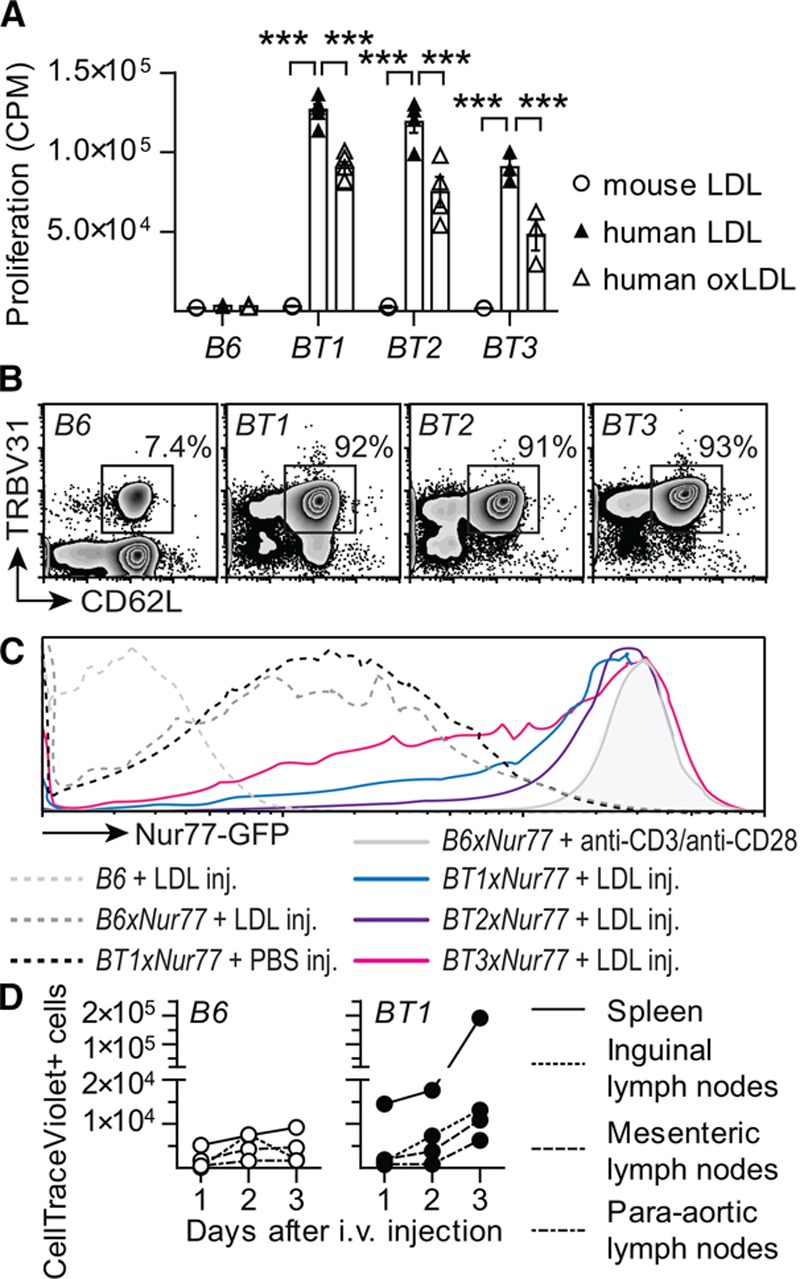
We have developed a T-cell receptor-transgenic mouse model to characterize the effects of immune reactions against LDL. Through adoptive cell transfers and cross-breeding to hypercholesterolemic mice expressing the antigenic human LDL protein apolipoprotein B-100, we evaluate the effects on atherosclerosis.
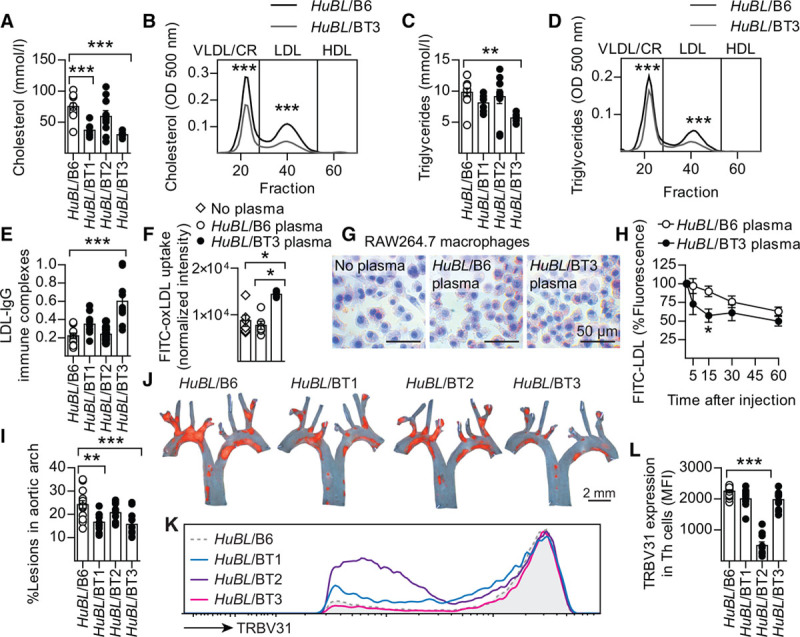
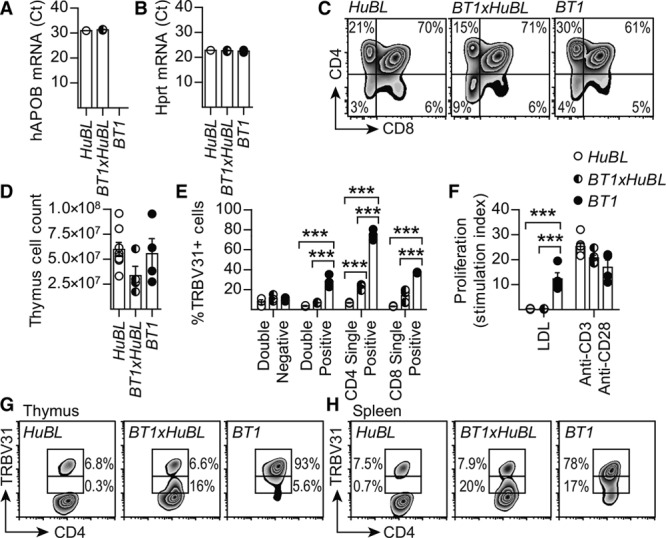
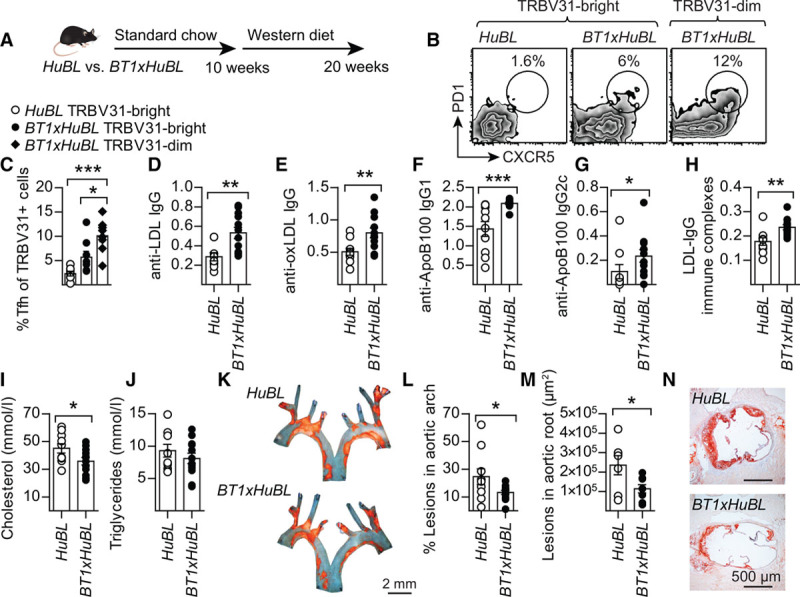
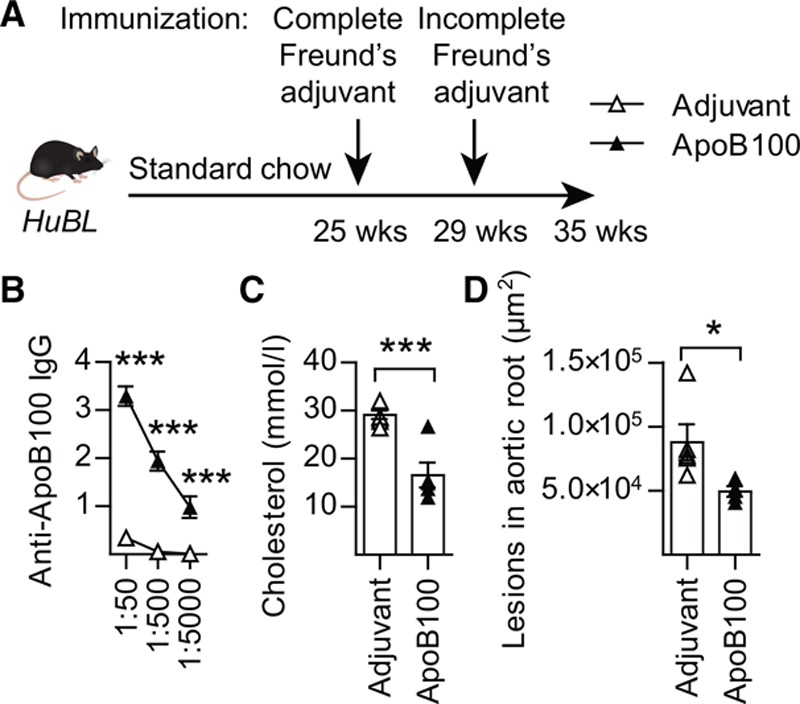
A subpopulation of LDL-reactive T cells survived clonal selection in the thymus, developed into T follicular helper cells in lymphoid tissues on antigen recognition, and promoted B-cell activation. This led to production of anti-LDL immunoglobulin G antibodies that enhanced LDL clearance through immune complex formation. Furthermore, the cellular immune response to LDL was associated with increased cholesterol excretion in feces and with reduced vascular inflammation.
These data show that anti-LDL immunoreactivity evokes 3 atheroprotective mechanisms: antibody-dependent LDL clearance, increased cholesterol excretion, and reduced vascular inflammation.
动脉粥样硬化性心血管疾病是一种慢性炎症过程,当携带胆固醇的低密度脂蛋白(LDL)在动脉壁中滞留时就会引发该疾病。一些识别 LDL 肽成分作为抗原的 CD4 T 细胞被募集到正在形成的病变部位,导致 T 细胞激活。尽管这些 T 细胞被认为是促动脉粥样硬化的,但 LDL 免疫接种可减少实验动物的疾病。这些看似矛盾的发现阻碍了基于免疫的心血管治疗的发展。本研究旨在阐明 LDL 反应性 T 细胞的激活如何影响代谢和血管病理生物学。
我们开发了一种 T 细胞受体转基因小鼠模型,以表征针对 LDL 的免疫反应的影响。通过过继细胞转移和与在表达抗原性人 LDL 蛋白载脂蛋白 B-100 的 hypercholesterolemic 小鼠杂交,我们评估了对动脉粥样硬化的影响。
LDL 反应性 T 细胞的一个亚群在胸腺中经历了克隆选择,在抗原识别时在淋巴组织中发育成 T 滤泡辅助细胞,并促进 B 细胞激活。这导致产生了抗 LDL 免疫球蛋白 G 抗体,通过形成免疫复合物增强了 LDL 的清除。此外,针对 LDL 的细胞免疫反应与粪便中胆固醇排泄增加和血管炎症减少有关。
这些数据表明,抗 LDL 免疫反应引发了 3 种抗动脉粥样硬化机制:抗体依赖性 LDL 清除、增加的胆固醇排泄和减少的血管炎症。