Wang Haiguang, Hogquist Kristin A
Department of Laboratory Medicine and Pathology, Center for Immunology, University of Minnesota, Minneapolis, MN, United States.
Front Immunol. 2018 Jun 26;9:1450. doi: 10.3389/fimmu.2018.01450. eCollection 2018.
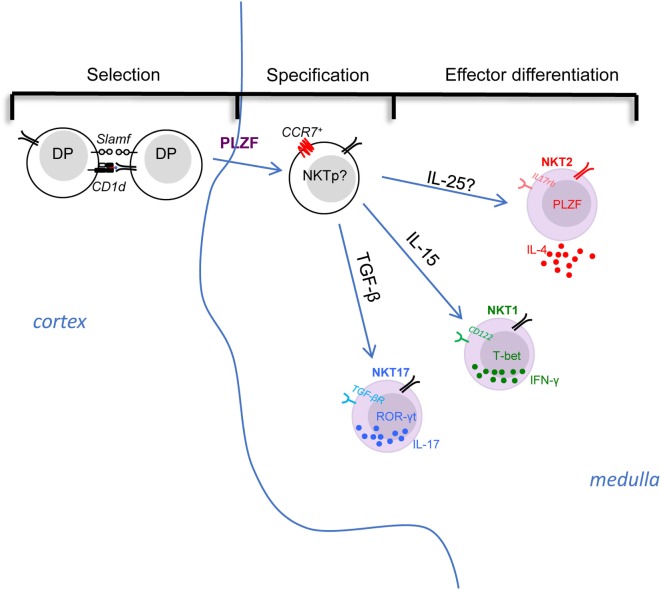
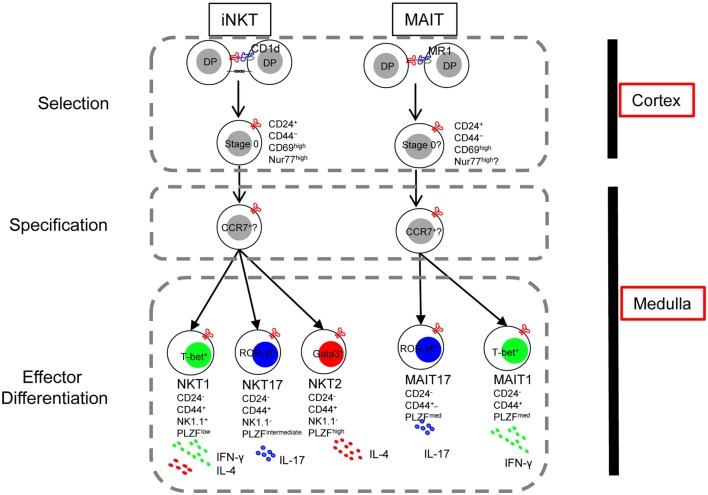
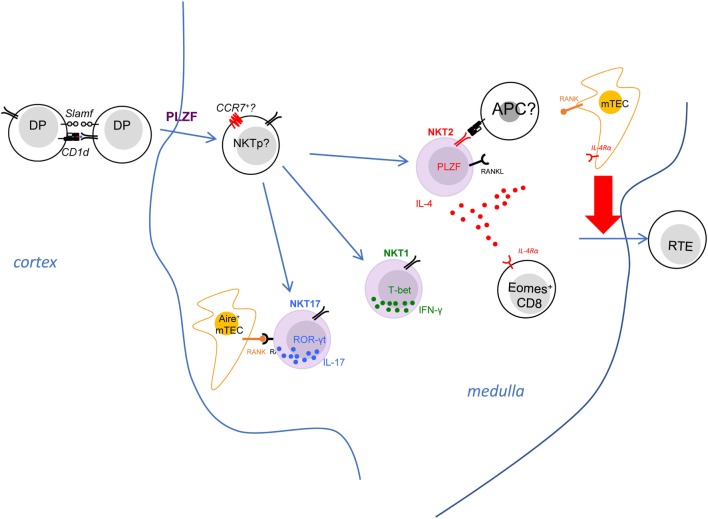
In contrast to peptide-recognizing T cells, invariant natural killer T (iNKT) cells express a semi-invariant T cell receptor that specifically recognizes self- or foreign-lipids presented by CD1d molecules. There are three major functionally distinct effector states for iNKT cells. Owning to these innate-like effector states, iNKT cells have been implicated in early protective immunity against pathogens. Yet, growing evidence suggests that iNKT cells play a role in tissue homeostasis as well. In this review, we discuss current knowledge about the underlying mechanisms that regulate the effector states of iNKT subsets, with a highlight on the roles of a variety of transcription factors and describe how each subset influences different facets of thymus homeostasis.
与识别肽的T细胞不同,不变自然杀伤T(iNKT)细胞表达一种半不变的T细胞受体,该受体特异性识别由CD1d分子呈递的自身或外来脂质。iNKT细胞有三种主要的功能不同的效应状态。由于这些类似先天的效应状态,iNKT细胞已被认为参与了针对病原体的早期保护性免疫。然而,越来越多的证据表明,iNKT细胞在组织稳态中也发挥作用。在这篇综述中,我们讨论了关于调节iNKT亚群效应状态的潜在机制的当前知识,重点介绍了多种转录因子的作用,并描述了每个亚群如何影响胸腺稳态的不同方面。