Sri Sakthi Amma Institute of Biomedical Research, Sri Narayani Hospital & Research Centre, Vellore, India.
Department of Microbiology, King George Medical University, Lucknow, India.
Indian J Med Res. 2018 Apr;147(4):391-399. doi: 10.4103/ijmr.IJMR_241_16.
BACKGROUND & OBJECTIVES: Human parvovirus B19V (B19V) is known to be associated with erythema infectiosum commonly in children, aplastic crisis, especially in persons with underlying haemolytic disorders, hydrops fetalis in pregnancies and arthritis. This cross-sectional study was aimed to determine the presence of B19V infection in childhood febrile illnesses, association of B19V with arthropathies and in adult patients with end-stage renal disease (ESRD) on dialysis. The genetic diversity among the sequences was also analysed.
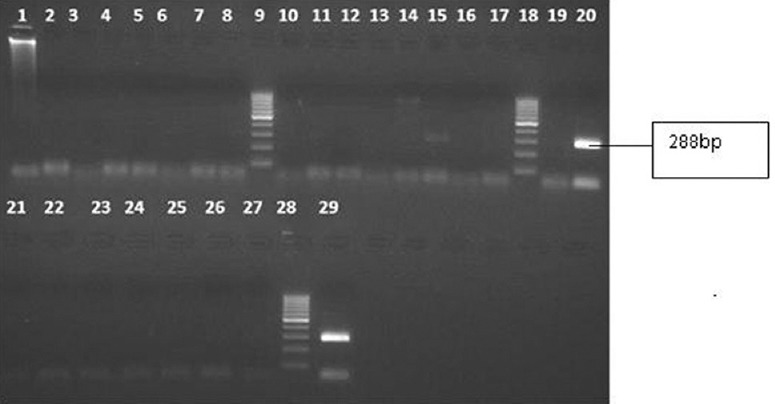
A nested polymerase chain reaction (nPCR) assay was used for B19V DNA targeting VP1/VP2 region and used for testing 618 patients and 100 healthy controls. Phylogenetic analysis on nucleotide and amino acid sequences was carried out to compare our sequences with other Indian strains and global strains.
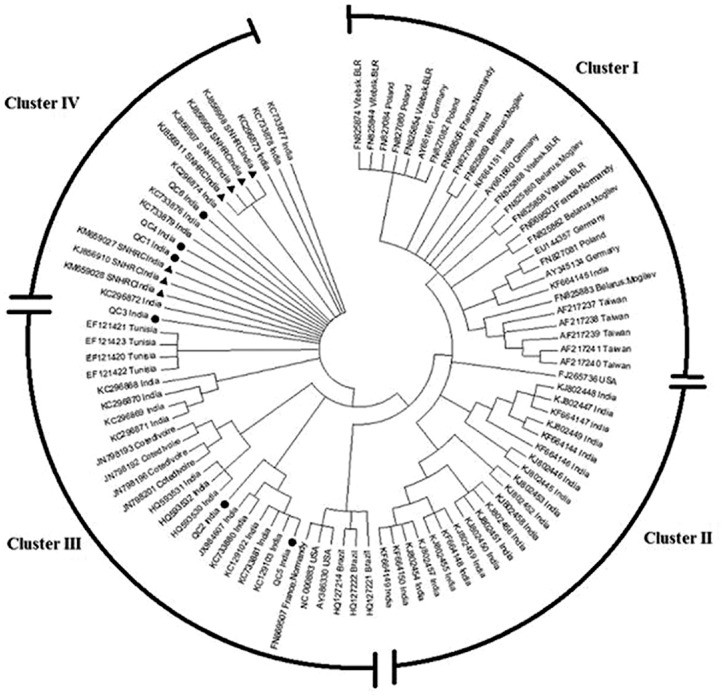
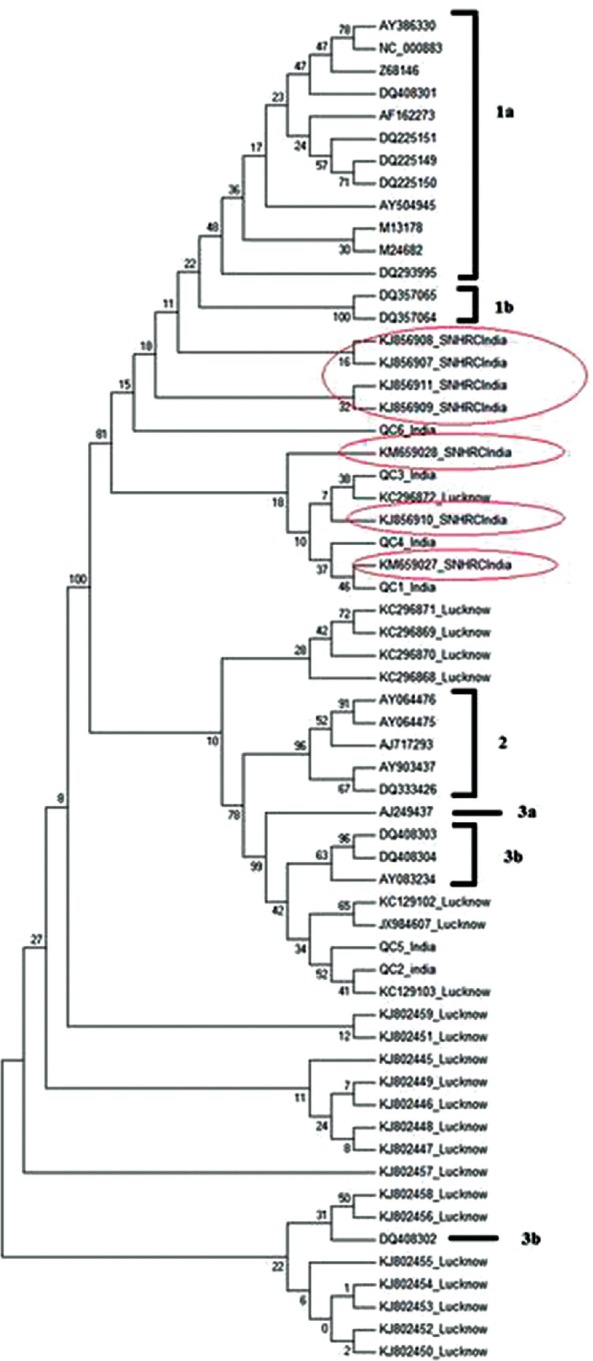
Among 618 samples tested, seven (1.13%) were found positive. The phylogenetic analysis revealed that all the seven sequences belonged to genotype 1 and showed low genetic diversity. The clustering pattern of seven sequences was similar both by nucleotide and by predicted amino acid sequences. The fixed effects likelihood analysis showed no positive or negatively selected sites.
INTERPRETATION & CONCLUSIONS: Seven samples (4 from non-traumatic arthropathies, 2 from patients with ESRD and 1 from febrile illness patient) were found positive by nPCR. When our seven sequences were compared with global strains, the closest neighbour was other Indian strains followed by the Tunisian strains.
人细小病毒 B19V(B19V)已知与儿童常见的传染性红斑、再生障碍危象(尤其在潜在溶血性疾病患者中)、胎儿水肿和关节炎有关。本横断面研究旨在确定 B19V 感染在儿童发热性疾病中的存在情况、B19V 与关节病的关系以及在接受透析的终末期肾病(ESRD)成年患者中的存在情况。还分析了序列之间的遗传多样性。
使用巢式聚合酶链反应(nPCR)检测针对 VP1/VP2 区的 B19V DNA,用于检测 618 名患者和 100 名健康对照者。对核苷酸和氨基酸序列进行系统发育分析,以比较我们的序列与其他印度株和全球株。
在检测的 618 个样本中,有 7 个(1.13%)呈阳性。系统发育分析显示,所有 7 个序列均属于基因型 1,遗传多样性较低。7 个序列的聚类模式在核苷酸和预测的氨基酸序列上均相似。固定效应似然分析显示没有阳性或阴性选择位点。
nPCR 检测到 7 个样本(4 个来自非创伤性关节炎、2 个来自 ESRD 患者和 1 个来自发热性疾病患者)呈阳性。当将我们的 7 个序列与全球株进行比较时,最接近的邻居是其他印度株,其次是突尼斯株。