Somodi Sándor, Seres Ildikó, Lőrincz Hajnalka, Harangi Mariann, Fülöp Péter, Paragh György
Department of Internal Medicine, Faculty of Medicine, University of Debrecen, Debrecen, Hungary.
Department of Clinical Pharmacology, Faculty of Pharmacy, University of Debrecen, Debrecen, Hungary.
Int J Endocrinol. 2018 May 30;2018:9596054. doi: 10.1155/2018/9596054. eCollection 2018.
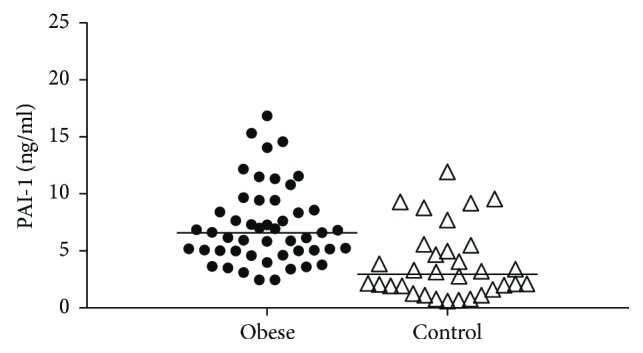
The elevated level of plasminogen activator inhibitor-1 (PAI-1) in obese subjects with metabolic syndrome and in patients with type 2 diabetes is well established. The association of plasma PAI-1 and lipid metabolism is still unclear. The aim of the present study was to determine the relationship between plasma PAI-1 levels and the distribution of lipoprotein subfractions in obese and lean nondiabetic individuals.
We enrolled fifty nondiabetic obese patients and thirty-two healthy volunteers. Lipoprotein subfractions were detected with Lipoprint System. Plasma PAI-1, tumor necrosis factor- (TNF-), interleukin-6 (IL-6), and myeloperoxidase (MPO) concentrations were determined with enzyme-linked immunosorbent assay (ELISA), while serum paraoxonase-1 (PON1) activities were measured by spectrophotometry.
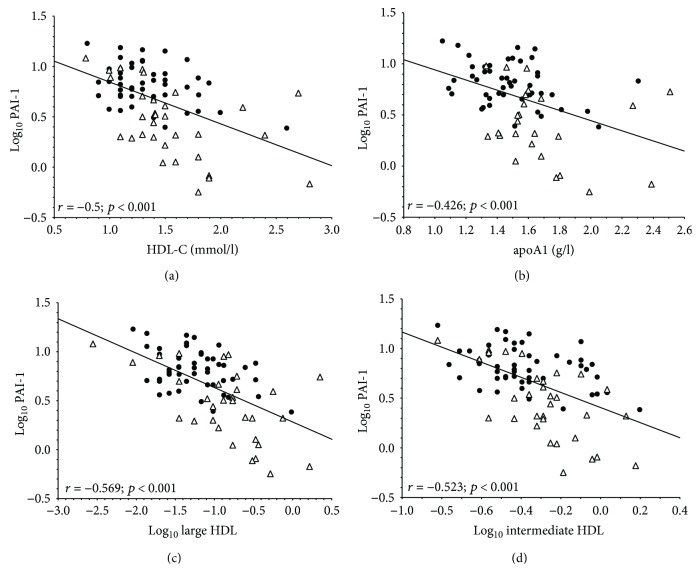
The TNF-, IL-6, oxidized low-density lipoprotein (oxLDL), and MPO levels were found to be significantly higher, while PON1 paraoxonase and arylesterase activities were nonsignificantly lower in the obese patients. Strong significant negative correlations were found between plasma PAI-1 concentration and mean LDL size, as well as between PAI-1 concentrations and the levels of the large and intermediate high-density lipoprotein (HDL) subfractions. In multiple regression analysis, PAI-1 was predicted by waist circumference and intermediate HDL subfraction.
The significant correlations between PAI-1 levels and lipoprotein subfractions indicate the link between PAI-1 and lipid metabolism in obesity.
肥胖合并代谢综合征的受试者以及2型糖尿病患者体内纤溶酶原激活物抑制剂-1(PAI-1)水平升高,这一点已得到充分证实。血浆PAI-1与脂质代谢之间的关联仍不明确。本研究的目的是确定肥胖和非肥胖非糖尿病个体血浆PAI-1水平与脂蛋白亚组分分布之间的关系。
我们招募了50名非糖尿病肥胖患者和32名健康志愿者。使用脂蛋白分析系统检测脂蛋白亚组分。采用酶联免疫吸附测定法(ELISA)测定血浆PAI-1、肿瘤坏死因子-α(TNF-α)、白细胞介素-6(IL-6)和髓过氧化物酶(MPO)浓度,同时通过分光光度法测量血清对氧磷酶-1(PON1)活性。
发现肥胖患者的TNF-α、IL-6、氧化型低密度脂蛋白(oxLDL)和MPO水平显著更高,而PON1对氧磷酶和芳基酯酶活性则略有降低。血浆PAI-1浓度与平均低密度脂蛋白大小之间,以及PAI-1浓度与大、中密度脂蛋白(HDL)亚组分水平之间存在显著的负相关。在多元回归分析中,PAI-1可通过腰围和中密度HDL亚组分进行预测。
PAI-1水平与脂蛋白亚组分之间的显著相关性表明肥胖中PAI-1与脂质代谢之间存在联系。