Department of Cardiology, Chongqing Institute of Cardiology, Daping Hospital, Third Military Medical University, Chongqing, China.
Department of Cardiology, North Sichuan Medical College First Affiliated Hospital, Nanchong, Sichuan, China.
J Am Heart Assoc. 2018 Jul 12;7(14):e005171. doi: 10.1161/JAHA.116.005171.
Ischemia/reperfusion injury (IRI) is one of the most predominant complications of ischemic heart disease. Gastrin has emerged as a regulator of cardiovascular function, playing a key protective role in hypoxia. Serum gastrin levels are increased in patients with myocardial infarction, but the pathophysiogical significance of this finding is unknown. The purpose of this study was to determine whether and how gastrin protects cardiac myocytes from IRI.
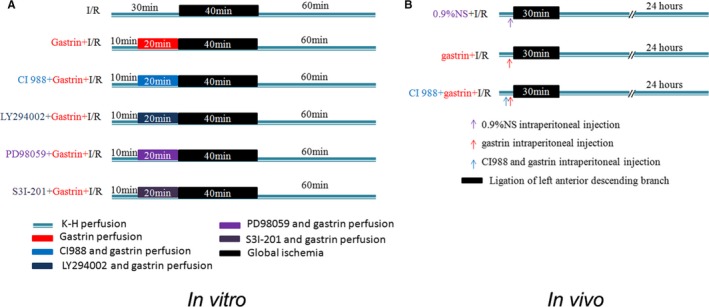
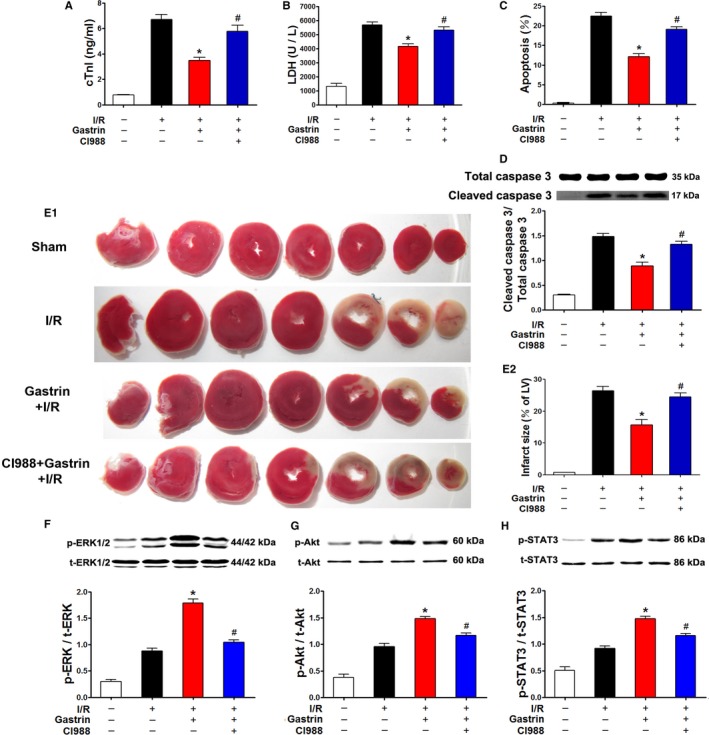
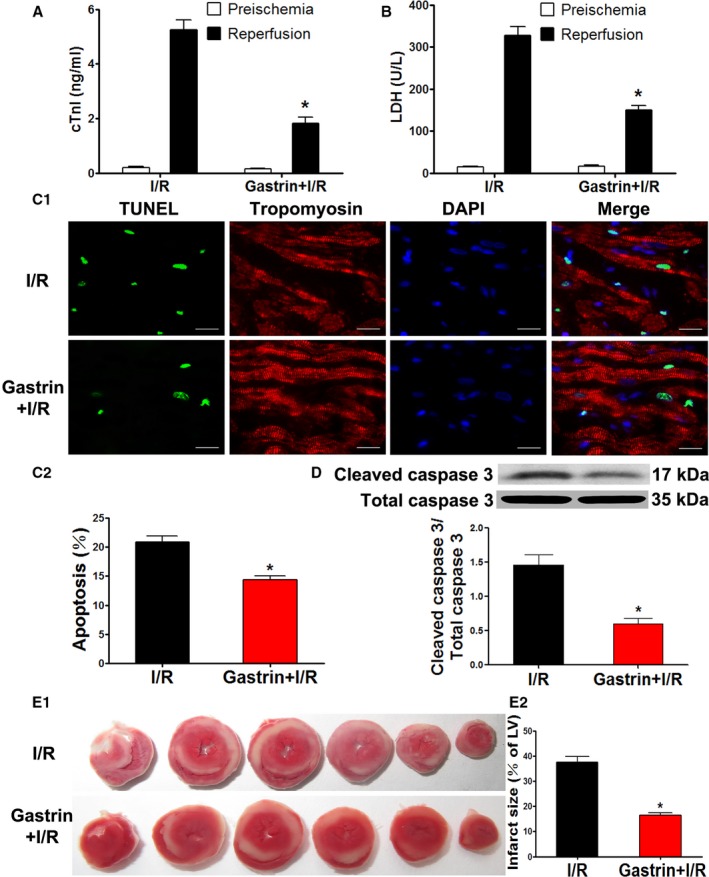
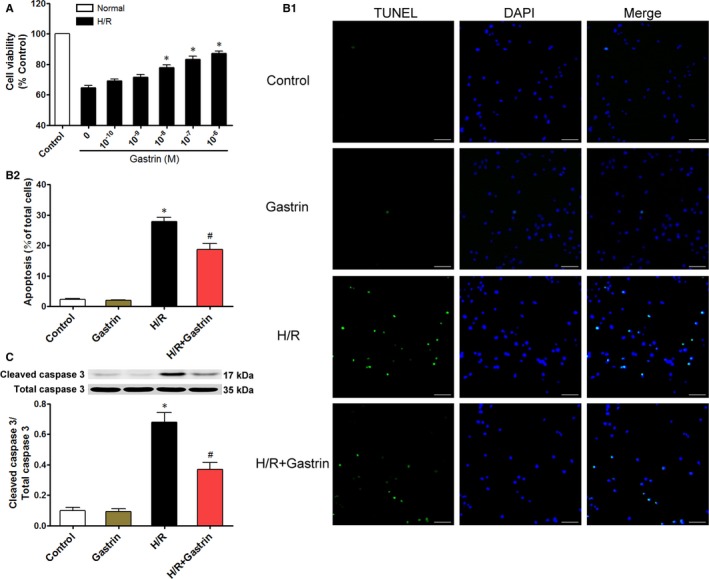
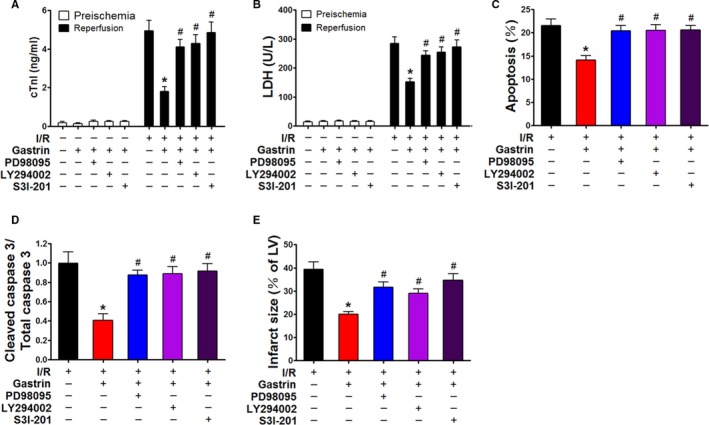
Adult male Sprague-Dawley rats were used in the experiments. The hearts in living rats or isolated Langendorff-perfused rat hearts were subjected to ischemia followed by reperfusion to induce myocardial IRI. Gastrin, alone or with an antagonist, was administered before the induction of myocardial IRI. We found that gastrin improved myocardial function and reduced the expression of myocardial injury markers, infarct size, and cardiomyocyte apoptosis induced by IRI. Gastrin increased the phosphorylation levels of ERK1/2 (extracellular signal-regulated kinase 1/2), AKT (protein kinase B), and STAT3 (signal transducer and activator of transcription 3), indicating its ability to activate the RISK (reperfusion injury salvage kinase) and SAFE (survivor activating factor enhancement) pathways. The presence of inhibitors of ERK1/2, AKT, or STAT3 abrogated the gastrin-mediated protection. The protective effect of gastrin was via CCK2R (cholecystokinin 2 receptor) because the CCK2R blocker CI988 prevented the gastrin-mediated protection of the heart with IRI. Moreover, we found a negative correlation between serum levels of cardiac troponin I and gastrin in patients with unstable angina pectoris undergoing percutaneous coronary intervention, suggesting a protective effect of gastrin in human cardiomyocytes.
These results indicate that gastrin can reduce myocardial IRI by activation of the RISK and SAFE pathways.
缺血/再灌注损伤(IRI)是缺血性心脏病最主要的并发症之一。胃泌素已成为心血管功能的调节剂,在缺氧中发挥关键的保护作用。心肌梗死患者的血清胃泌素水平升高,但这一发现的病理生理意义尚不清楚。本研究旨在确定胃泌素是否以及如何保护心肌细胞免受 IRI。
实验中使用成年雄性 Sprague-Dawley 大鼠。活体大鼠或离体 Langendorff 灌流心脏的心脏受到缺血后再灌注,以诱导心肌 IRI。在诱导心肌 IRI 之前,单独给予胃泌素或与拮抗剂一起给予胃泌素。我们发现,胃泌素改善了心肌功能,降低了 IRI 诱导的心肌损伤标志物表达、梗死面积和心肌细胞凋亡。胃泌素增加了 ERK1/2(细胞外信号调节激酶 1/2)、AKT(蛋白激酶 B)和 STAT3(信号转导和转录激活因子 3)的磷酸化水平,表明其能够激活 RISK(再灌注损伤挽救激酶)和 SAFE(存活激活因子增强)途径。ERK1/2、AKT 或 STAT3 的抑制剂的存在消除了胃泌素介导的保护作用。胃泌素的保护作用是通过 CCK2R(胆囊收缩素 2 受体)实现的,因为 CCK2R 阻断剂 CI988 阻止了 IRI 心脏中胃泌素介导的保护作用。此外,我们发现接受经皮冠状动脉介入治疗的不稳定型心绞痛患者的血清心肌肌钙蛋白 I 水平与胃泌素呈负相关,提示胃泌素对人类心肌细胞具有保护作用。
这些结果表明,胃泌素可以通过激活 RISK 和 SAFE 途径减少心肌 IRI。