State Key Laboratory of Oncology in South China, Collaborative Innovation Centre for Cancer Medicine, Sun Yat-sen University Cancer Center, No. 651 Dongfeng East Road, Guangzhou, 510060, People's Republic of China.
Department of the VIP Region, Sun Yat-sen University Cancer Center, Guangzhou, 510060, People's Republic of China.
J Transl Med. 2018 Jul 13;16(1):195. doi: 10.1186/s12967-018-1570-z.
Currently, mismatch repair-deficient (dMMR) status is a promising candidate for targeted immune checkpoint inhibition therapy in colorectal cancer (CRC) patients, however, the potential immunological mechanism has not yet been well clarified and some other predictors need to be excavated as well.
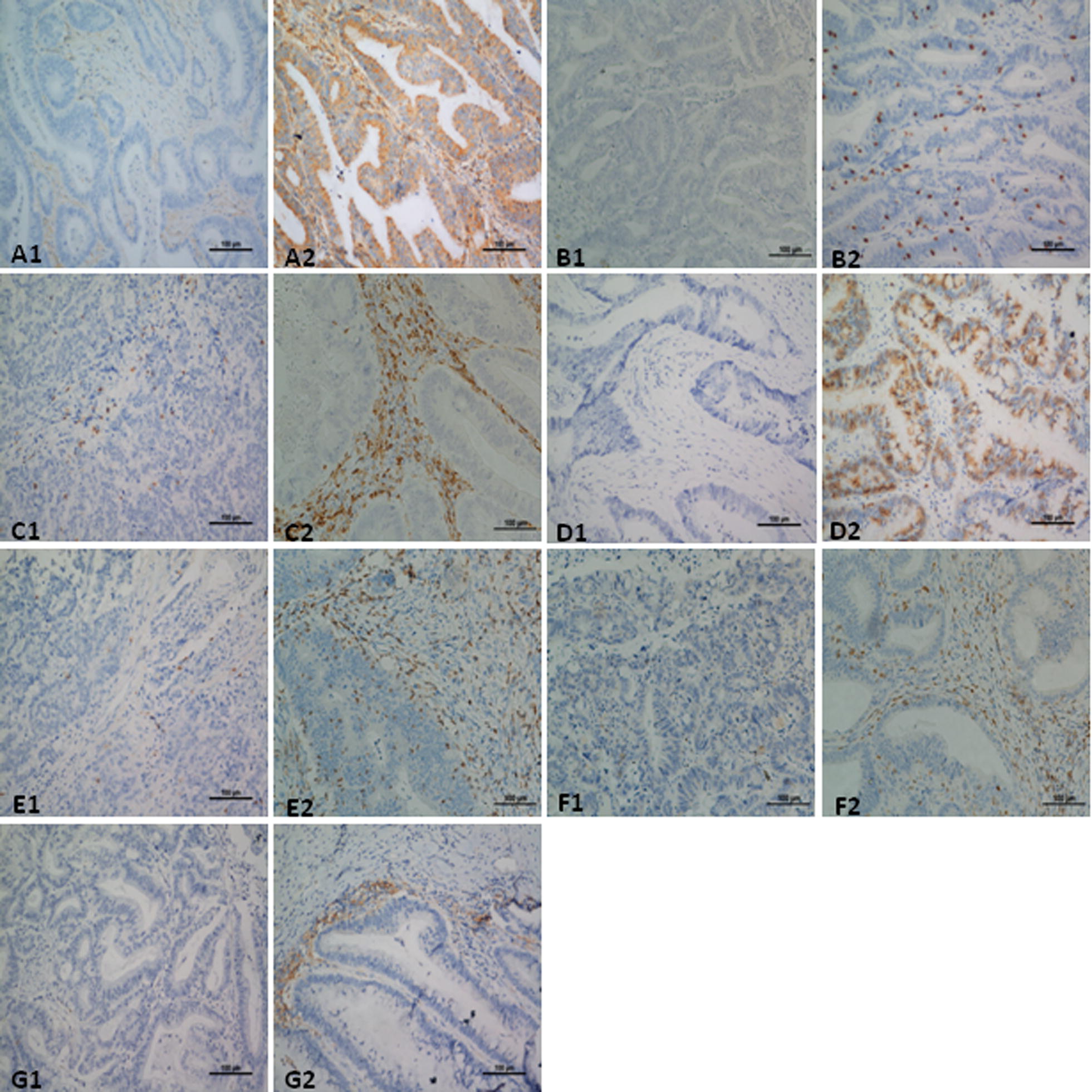
We collected 330 CRC patients by the match of mismatch repair-proficient (167) and dMMR (163), explored the relationship between MMR status and some important immune molecules including MHC class I, CD3, CD4, CD8, CD56, programmed death-1 and programmed death ligand-1, and investigated the risk factors for dMMR status as well as low MHC class I expression. The Pearson Chi square test was used for analyzing the associations between clinicopathological and immune characteristics and MMR status, and two categories logistic regression model was used for univariate and multivariate analysis to predict the odds ratio of risk factors for dMMR status and low MHC class I expression.
Multivariate logistic regression analysis showed that low MHC class I and CD4 expression and high CD8 expression were significant risk factors for dMMR status [odds ratio (OR) = 24.66, 2.94 and 2.97, respectively; all p < 0.05] and dMMR status was the only risk factor for low MHC class I expression (OR = 15.34; p < 0.001).
High CD8 and low MHC class I expression suggests the contradiction and complexity of immune microenvironment in dMMR CRC patients. Some other immunocytes such as CD56 cells might also participate in the process of immune checkpoint inhibition, whereas needs further investigations.
目前,错配修复缺陷(dMMR)状态是结直肠癌(CRC)患者靶向免疫检查点抑制治疗的有前途的候选者,然而,潜在的免疫机制尚未得到很好的阐明,还需要挖掘一些其他预测因子。
我们通过匹配错配修复 proficient(167 例)和 dMMR(163 例)收集了 330 例 CRC 患者,探讨了 MMR 状态与一些重要免疫分子(包括 MHC Ⅰ类、CD3、CD4、CD8、CD56、程序性死亡受体 1 和程序性死亡配体 1)之间的关系,并研究了 dMMR 状态和低 MHC Ⅰ类表达的危险因素。Pearson Chi 平方检验用于分析临床病理和免疫特征与 MMR 状态之间的关系,二分类 logistic 回归模型用于单因素和多因素分析,以预测 dMMR 状态和低 MHC Ⅰ类表达的危险因素的比值比。
多因素 logistic 回归分析表明,低 MHC Ⅰ类和 CD4 表达以及高 CD8 表达是 dMMR 状态的显著危险因素[比值比(OR)分别为 24.66、2.94 和 2.97;均 p<0.05],dMMR 状态是低 MHC Ⅰ类表达的唯一危险因素(OR=15.34;p<0.001)。
高 CD8 和低 MHC Ⅰ类表达提示 dMMR CRC 患者免疫微环境的矛盾和复杂性。其他一些免疫细胞,如 CD56 细胞,也可能参与免疫检查点抑制过程,这需要进一步研究。