Health Protection Research Unit, Wolfson Building, Institute of Cellular Medicine, Newcastle University, Newcastle Upon Tyne NE2 4AA, United Kingdom.
Health Protection Research Unit, Wolfson Building, Institute of Cellular Medicine, Newcastle University, Newcastle Upon Tyne NE2 4AA, United Kingdom; Department of Pharmacology and Toxicology, Faculty of Pharmacy, Cairo University, Kasr El-Aini St., Cairo 11562, Egypt.
J Hepatol. 2018 Nov;69(5):1123-1135. doi: 10.1016/j.jhep.2018.06.027. Epub 2018 Jul 11.
BACKGROUND & AIMS: Primary biliary cholangitis (PBC) is an autoimmune-associated chronic liver disease triggered by environmental factors, such as exposure to xenobiotics, which leads to a loss of tolerance to the lipoic acid-conjugated regions of the mitochondrial pyruvate dehydrogenase complex, typically to the E2 component. We aimed to identify xenobiotics that might be involved in the environmental triggering of PBC.
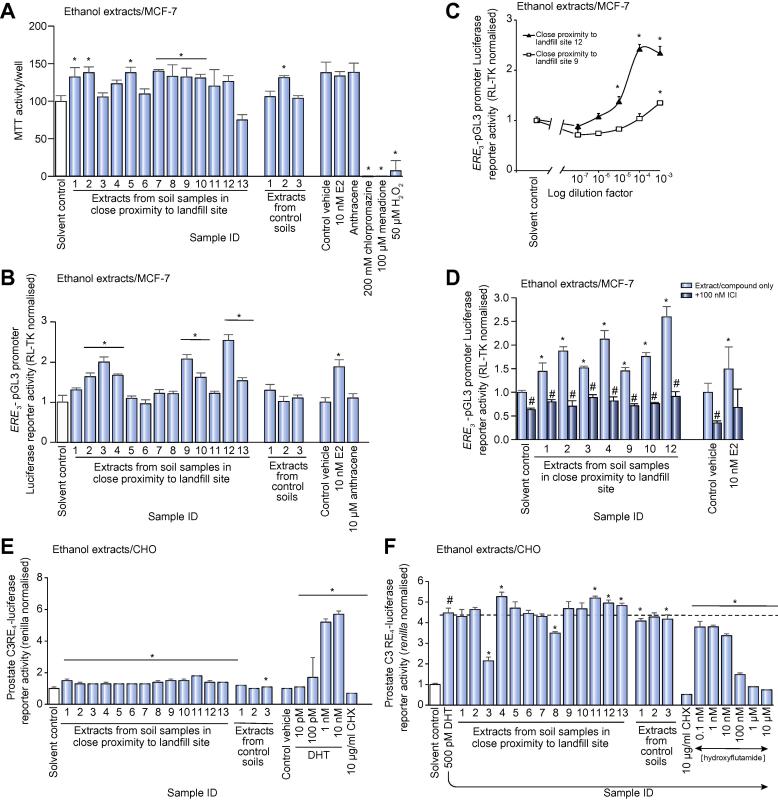
Urban landfill and control soil samples from a region with high PBC incidence were screened for xenobiotic activities using analytical, cell-based xenobiotic receptor activation assays and toxicity screens.
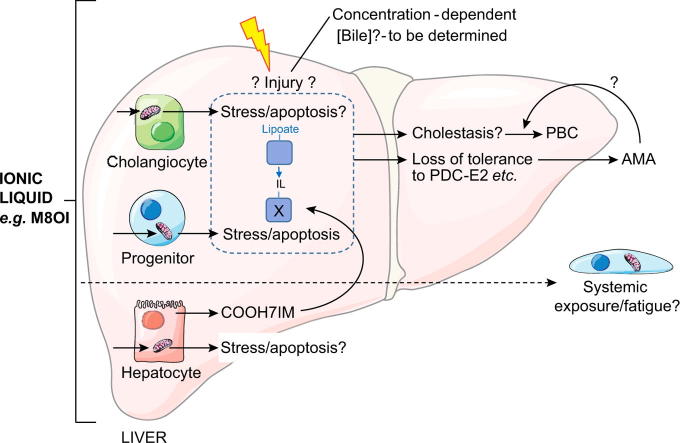
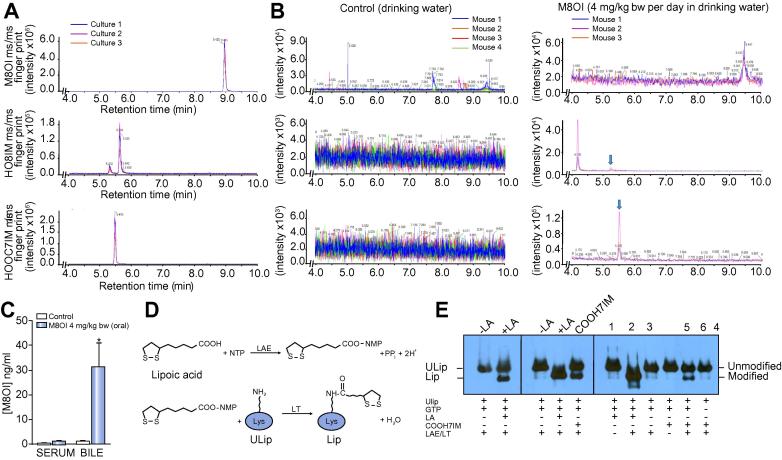
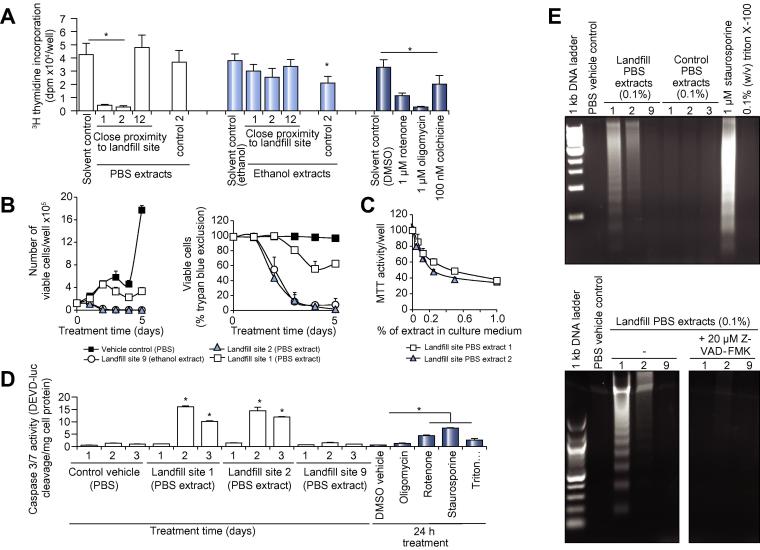
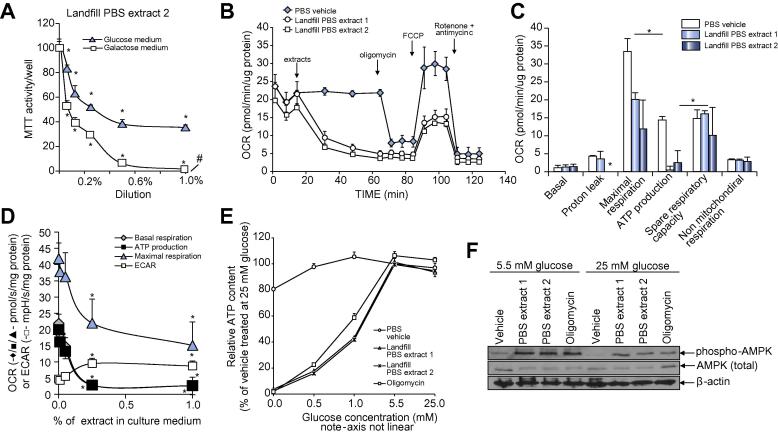
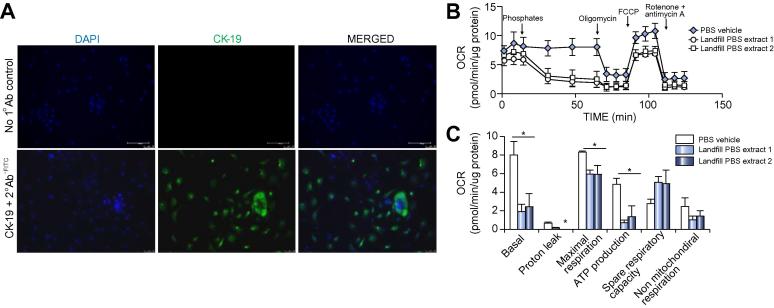
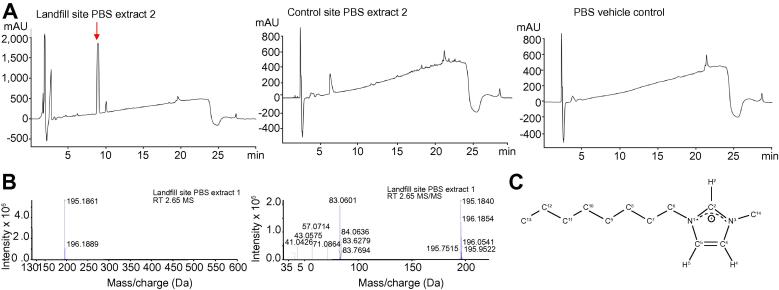
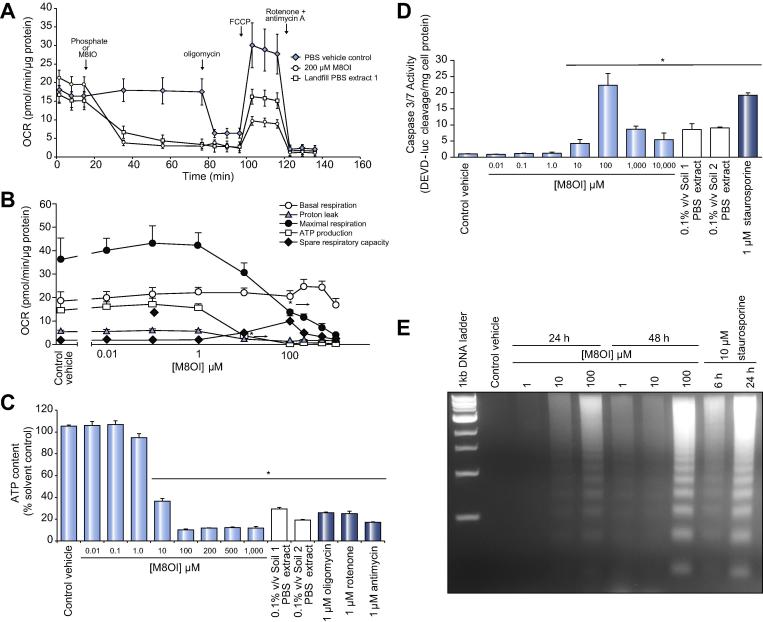
A variety of potential xenobiotic classes were ubiquitously present, as identified by their interaction with xenobiotic receptors - aryl hydrocarbon receptor, androgen receptor and peroxisome proliferator activated receptor alpha - in cell-based screens. In contrast, xenoestrogens were present at higher levels in soil extracts from around an urban landfill. Furthermore, two landfill sampling sites contained a chemical(s) that inhibited mitochondrial oxidative phosphorylation and induced the apoptosis of a hepatic progenitor cell. The mitochondrial effect was also demonstrated in human liver cholangiocytes from three separate donors. The chemical was identified as the ionic liquid [3-methyl-1-octyl-1H-imidazol-3-ium] (M8OI) and the toxic effects were recapitulated using authentic pure chemical. A carboxylate-containing human hepatocyte metabolite of M8OI, bearing structural similarity to lipoic acid, was also enzymatically incorporated into the E2 component of the pyruvate dehydrogenase complex via the exogenous lipoylation pathway in vitro.
These results identify, for the first time, a xenobiotic in the environment that may be related to and/or be a component of an environmental trigger for PBC. Therefore, further study in experimental animal models is warranted, to determine the risk of exposure to these ionic liquids.
Primary biliary cholangitis is a liver disease in which most patients have antibodies to mitochondrial proteins containing lipoic acid binding site(s). This paper identified a man-made chemical present in soils around a waste site. It was then shown that this chemical was metabolized into a product with structural similarity to lipoic acid, which was capable of replacing lipoic acid in mitochondrial proteins.
原发性胆汁性胆管炎(PBC)是一种由环境因素(如接触异源生物)触发的自身免疫性慢性肝病,导致对脂酰基辅酶 A 结合区域的丙酮酸脱氢酶复合物的耐受丧失,通常是 E2 成分。我们旨在确定可能参与 PBC 环境触发的异源生物。
使用分析、基于细胞的异源生物受体激活测定和毒性筛选,筛选来自高 PBC 发病率地区的城市垃圾填埋场和对照土壤样本中的异源生物活性。
通过细胞筛选,鉴定了各种潜在的异源生物类,这些类与异源生物受体(芳烃受体、雄激素受体和过氧化物酶体增殖物激活受体α)相互作用。相比之下,在城市垃圾填埋场周围的土壤提取物中,存在更高水平的外源性雌激素。此外,两个垃圾填埋场采样点含有一种抑制线粒体氧化磷酸化并诱导肝祖细胞凋亡的化学物质。这种线粒体效应也在来自三个不同供体的人类肝胆管细胞中得到证实。该化学物质被鉴定为离子液体[3-甲基-1-辛基-1H-咪唑-3-翁](M8OI),并使用纯化学物质重现了其毒性作用。M8OI 的羧酸盐人类肝细胞代谢产物与脂酰基辅酶 A 具有结构相似性,也通过体外外源性脂酰化途径被纳入丙酮酸脱氢酶复合物的 E2 成分。
这些结果首次确定了环境中的一种异源生物,它可能与 PBC 的环境触发因素有关,或者是其组成部分。因此,需要在实验动物模型中进一步研究,以确定接触这些离子液体的风险。
原发性胆汁性胆管炎是一种肝脏疾病,其中大多数患者对含有脂酰基辅酶 A 结合位点的线粒体蛋白有抗体。本文在废物场周围的土壤中发现了一种人造化学物质。然后表明,这种化学物质被代谢成一种与脂酰基辅酶 A 具有结构相似性的产物,能够替代线粒体蛋白中的脂酰基辅酶 A。