Institute of Bioengineering, Research Center of Biotechnology RAS, Moscow, Russia.
Sci Rep. 2018 Jul 13;8(1):10667. doi: 10.1038/s41598-018-28795-y.
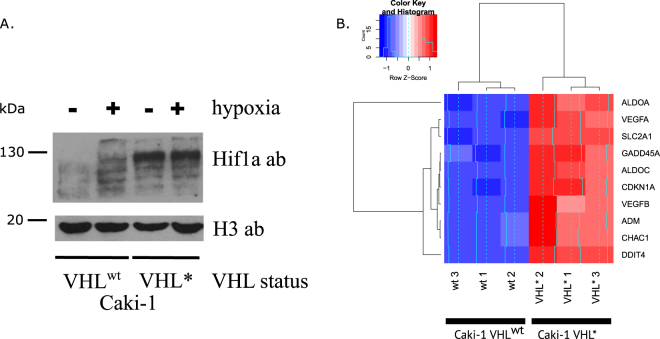
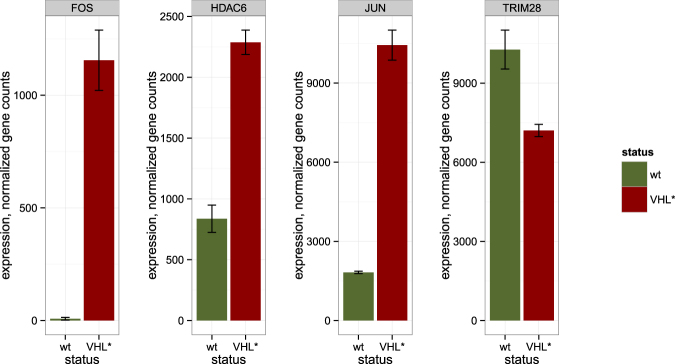
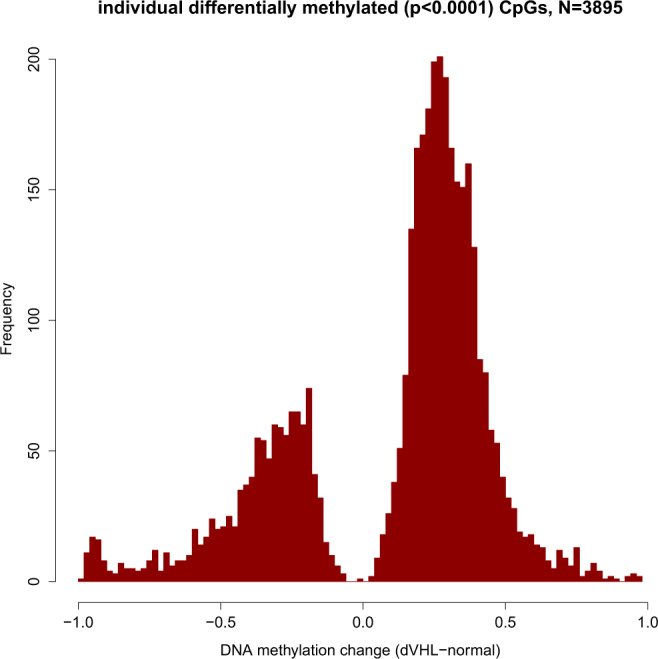
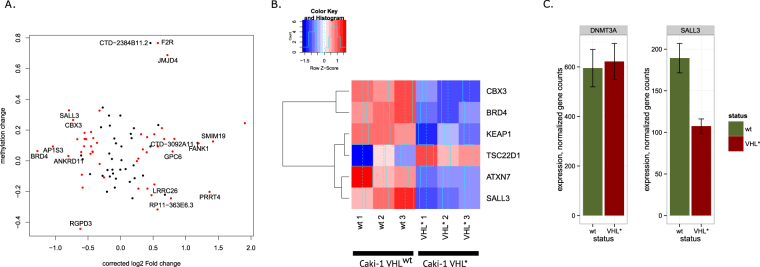
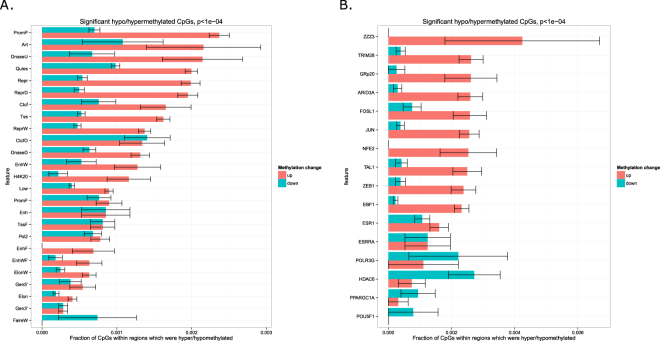
VHL inactivation is a key oncogenic event for renal carcinomas. In normoxia, VHL suppresses HIF1a-mediated transcriptional response, which is characteristic to hypoxia. It has previously been shown that hypoxic conditions inhibit TET-dependent hydroxymethylation of cytosines and cause DNA hypermethylation at gene promoters. In this work, we performed VHL inactivation by CRISPR/Cas9 and studied its effects on gene expression and DNA methylation. We showed that even without hypoxia, VHL inactivation leads to hypermethylation of the genome. Hypermethylated cytosines were evenly distributed throughout the genome with a slight preference for AP-1 (JUN and FOS) binding sites. Hypermethylated cytosines tended to be enriched within the binding sites of transcription factors that showed increased gene expression after VHL inactivation. We also observed promoter hypermethylation associated with decreased gene expression for several regulators of transcription and DNA methylation including SALL3.
VHL 失活是肾细胞癌的一个关键致癌事件。在常氧条件下,VHL 抑制 HIF1a 介导的转录反应,这是缺氧的特征。以前已经表明,缺氧条件抑制 TET 依赖性胞嘧啶羟甲基化,并导致基因启动子处的 DNA 高甲基化。在这项工作中,我们通过 CRISPR/Cas9 进行 VHL 失活,并研究了它对基因表达和 DNA 甲基化的影响。我们表明,即使没有缺氧,VHL 失活也会导致基因组的过度甲基化。过度甲基化的胞嘧啶在整个基因组中均匀分布,略微偏向于 AP-1(JUN 和 FOS)结合位点。过度甲基化的胞嘧啶倾向于富集在转录因子的结合位点内,这些转录因子在 VHL 失活后基因表达增加。我们还观察到与几个转录和 DNA 甲基化调节剂(包括 SALL3)的基因表达降低相关的启动子过度甲基化。