Wu Yuan, Li Dan, Zhou Fang, Liang Hao, Liu Yuan, Hou Weijia, Yuan Quan, Zhang Xiaobing, Tan Weihong
Molecular Science and Biomedicine Laboratory , State Key Laboratory of Chemo/Bio-Sensing and Chemometrics , College of Biology , College of Chemistry and Chemical Engineering , Hunan University , Changsha , 410082 , China . Email:
Center for Research at Bio/Nano Interface , Department of Chemistry , Department of Physiology and Functional Genomics , Health Cancer Center , UF Genetics Institute and McKnight Brain Institute , University of Florida , Gainesville , Florida 32611-7200 , USA.
Chem Sci. 2018 May 17;9(24):5427-5434. doi: 10.1039/c8sc00490k. eCollection 2018 Jun 28.
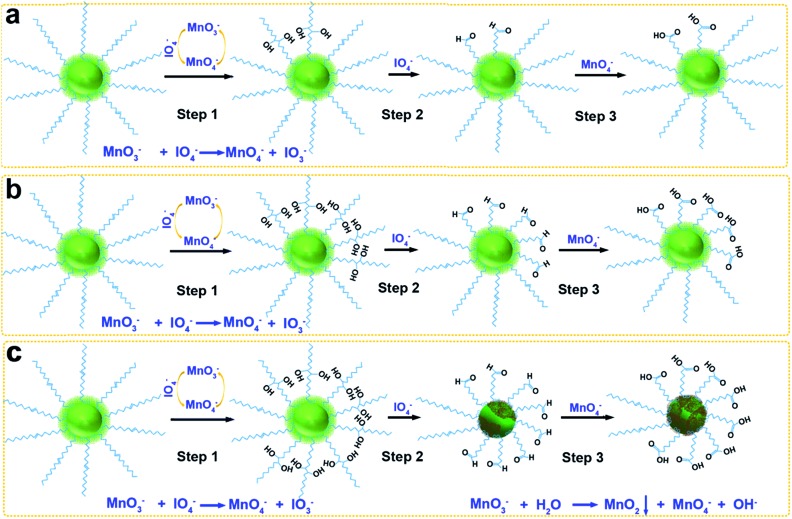
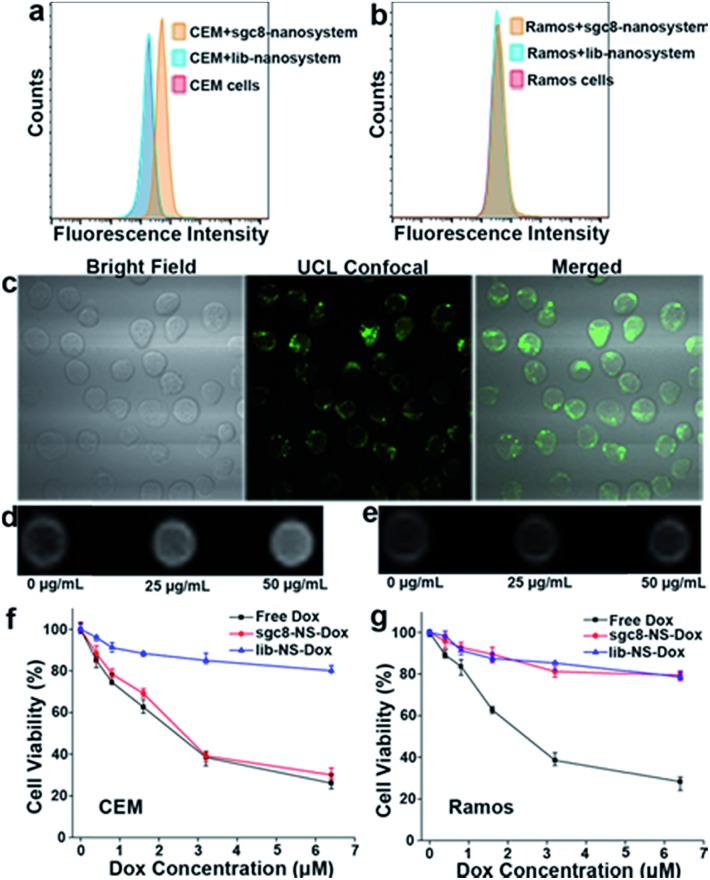
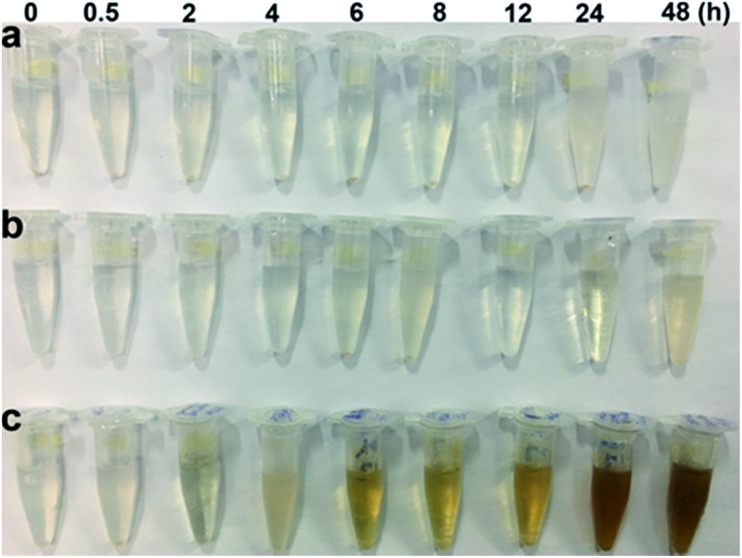
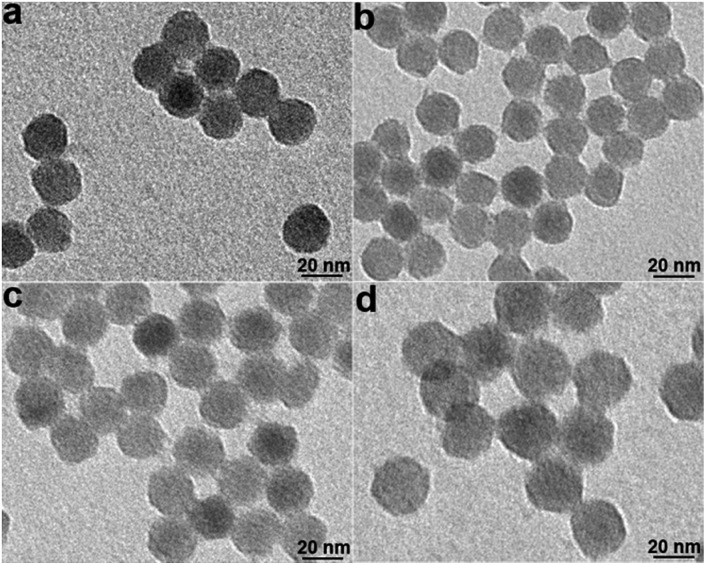
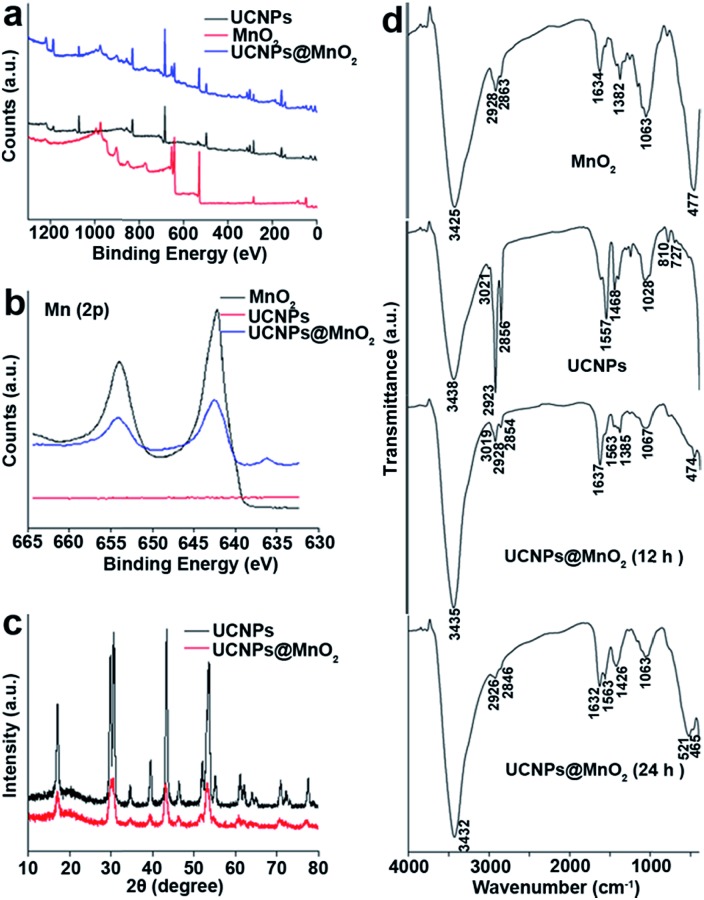
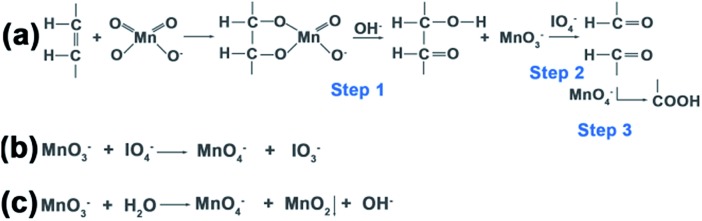
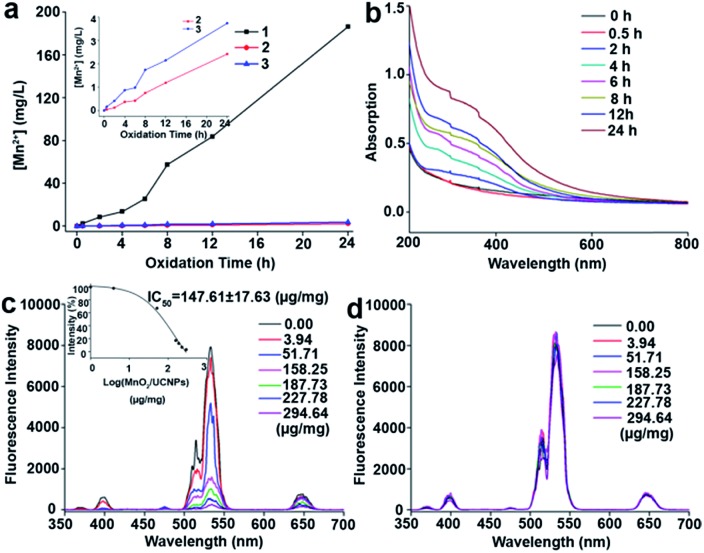
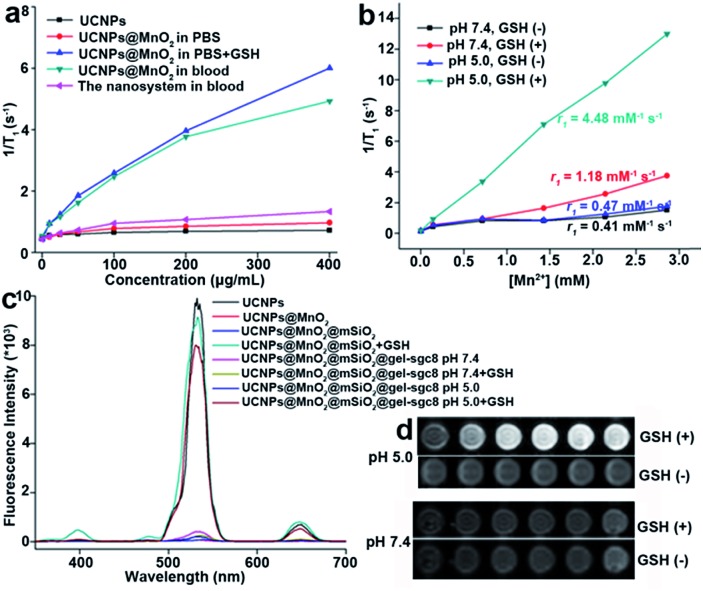
We have developed a simple and versatile strategy for growth of MnO on the surfaces of oleic acid-capped hydrophobic upconversion nanoparticles (UCNPs) by optimizing the component concentrations in the Lemieux-von Rudloff reagent. The oxidation time was shortened by a factor of two compared to that of the reported method. This oxidation process has no obvious adverse effects on the phases of UCNPs. STEM, X-ray photoelectron spectroscopy (XPS), Fourier transform infrared (FTIR) and energy-dispersive X-ray analysis (EDX) characterization demonstrated the successful growth of MnO on the surfaces of UCNPs. Furthermore, when the weight ratio of MnO/UCNPs reached (147.61 ± 17.63) μg mg, 50% of the initial upconversion luminescence of UCNPs was quenched, as revealed by fluorescence and inductively coupled plasma optical emission spectrometry (ICP-OES) results. The presence of the surface MnO precipitate not only confers high dispersity of UCNPs in water, but also allows further activatable magnetic resonance imaging (MRI) and fluorescence multimodal imaging after reduction to Mn by intracellular glutathione (GSH). A novel targeted drug carrier nanosystem was prepared to protect MnO from early decomposition in blood circulation by coating with mesoporous silica and capping with a gelatin nanolayer. Aptamer sgc8 was then attached to the surface of the gelatin nanolayer by covalent crosslinking to achieve targeted drug delivery. The results suggest that this nanosystem shows promise for further applications in cancer cell imaging and therapy.
我们通过优化Lemieux-von Rudloff试剂中的成分浓度,开发了一种简单且通用的策略,用于在油酸包覆的疏水上转换纳米颗粒(UCNPs)表面生长MnO。与报道的方法相比,氧化时间缩短了一半。该氧化过程对UCNPs的相没有明显的不利影响。扫描透射电子显微镜(STEM)、X射线光电子能谱(XPS)、傅里叶变换红外光谱(FTIR)和能量色散X射线分析(EDX)表征证明了MnO在UCNPs表面成功生长。此外,荧光和电感耦合等离子体发射光谱(ICP-OES)结果表明,当MnO/UCNPs的重量比达到(147.61±17.63)μg mg时,UCNPs初始上转换发光的50%被猝灭。表面MnO沉淀物的存在不仅赋予UCNPs在水中的高分散性,而且在被细胞内谷胱甘肽(GSH)还原为Mn后,还允许进一步进行可激活的磁共振成像(MRI)和荧光多模态成像。通过用介孔二氧化硅包覆并用明胶纳米层封端,制备了一种新型的靶向药物载体纳米系统,以保护MnO在血液循环中不提前分解。然后通过共价交联将适体sgc8连接到明胶纳米层表面,以实现靶向药物递送。结果表明,该纳米系统在癌细胞成像和治疗方面具有进一步应用的潜力。