Key Laboratory of Animal Nutrition & Feed Science, Zhejiang Province, College of Animal Sciences, Zhejiang University, Hangzhou 310058, China.
Department of Animal Science, College of Agricultural, Consumer and Environmental Science, University of Illinois at Urbana-Champaign, Urbana, IL 61801, USA.
Nutrients. 2018 Jul 16;10(7):907. doi: 10.3390/nu10070907.
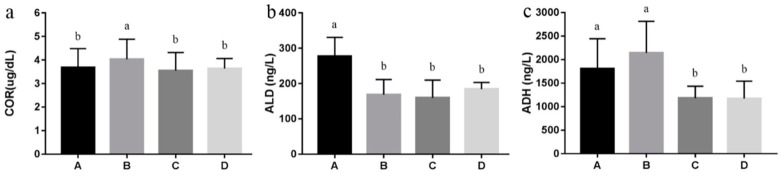
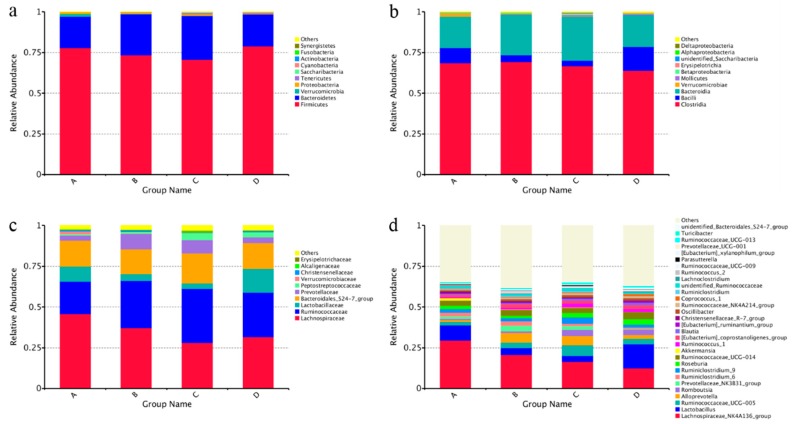
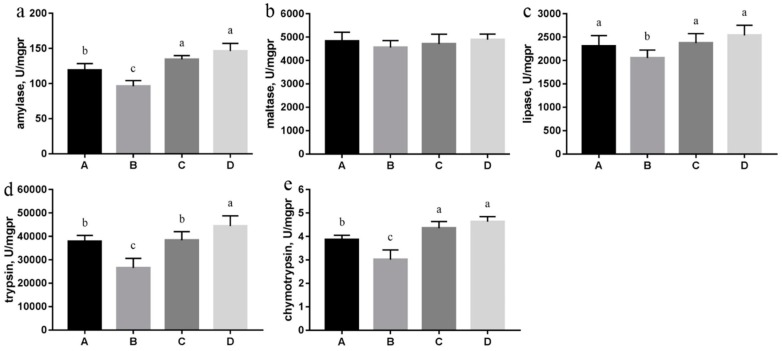
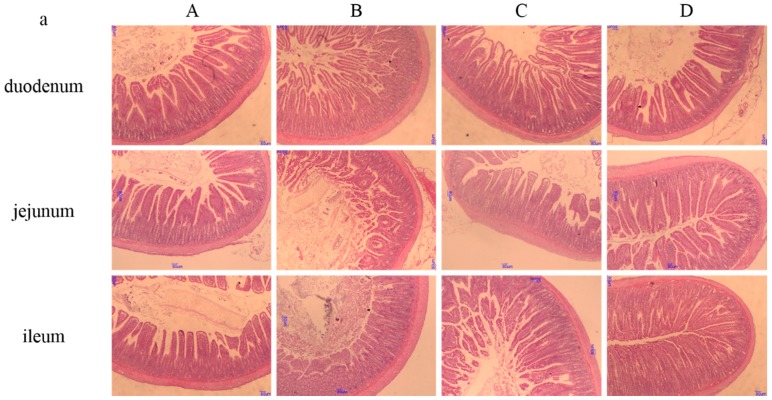
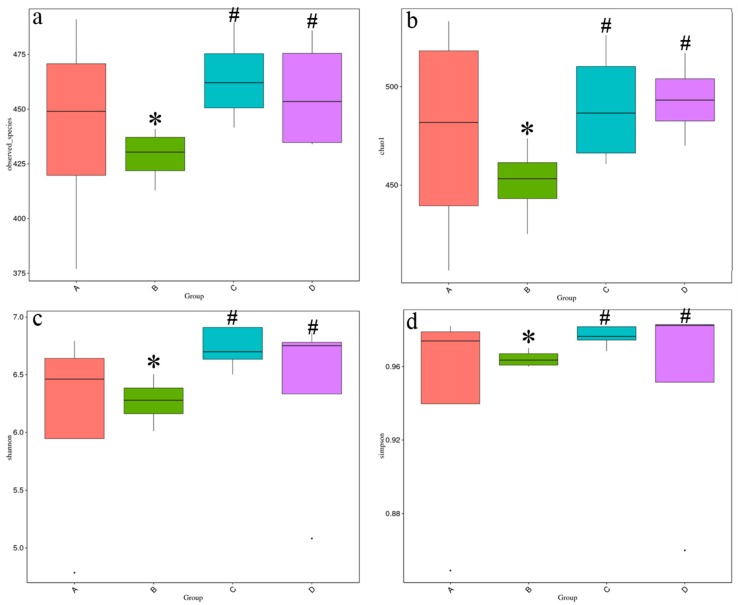
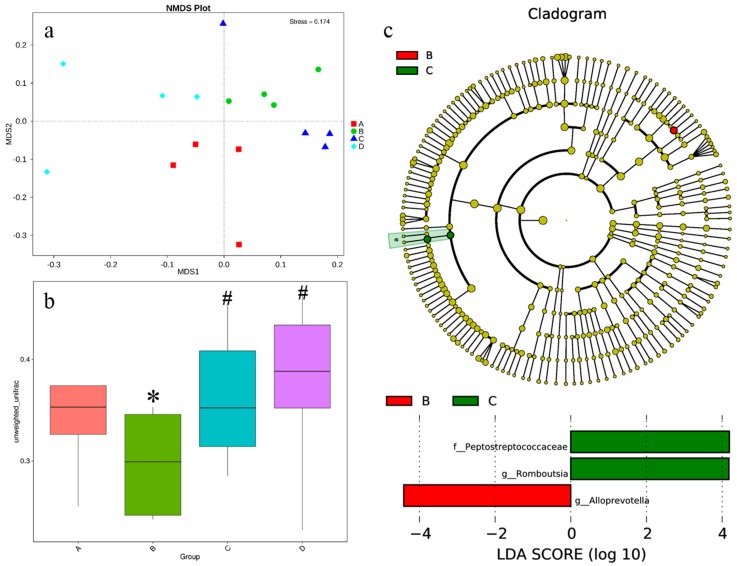
To investigate the role of betaine in the intestinal functions of high-salt stressed rats, 32 four-week-old male Sprague⁻Dawley rats weighing 128.0 (SD 5.06) g were randomly allotted to four groups. The control group was fed with standard chow diet (0.4% NaCl), while the treatment groups were fed a high-salt diet (4.0% NaCl) supplemented with betaine at 0.0%, 0.5%, and 1.0%, respectively. The experiment lasted 28 days. The results showed that rats in the high-salt stressed groups had a significant increase in both water intake and kidney index ( < 0.05). The level of cortisol (COR) was increased in the high-salt stressed rats ( < 0.05), and returned to normal levels with betaine supplementation ( < 0.05). Aldosterone (ALD) was decreased in all high-salt diet groups ( < 0.05). Betaine supplementation decreased antidiuretic hormone (ADH) levels significantly ( < 0.05). High salt stress decreased the activities of amylase, lipase, trypsin, and chymotrypsin in the small intestinal luminal contents ( < 0.05), however, these activities increased with betaine supplementation ( < 0.05). The gut villus height of small intestine was significantly decreased in the high-salt diet group ( < 0.05). However, they were higher in the betaine supplementation groups than in the control group ( < 0.05). A similar result was observed in the ratio of villus height to crypt depth ( < 0.05). Both alpha diversity indexes and beta diversity indexes showed that high salt stress decreased the diversity of intestinal microbiota, while supplementation with betaine counteracted the negative effect. In conclusion, the results indicate that betaine improves intestinal function by enhancing the digestive enzymes, ameliorating intestinal morphology, and enriching intestinal microbiota of high-salt stressed rats.
为了研究甜菜碱在高盐应激大鼠肠道功能中的作用,将 32 只 4 周龄雄性 Sprague-Dawley 大鼠(体重 128.0(标准差 5.06)g)随机分为 4 组。对照组给予标准饲料(0.4%NaCl),治疗组给予高盐饲料(4.0%NaCl),并分别补充 0.0%、0.5%和 1.0%的甜菜碱。实验持续 28 天。结果显示,高盐应激组大鼠的饮水量和肾脏指数均显著增加(<0.05)。高盐应激大鼠的皮质醇(COR)水平升高(<0.05),补充甜菜碱后恢复正常(<0.05)。所有高盐饮食组的醛固酮(ALD)均降低(<0.05)。补充甜菜碱可显著降低抗利尿激素(ADH)水平(<0.05)。高盐应激降低了小肠腔内容物中淀粉酶、脂肪酶、胰蛋白酶和糜蛋白酶的活性(<0.05),但补充甜菜碱后这些活性增加(<0.05)。高盐饮食组小肠绒毛高度显著降低(<0.05)。然而,与对照组相比,甜菜碱补充组的绒毛高度更高(<0.05)。绒毛高度与隐窝深度的比值也有类似的结果(<0.05)。无论是 alpha 多样性指数还是 beta 多样性指数都表明,高盐应激降低了肠道微生物群的多样性,而补充甜菜碱则抵消了这种负面影响。综上所述,这些结果表明,甜菜碱通过增强消化酶、改善肠道形态和丰富高盐应激大鼠的肠道微生物群来改善肠道功能。