Department of Clinical Laboratory, Qilu Hospital of Shandong University, Jinan, Shandong, China (mainland).
Infertility Center, Department of Obstetrics and Gynecology, Qilu Hospital of Shandong University, Jinan, Shandong, China (mainland).
Med Sci Monit. 2020 Jun 6;26:e922160. doi: 10.12659/MSM.922160.
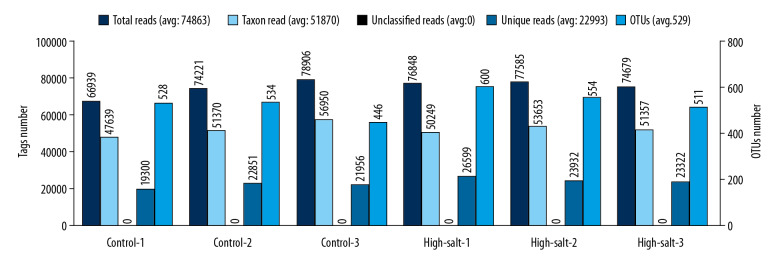
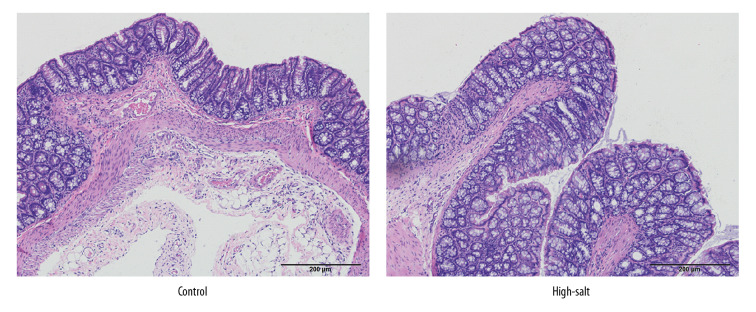
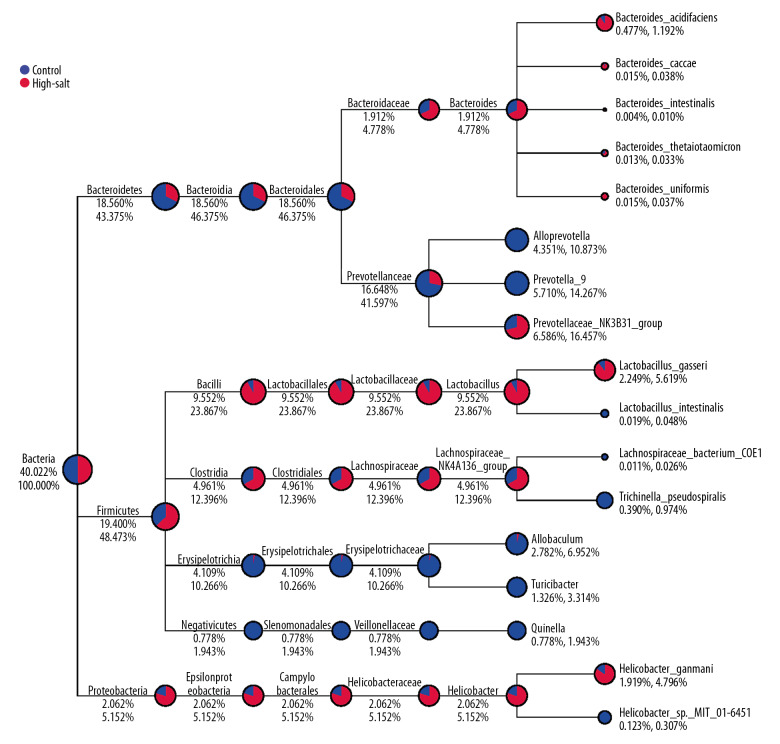
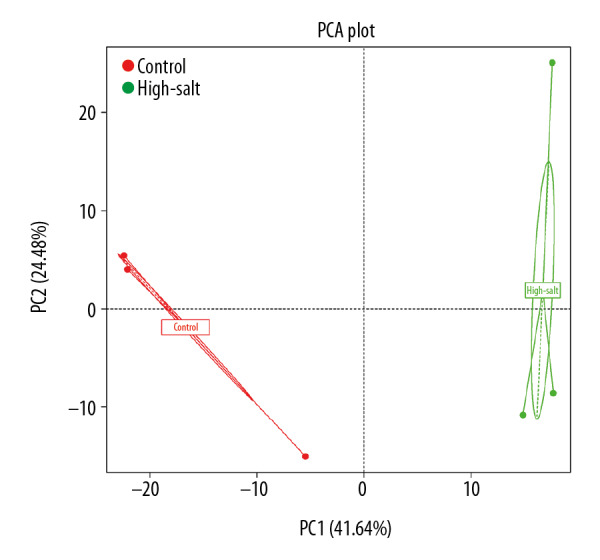
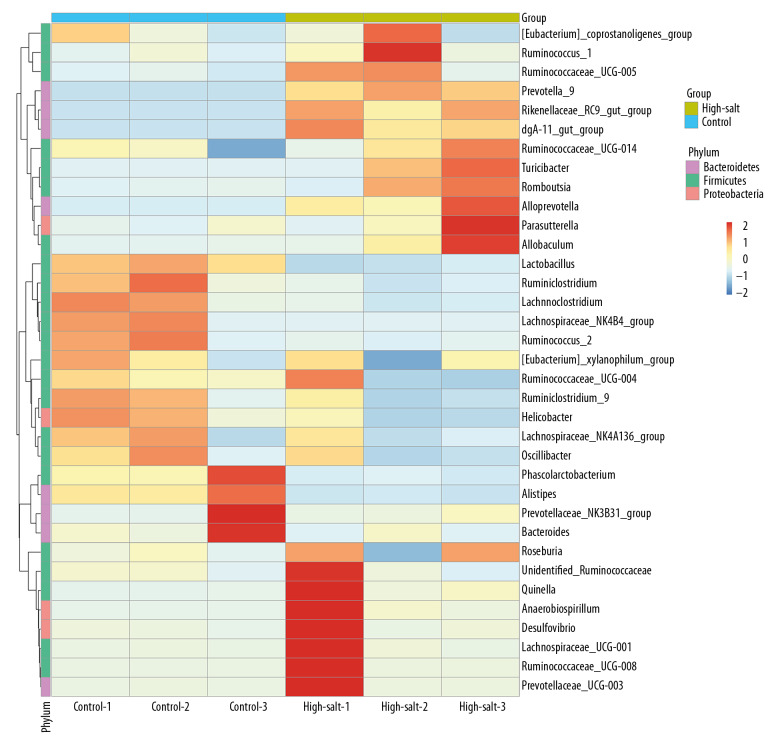
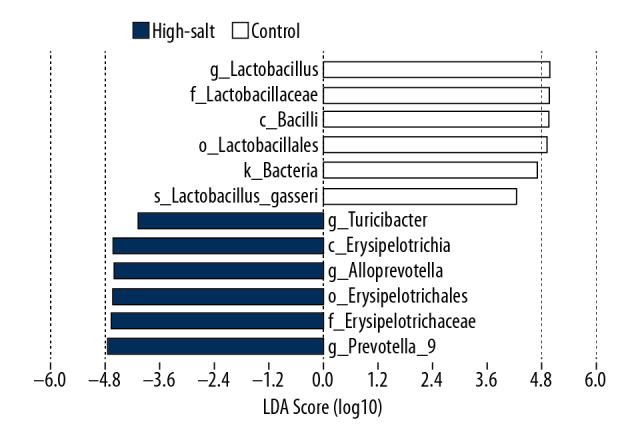
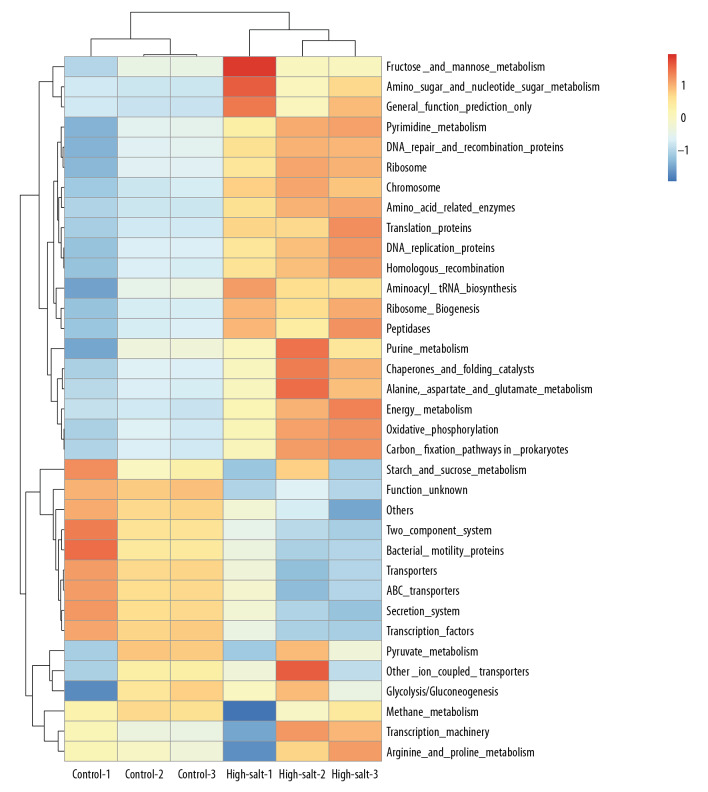
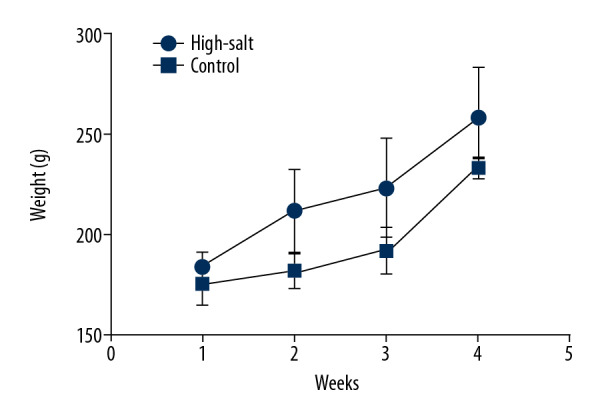
BACKGROUND A high-salt diet may result in chronic disease and changes in the intestinal microbiota. This pilot study aimed to investigate the microbial composition of the intestine in Wistar rats given intragastric high-salt infusions for four weeks. MATERIAL AND METHODS Six 4-week-old male Wistar rats were fed standard chow and divided into the high-salt group (n=3) and the control study group (n=3). Rats in the high-salt group were given 1 ml of 10% NaCl solution intragastrically three times per week for four weeks. The fecal pellets were collected, and the microbiota was characterized using 16S rRNA gene sequencing that targeted the V4 region. The relative abundance of microbial populations was compared using linear discriminant analysis effect size (LEfSe) statistical analysis for the identification of biomarkers between two or more groups, principal component analysis (PCA), and linear discriminant analysis (LDA). Microbial genome prediction was performed using the phylogenetic investigation of communities by reconstructing the unobserved states (PICRUSt) bioinformatics software. RESULTS There was no significant difference in the alpha diversity of the fecal microbiota between the high-salt group and the control group. However, PCA showed structural segregation between the two groups. Further analysis using LEfSe showed that the intestinal contents in the high-salt group had significantly reduced populations of Lactobacillus and Prevotella NK3B31, and a significant increase in Alloprevotella and Prevotella 9, without physiological or pathological changes. CONCLUSIONS A pilot study in Wistar rats showed that high-salt intake was associated with a change in the composition of the intestinal microbiota.
高盐饮食可能导致慢性病和肠道微生物群的变化。本初步研究旨在研究给予胃内高盐灌注四周的 Wistar 大鼠肠道微生物组成。
将 6 只 4 周龄雄性 Wistar 大鼠用标准饲料喂养,并分为高盐组(n=3)和对照组(n=3)。高盐组大鼠每周三次给予 1ml10%NaCl 溶液胃内灌注四周。收集粪便颗粒,使用 16S rRNA 基因测序靶向 V4 区对微生物群落进行特征分析。使用线性判别分析效应大小(LEfSe)统计分析鉴定两组或更多组之间的生物标志物,进行主成分分析(PCA)和线性判别分析(LDA),比较微生物种群的相对丰度。使用基于重建未观察状态的群落系统发育分析(PICRUSt)生物信息学软件对微生物基因组进行预测。
高盐组和对照组粪便微生物群的 alpha 多样性无显著差异。然而,PCA 显示两组之间存在结构分离。进一步使用 LEfSe 分析表明,高盐组肠道内容物中乳杆菌和 Prevotella NK3B31 的丰度显著降低,而 Alloprevotella 和 Prevotella 9 的丰度显著增加,无生理或病理变化。
Wistar 大鼠的初步研究表明,高盐摄入与肠道微生物群落组成的变化有关。