
关于工业抗菌二氧化钛纳米颗粒因活性氧猝灭和中性脂质改变而对结肠细胞产生尺寸依赖性增强细胞毒性的机制洞察
Mechanistic Insight into Size-Dependent Enhanced Cytotoxicity of Industrial Antibacterial Titanium Oxide Nanoparticles on Colon Cells Because of Reactive Oxygen Species Quenching and Neutral Lipid Alteration.
作者信息
Verma Suresh K, Jha Ealisha, Panda Pritam Kumar, Thirumurugan Arun, Parashar S K S, Patro Shubhransu, Suar Mrutyunjay
机构信息
School of Biotechnology, School of Applied Sciences, and Kalinga School of Medical Sciences, KIIT University, Bhubaneswar, Orissa 751024, India.
Department of Physics and Physical Oceanography, Memorial University of Newfoundland, St. John's, Newfoundland and Labrador NL A1C 5S7, Canada.
出版信息
ACS Omega. 2018 Jan 31;3(1):1244-1262. doi: 10.1021/acsomega.7b01522. Epub 2018 Jan 30.
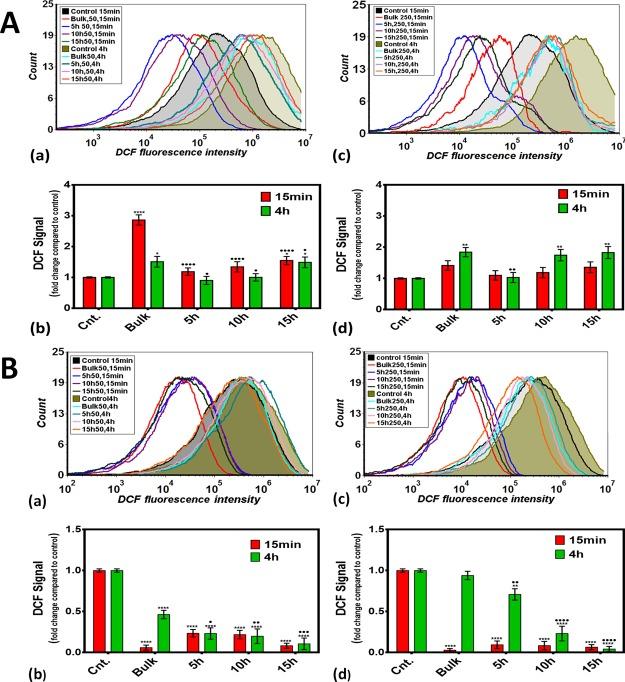
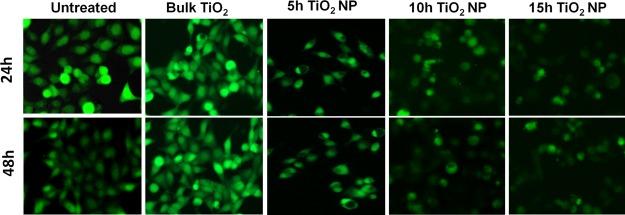
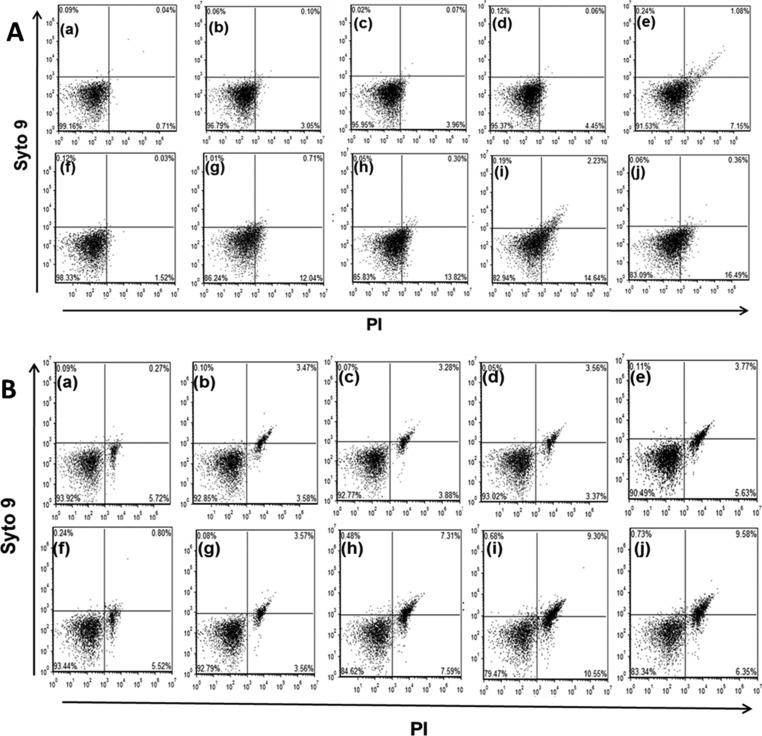
This study evaluates the impact of industrially prepared TiO nanoparticles on the biological system by using an in vitro model of colon cancer cell lines (HCT116). Industrial synthesis of titanium oxide nanoparticles was mimicked on the lab scale by the high-energy ball milling method by milling bulk titanium oxide particles for 5, 10, and 15 h in an ambient environment. The physiochemical characterization by field emission scanning electron microscopy, dynamic light scattering, and UV-visible spectroscopy revealed alteration in the size and surface charge with respect to increase in the milling time. The size was found to be reduced to 82 ± 14, 66 ± 12, and 42 ± 10 nm in 5, 10, and 15 h milled nano TiO from 105 ± 12 nm of bulk TiO, whereas the zeta potential increased along with the milling time in all biological media. Cytotoxicity and genotoxicity assays performed with HCT116 cell lines by MTT assay, oxidative stress, intracellular lipid analysis, apoptosis, and cell cycle estimation depicted cytotoxicity as a consequence of reactive oxygen species quenching and lipid accumulation, inducing significant apoptosis and genotoxic cytotoxicity. In silico analysis depicted the role of Sod1, Sod2, p53, and VLDR proteins-TiO hydrogen bond interaction having a key role in determining the cytotoxicity. The particles exhibited significant antibacterial activities against and .
本研究通过使用结肠癌细胞系(HCT116)的体外模型,评估工业制备的二氧化钛纳米颗粒对生物系统的影响。通过高能球磨法在实验室规模模拟工业合成氧化钛纳米颗粒,即在环境条件下将块状氧化钛颗粒研磨5、10和15小时。用场发射扫描电子显微镜、动态光散射和紫外可见光谱进行的物理化学表征显示,随着研磨时间的增加,尺寸和表面电荷发生了变化。发现5、10和15小时研磨的纳米TiO的尺寸从块状TiO的105±12nm减小到82±14、66±12和42±10nm,而在所有生物介质中,zeta电位随研磨时间增加。通过MTT法、氧化应激、细胞内脂质分析、凋亡和细胞周期评估对HCT116细胞系进行的细胞毒性和遗传毒性测定表明,细胞毒性是活性氧淬灭和脂质积累的结果,诱导了显著的凋亡和遗传毒性细胞毒性。计算机分析表明,Sod1、Sod2、p53和VLDR蛋白与TiO的氢键相互作用在确定细胞毒性中起关键作用。这些颗粒对……和……表现出显著的抗菌活性。





 Zotero 插件