• 文献检索
  • 文档翻译
  • 深度研究
  • 学术资讯
  • Suppr Zotero 插件Zotero 插件
  • 邀请有礼
  • 套餐&价格
  • 历史记录
应用&插件
Suppr Zotero 插件Zotero 插件浏览器插件Mac 客户端Windows 客户端微信小程序
定价
高级版会员购买积分包购买API积分包
服务
文献检索文档翻译深度研究API 文档MCP 服务
关于我们
关于 Suppr公司介绍联系我们用户协议隐私条款
关注我们

Suppr 超能文献

核心技术专利:CN118964589B侵权必究
粤ICP备2023148730 号-1Suppr @ 2026

文献检索

告别复杂PubMed语法,用中文像聊天一样搜索,搜遍4000万医学文献。AI智能推荐,让科研检索更轻松。

立即免费搜索

文件翻译

保留排版,准确专业,支持PDF/Word/PPT等文件格式,支持 12+语言互译。

免费翻译文档

深度研究

AI帮你快速写综述,25分钟生成高质量综述,智能提取关键信息,辅助科研写作。

立即免费体验

认知行为疗法治疗儿童 OCD 的中介机制:功能失调信念的作用。

Mediating Mechanisms in Cognitive Behavioral Therapy for Childhood OCD: The Role of Dysfunctional Beliefs.

机构信息

Department of Child and Adolescent Psychiatry, Academic Medical Center, Meibergdreef 5, 1105 AZ, Amsterdam, The Netherlands.

Academic Center for Child and Adolescent Psychiatry, De Bascule, Meibergdreef 5, 1105 AZ, Amsterdam, The Netherlands.

出版信息

Child Psychiatry Hum Dev. 2019 Apr;50(2):173-185. doi: 10.1007/s10578-018-0830-8.

DOI:10.1007/s10578-018-0830-8
PMID:30032391
原文链接:https://pmc.ncbi.nlm.nih.gov/articles/PMC6428795/
Abstract

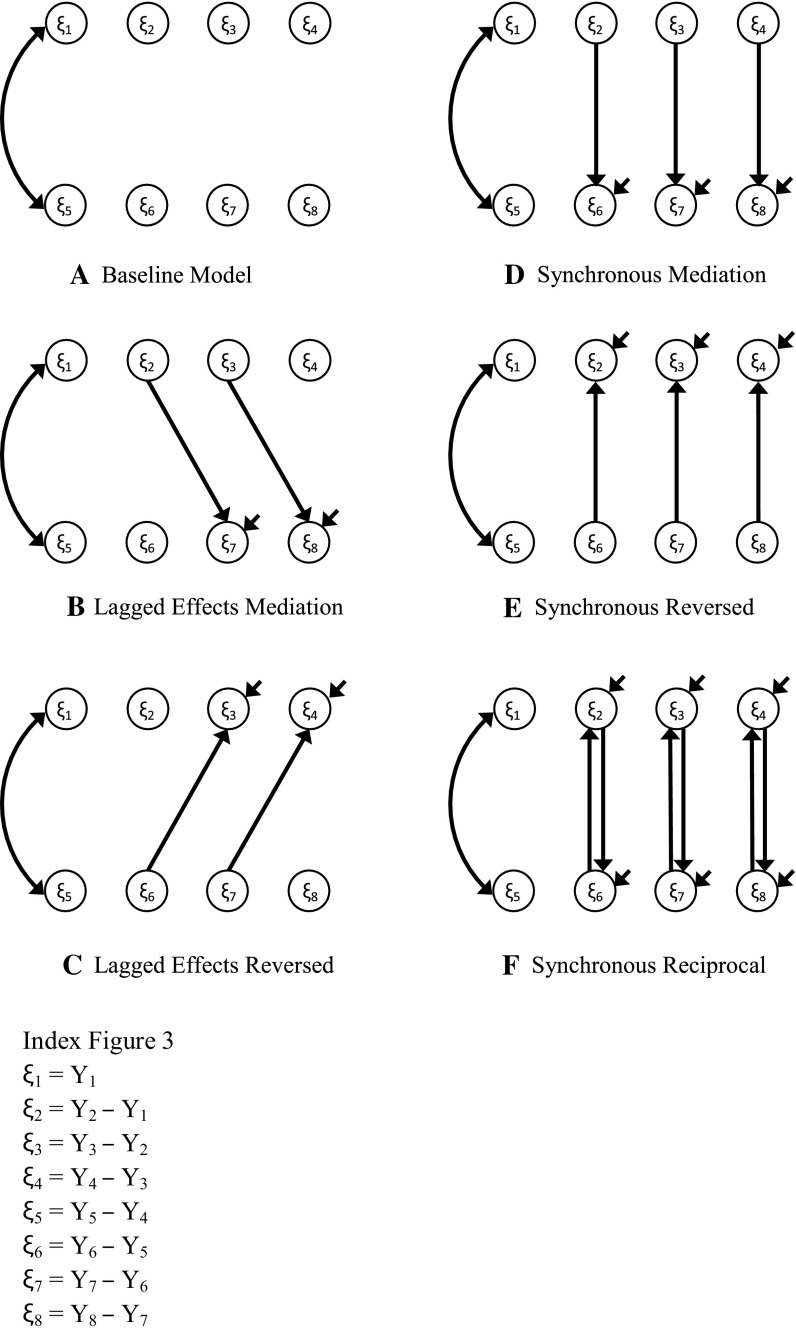
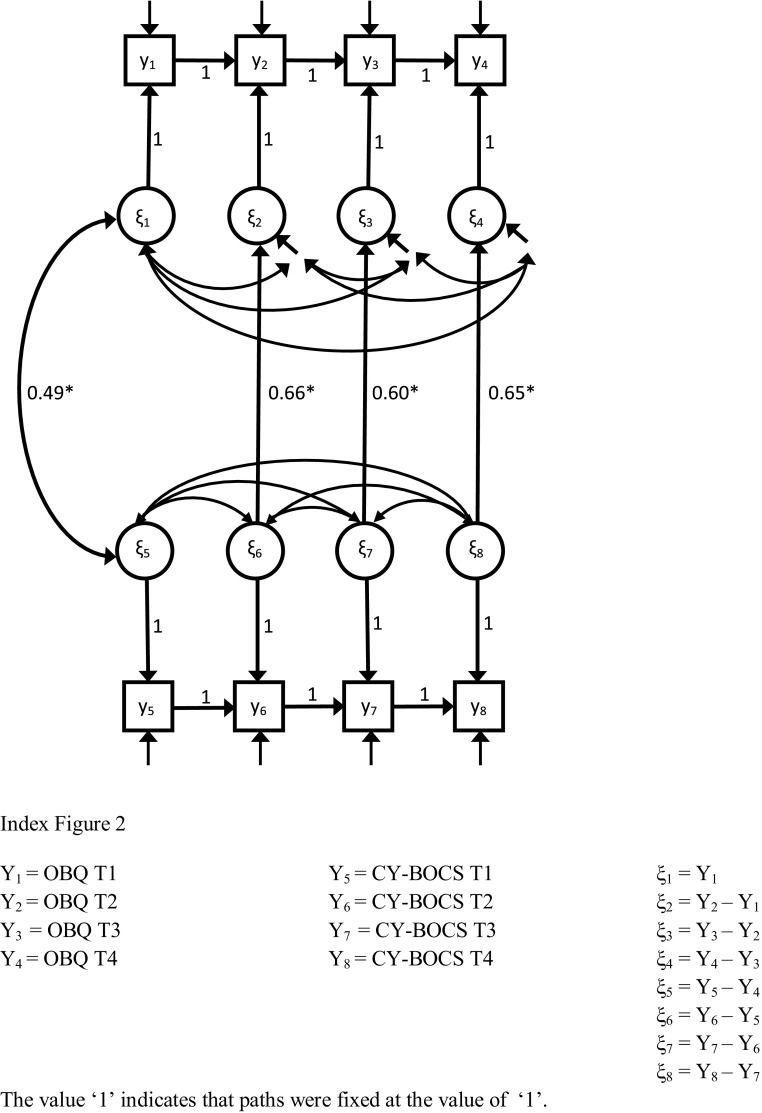
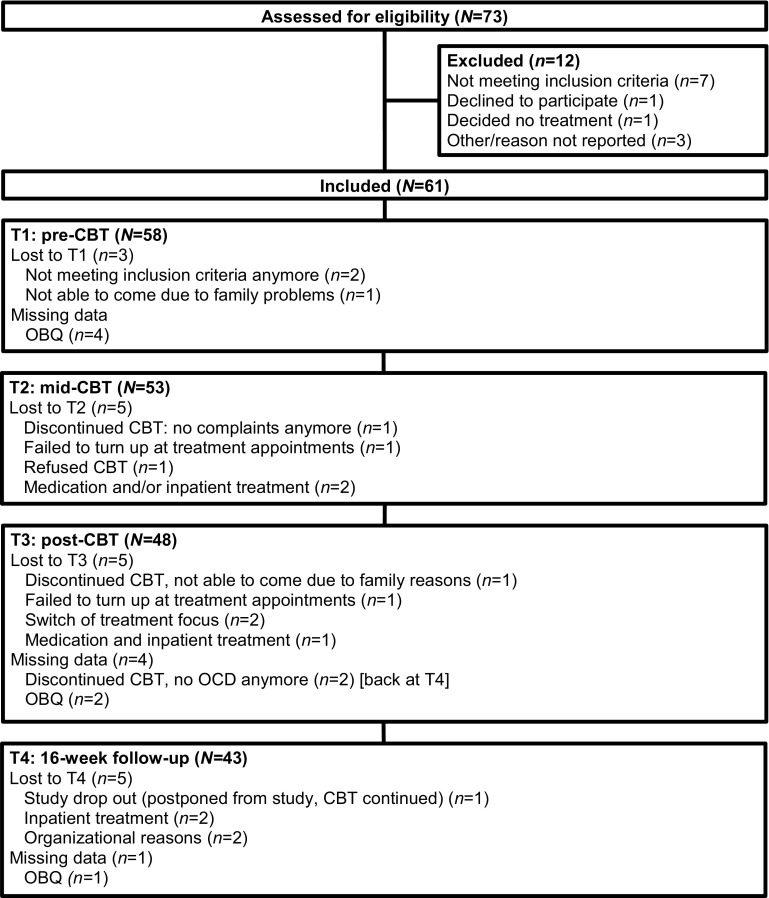
Reframing cognitions is assumed to play an important role in treatment for obsessive-compulsive disorder (OCD). However, there hardly is any empirical support for this assumption, especially for children. The aim of this study was to examine if changing dysfunctional beliefs is a mediating mechanism of cognitive behavioral therapy (CBT) for childhood OCD. Fifty-eight children (8-18 years) with OCD received CBT. Dysfunctional beliefs (OBQ-CV) and OCD severity (CY-BOCS) were measured pre-treatment, mid-treatment, post-treatment, and at 16-week follow-up. Results showed that OCD severity and dysfunctional beliefs decreased during CBT. Changes in severity predicted changes in beliefs within the same time interval. Our results did not support the hypothesis that changing dysfunctional beliefs mediates treatment effect. Future studies are needed to replicate these findings and shed more light on the role of explicit and implicit cognitions in treatment for childhood OCD.

摘要

重新构建认知被认为在强迫症(OCD)的治疗中起着重要作用。然而,几乎没有任何经验证据支持这一假设,尤其是对儿童而言。本研究旨在检验改变功能失调信念是否是认知行为疗法(CBT)治疗儿童 OCD 的中介机制。58 名患有 OCD 的儿童(8-18 岁)接受了 CBT。在治疗前、治疗中、治疗后和 16 周随访时测量了功能失调信念(OBQ-CV)和 OCD 严重程度(CY-BOCS)。结果表明,在 CBT 期间 OCD 严重程度和功能失调信念降低。同一时间间隔内严重程度的变化预测了信念的变化。我们的结果不支持改变功能失调信念介导治疗效果的假设。需要进一步的研究来复制这些发现,并更深入地了解明确和内隐认知在儿童 OCD 治疗中的作用。
https://cdn.ncbi.nlm.nih.gov/pmc/blobs/d7cb/6428795/415c32dc84c3/10578_2018_830_Fig3_HTML.jpg
https://cdn.ncbi.nlm.nih.gov/pmc/blobs/d7cb/6428795/0f31c9895fb4/10578_2018_830_Fig1_HTML.jpg
https://cdn.ncbi.nlm.nih.gov/pmc/blobs/d7cb/6428795/b928824d3edc/10578_2018_830_Fig2_HTML.jpg
https://cdn.ncbi.nlm.nih.gov/pmc/blobs/d7cb/6428795/415c32dc84c3/10578_2018_830_Fig3_HTML.jpg
https://cdn.ncbi.nlm.nih.gov/pmc/blobs/d7cb/6428795/0f31c9895fb4/10578_2018_830_Fig1_HTML.jpg
https://cdn.ncbi.nlm.nih.gov/pmc/blobs/d7cb/6428795/b928824d3edc/10578_2018_830_Fig2_HTML.jpg
https://cdn.ncbi.nlm.nih.gov/pmc/blobs/d7cb/6428795/415c32dc84c3/10578_2018_830_Fig3_HTML.jpg

相似文献

1
Mediating Mechanisms in Cognitive Behavioral Therapy for Childhood OCD: The Role of Dysfunctional Beliefs.认知行为疗法治疗儿童 OCD 的中介机制:功能失调信念的作用。
Child Psychiatry Hum Dev. 2019 Apr;50(2):173-185. doi: 10.1007/s10578-018-0830-8.
2
Predictors associated with improved cognitive-behavioral therapy outcome in pediatric obsessive-compulsive disorder.与儿童强迫症认知行为治疗效果改善相关的预测因素。
J Am Acad Child Adolesc Psychiatry. 2015 Mar;54(3):200-207.e1. doi: 10.1016/j.jaac.2014.12.007. Epub 2014 Dec 20.
3
Defining cognitive-behavior therapy response and remission in pediatric OCD: a signal detection analysis of the Children's Yale-Brown Obsessive Compulsive Scale.界定儿童强迫症认知行为疗法的反应与缓解:儿童耶鲁-布朗强迫量表的信号检测分析
Eur Child Adolesc Psychiatry. 2017 Jan;26(1):47-55. doi: 10.1007/s00787-016-0863-0. Epub 2016 May 21.
4
Neural correlates of obsessive-compulsive related dysfunctional beliefs.强迫症相关功能失调信念的神经相关物。
Prog Neuropsychopharmacol Biol Psychiatry. 2013 Dec 2;47:25-32. doi: 10.1016/j.pnpbp.2013.07.016. Epub 2013 Aug 2.
5
Psychometric validation of a Danish version of the Obsessive Beliefs Questionnaire - Child Version (OBQ-CV).丹麦版儿童强迫观念问卷(OBQ-CV)的心理测量学验证
Nord J Psychiatry. 2018 Nov;72(8):621-629. doi: 10.1080/08039488.2018.1513068. Epub 2018 Nov 1.
6
Remission and Relapse Across Three Years in Pediatric Obsessive-Compulsive Disorder Following Evidence-Based Treatments.基于证据的治疗后,儿科强迫症三年内的缓解和复发。
J Am Acad Child Adolesc Psychiatry. 2024 May;63(5):519-527. doi: 10.1016/j.jaac.2023.09.548. Epub 2023 Dec 7.
7
Dysfunctional beliefs in group and individual cognitive behavioral therapy for obsessive compulsive disorder.团体和个体认知行为疗法治疗强迫症中的功能失调信念。
J Anxiety Disord. 2011 May;25(4):483-9. doi: 10.1016/j.janxdis.2010.12.001. Epub 2010 Dec 21.
8
How resistant is 'treatment-resistant' obsessive-compulsive disorder in youth?青少年“难治性”强迫症的耐药性如何?
Br J Clin Psychol. 2015 Mar;54(1):63-75. doi: 10.1111/bjc.12061. Epub 2014 Jul 31.
9
MRSI correlates of cognitive-behavioral therapy in pediatric obsessive-compulsive disorder.磁共振频谱成像在儿童强迫症认知行为治疗中的相关性。
Prog Neuropsychopharmacol Biol Psychiatry. 2012 Jan 10;36(1):161-8. doi: 10.1016/j.pnpbp.2011.09.007. Epub 2011 Oct 1.
10
A prospective study of intensive in-patient treatment for obsessive-compulsive disorder.一项针对强迫症患者的强化住院治疗的前瞻性研究。
Psychiatry Res. 2020 Sep;291:113303. doi: 10.1016/j.psychres.2020.113303. Epub 2020 Jul 13.

引用本文的文献

1
Treating Guilt-Inducing Self-Talk in Ocd with Dramatized Socratic Dialogue: A Step by Step Intervention.运用戏剧化苏格拉底式对话治疗强迫症中引发内疚的自我对话:逐步干预
Clin Neuropsychiatry. 2024 Feb;21(1):63-78. doi: 10.36131/cnfioritieditore2023060104.
2
Comparison of Early Maladaptive Schemas in Obsessive-Compulsive Disorder Patients, Their Siblings, and Controls.强迫症患者、其兄弟姐妹及对照组早期适应不良图式的比较。
Alpha Psychiatry. 2022 Jul 1;23(4):157-163. doi: 10.5152/alphapsychiatry.2022.21565. eCollection 2022 Jul.
3
A Systematic Review of Behavioral, Physiological, and Neurobiological Cognitive Regulation Alterations in Obsessive-Compulsive Disorder.

本文引用的文献

1
Cognitive Mediation of Symptom Change in Exposure and Response Prevention for Obsessive-Compulsive Disorder.强迫症暴露与反应阻止治疗中症状改变的认知调节
Behav Ther. 2016 Jul;47(4):474-86. doi: 10.1016/j.beth.2016.03.003. Epub 2016 Mar 31.
2
Therapeutic Process During Exposure: Habituation Model.暴露期间的治疗过程:习惯化模型。
J Obsessive Compuls Relat Disord. 2015 Jul 1;6:147-157. doi: 10.1016/j.jocrd.2015.01.006.
3
Introduction to the special issue on Cognitive bias modification: Taking a step back to move forward?
强迫症患者行为、生理和神经生物学认知调节改变的系统评价
Brain Sci. 2020 Oct 29;10(11):797. doi: 10.3390/brainsci10110797.
4
Avoidance, Insight, Impairment Recognition Concordance, and Cognitive-Behavioral Therapy Outcomes in Pediatric Obsessive-Compulsive Disorder.避免、洞察、损害识别一致性与儿童强迫症的认知-行为治疗结果。
J Am Acad Child Adolesc Psychiatry. 2020 May;59(5):650-659.e2. doi: 10.1016/j.jaac.2019.05.030. Epub 2019 Jun 20.
认知偏差矫正特刊引言:以退为进?
J Behav Ther Exp Psychiatry. 2015 Dec;49(Pt A):1-4. doi: 10.1016/j.jbtep.2015.05.006. Epub 2015 May 22.
4
Components of Cognitive Behavioral Therapy Related to Outcome in Childhood Anxiety Disorders.与儿童焦虑症治疗结果相关的认知行为疗法的组成部分。
Clin Child Fam Psychol Rev. 2015 Sep;18(3):240-51. doi: 10.1007/s10567-015-0184-8.
5
Cognitive-behavioral therapy for pediatric obsessive-compulsive disorder: Empirical review and clinical recommendations.儿童强迫症的认知行为治疗:实证综述与临床建议。
Psychiatry Res. 2015 May 30;227(1):78-92. doi: 10.1016/j.psychres.2015.02.009. Epub 2015 Mar 12.
6
Mechanisms of change in cognitive therapy for obsessive compulsive disorder: role of maladaptive beliefs and schemas.强迫症认知疗法中的改变机制:适应不良信念和图式的作用。
Behav Res Ther. 2015 Feb;65:5-10. doi: 10.1016/j.brat.2014.12.006. Epub 2014 Dec 16.
7
Effectiveness of cognitive behavior treatment for pediatric obsessive-compulsive disorder: acute outcomes from the Nordic Long-term OCD Treatment Study (NordLOTS).认知行为疗法对儿童强迫症的疗效:北欧长期强迫症治疗研究(NordLOTS)的急性结果
Behav Res Ther. 2015 Jan;64:15-23. doi: 10.1016/j.brat.2014.11.005. Epub 2014 Nov 21.
8
Standard individual cognitive behaviour therapy for paediatric obsessive-compulsive disorder: a systematic review of effect estimates across comparisons.儿童强迫症的标准个体认知行为疗法:对各比较中的效应估计值的系统评价
Nord J Psychiatry. 2015 Feb;69(2):81-92. doi: 10.3109/08039488.2014.941395. Epub 2014 Aug 21.
9
Maximizing exposure therapy: an inhibitory learning approach.最大化暴露疗法:一种抑制性学习方法。
Behav Res Ther. 2014 Jul;58:10-23. doi: 10.1016/j.brat.2014.04.006. Epub 2014 May 9.
10
Differential efficacy of cognitive-behavioral therapy and pharmacological treatments for pediatric obsessive-compulsive disorder: a meta-analysis.认知行为疗法和药物治疗儿童强迫症的疗效差异:荟萃分析。
J Anxiety Disord. 2014 Jan;28(1):31-44. doi: 10.1016/j.janxdis.2013.10.007. Epub 2013 Nov 22.