Das Undurti N
UND Life Sciences, 2221 NW 5th St., Battle Ground, WA 98604, USA.
BioScience Research Centre, GVP College of Engineering Campus, Visakhapatnam 530048, India.
J Adv Res. 2018 Jan 3;11:57-66. doi: 10.1016/j.jare.2018.01.001. eCollection 2018 May.
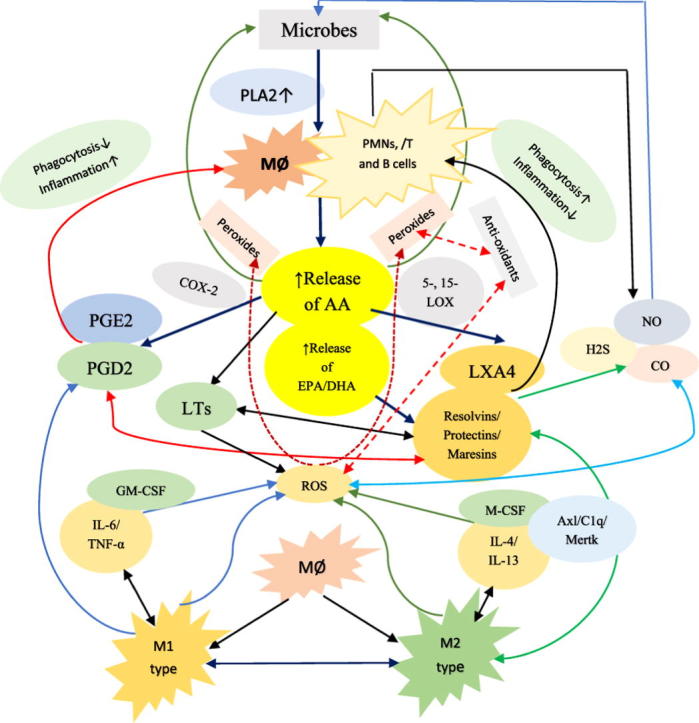
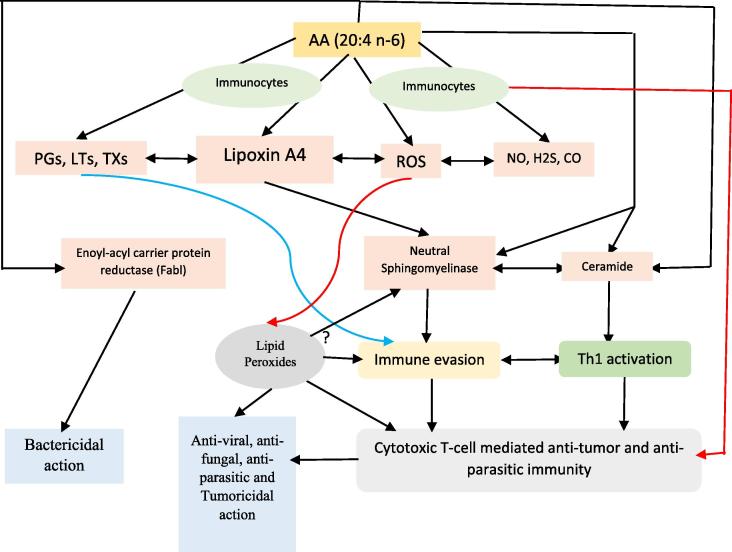
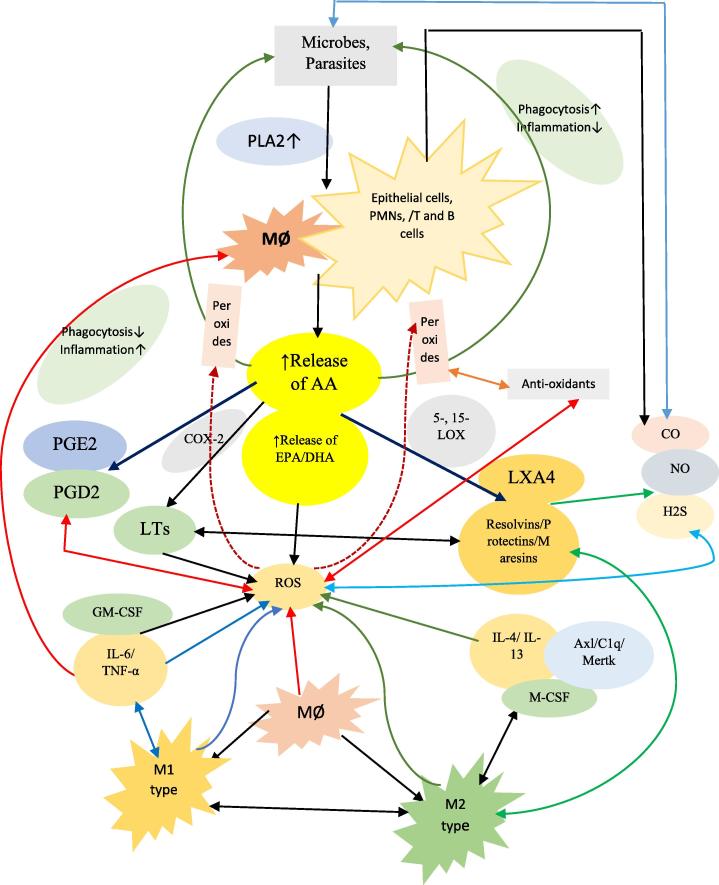
Our body is endowed with several endogenous anti-microbial compounds such as interferon, cytokines, free radicals, etc. However, little attention has been paid to the possibility that lipids could function as antimicrobial compounds. In this short review, the antimicrobial actions of various polyunsaturated fatty acids (PUFAs, mainly free acids) and their putative mechanisms of action are described. In general, PUFAs kill microbes by their direct action on microbial cell membranes, enhancing generation of free radicals, augmenting the formation of lipid peroxides that are cytotoxic, and by increasing the formation of their bioactive metabolites, such as prostaglandins, lipoxins, resolvins, protectins and maresins that enhance the phagocytic action of leukocytes and macrophages. Higher intakes of α-linolenic and cis-linoleic acids (ALA and LA respectively) and fish (a rich source of eicosapentaenoic acid and docosahexaenoic acid) might reduce the risk pneumonia. Previously, it was suggested that polyunsaturated fatty acids (PUFAs): linoleic, α-linolenic, γ-linolenic (GLA), dihomo-GLA (DGLA), arachidonic (AA), eicosapentaenoic (EPA), and docosahexaenoic acids (DHA) function as endogenous anti-bacterial, anti-fungal, anti-viral, anti-parasitic, and immunomodulating agents. A variety of bacteria are sensitive to the growth inhibitory actions of LA and ALA . Hydrolyzed linseed oil can kill methicillin-resistant . Both LA and AA have the ability to inactivate herpes, influenza, Sendai, and Sindbis virus within minutes of contact. AA, EPA, and DHA induce death of both and . Prostaglandin E1 (PGE1) and prostaglandin A (PGA), derived from DGLA, AA, and EPA inhibit viral replication and show anti-viral activity. Oral mucosa, epidermal cells, lymphocytes and macrophages contain and release significant amounts of PUFAs on stimulation. PUFAs stimulate NADPH-dependent superoxide production by macrophages, neutrophils and lymphocytes to kill the invading microorganisms. Cytokines induce the release of PUFAs from cell membrane lipid pool, a potential mechanism for their antimicrobial action. AA, EPA, and DHA give rise to lipoxins (LXs), resolvins, protectins, and maresins that limit and resolve inflammation and have antimicrobial actions. Thus, PUFAs and their metabolites have broad antimicrobial actions.
我们的身体具有多种内源性抗菌化合物,如干扰素、细胞因子、自由基等。然而,脂质可能作为抗菌化合物发挥作用这一可能性却很少受到关注。在这篇简短的综述中,描述了各种多不饱和脂肪酸(PUFAs,主要是游离酸)的抗菌作用及其假定的作用机制。一般来说,PUFAs通过直接作用于微生物细胞膜、增强自由基的生成、增加具有细胞毒性的脂质过氧化物的形成,以及增加其生物活性代谢产物(如前列腺素、脂氧素、消退素、保护素和maresin)的形成来杀死微生物,这些生物活性代谢产物可增强白细胞和巨噬细胞的吞噬作用。较高的α-亚麻酸和顺式亚油酸(分别为ALA和LA)摄入量以及鱼类(二十碳五烯酸和二十二碳六烯酸的丰富来源)的摄入可能会降低患肺炎的风险。此前有人提出,多不饱和脂肪酸(PUFAs):亚油酸、α-亚麻酸、γ-亚麻酸(GLA)、二高-GLA(DGLA)、花生四烯酸(AA)、二十碳五烯酸(EPA)和二十二碳六烯酸(DHA)可作为内源性抗菌、抗真菌、抗病毒、抗寄生虫和免疫调节因子发挥作用。多种细菌对LA和ALA的生长抑制作用敏感。水解亚麻籽油可杀死耐甲氧西林菌。LA和AA都有能力在接触数分钟内使疱疹病毒、流感病毒、仙台病毒和辛德毕斯病毒失活。AA、EPA和DHA可诱导[此处原文缺失相关内容]死亡。源自DGLA、AA和EPA的前列腺素E1(PGE1)和前列腺素A(PGA)可抑制病毒复制并显示出抗病毒活性。口腔黏膜、表皮细胞、淋巴细胞和巨噬细胞在受到刺激时会含有并释放大量的PUFAs。PUFAs刺激巨噬细胞、中性粒细胞和淋巴细胞产生依赖NADPH的超氧化物以杀死入侵的微生物。细胞因子诱导PUFAs从细胞膜脂质池中释放,这是其抗菌作用的一种潜在机制。AA、EPA和DHA可产生脂氧素(LXs)、消退素、保护素和maresin,它们可限制和消退炎症并具有抗菌作用。因此,PUFAs及其代谢产物具有广泛的抗菌作用。