Department of Medical Genetics and Molecular Biology, Faculty of Medicine, Iran University of Medical Sciences, Tehran, Iran.
Minimally Invasive Surgery Research Center, Iran University of Medical Sciences, Tehran, Iran.
PLoS One. 2018 Jul 26;13(7):e0200633. doi: 10.1371/journal.pone.0200633. eCollection 2018.
Lung cancer is the deadliest known cancer in the world, with the highest number of mutations in proto-oncogenes and tumor suppressor genes. Therefore, this study was conducted to determine the status of hotspot regions in DDR2 and KRAS genes for the first time, as well as in TP53 gene, in lung cancer patients within the Iranian population.
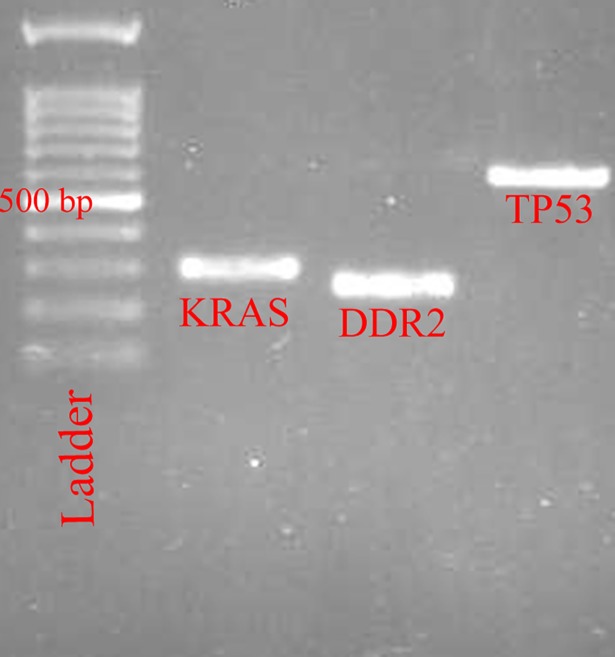
The mutations in exon 2 of KRAS, exon 18 of DDR2, and exons 5-6 of TP53 genes were screened in lung cancer samples, including non-small cell lung cancer (NSCLC) and small cell lung cancer (SCLC) using PCR and sequencing techniques.
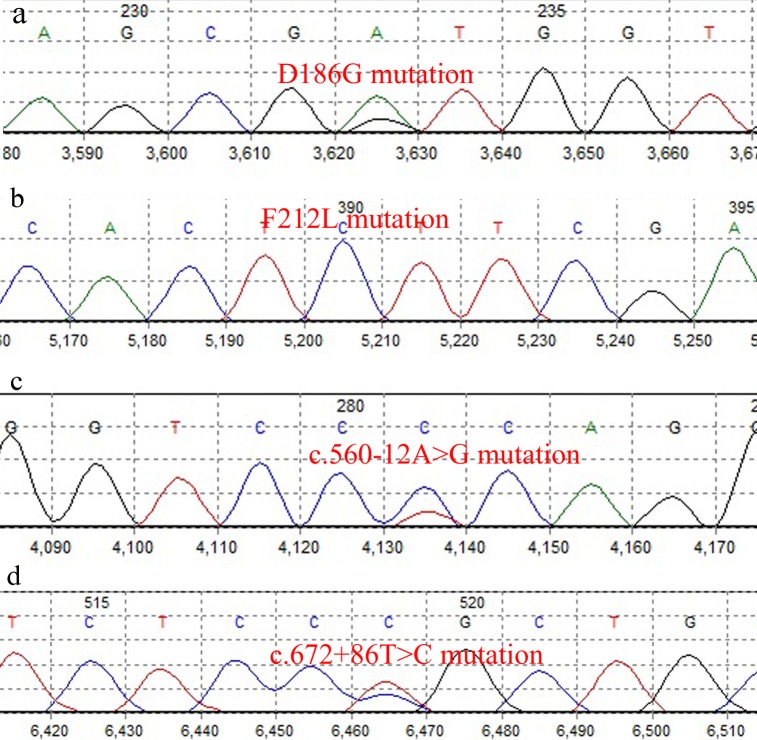
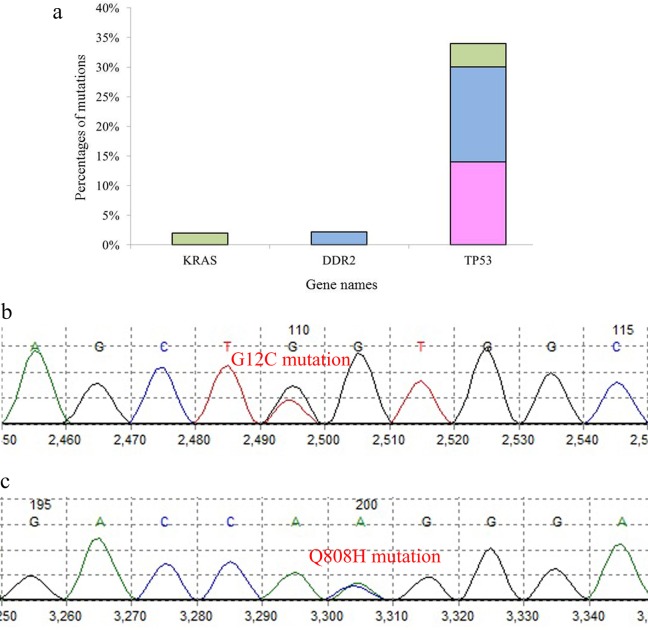
Analysis of the KRAS gene showed only a G12C variation in one large cell carcinoma (LCC) patient, whereas variants were not found in adenocarcinoma (ADC) and squamous cell carcinoma (SCC) cases. The Q808H variation in the DDR2 gene was detected in one SCC sample, while no variant was seen in the ADC and LCC subtypes. Variations in the TP53 gene were seen in all NSCLC subtypes, including six ADC (13.63%), seven SCC (15.9%) and two LCC (4.54%). Forty-eight variants were found in the TP53 gene. Of these, 15 variants were found in coding regions V147A, V157F, Q167Q, D186G, H193R, T211T, F212L and P222P, 33 variants in intronic regions rs1625895 (HGVS: c.672+62A>G), rs766856111 (HGVS: c.672+6G>A) and two new variants (c.560-12A>G and c.672+86T>C).
In conclusion, KRAS, DDR2, and TP53 variants were detected in 2%, 2.17% and 79.54% of all cases, respectively. The frequency of DDR2 mutation is nearly close to other studies, while KRAS and TP53 mutation frequencies are lower and higher than other populations, respectively. Three new putative pathogenic variants, for the first time, have been detected in Iranian patients with lung cancer, including Q808H in DDR2, F212L, and D186G in coding regions of TP53. In addition, we observed five novel benign variants, including Q167Q, P222P and T211T in coding sequence, and c.560-12A>G and c.672+86T>C, in intronic region of TP53. Mutations of KRAS and DDR2 were found in LCC and SCC subtypes, respectively, whereas mutations of TP53 were seen in SCC and ADC subtypes with higher frequencies and LCC subtype with lower frequency. Therefore, Iranian lung cancer patients can benefit from mutational analysis before starting the conventional treatment. A better understanding of the biology of these genes and their mutations will be critical for developing future targeted therapies.
肺癌是世界上已知的致命癌症,原癌基因和肿瘤抑制基因的突变数量最多。因此,本研究首次旨在确定 DDR2 和 KRAS 基因热点区域以及 TP53 基因在伊朗人群肺癌患者中的状况。
使用 PCR 和测序技术,筛选 KRAS 基因外显子 2、DDR2 基因外显子 18 和 TP53 基因外显子 5-6 中的突变,包括非小细胞肺癌(NSCLC)和小细胞肺癌(SCLC)。
KRAS 基因分析显示,只有一名大细胞癌(LCC)患者存在 G12C 变异,而在腺癌(ADC)和鳞状细胞癌(SCC)病例中未发现变异。DDR2 基因的 Q808H 变异在一名 SCC 样本中检测到,而 ADC 和 LCC 亚型均未见变异。TP53 基因的变异在所有 NSCLC 亚型中均可见,包括 6 名 ADC(13.63%)、7 名 SCC(15.9%)和 2 名 LCC(4.54%)。在 TP53 基因中发现了 48 个变异。其中,在编码区域 V147A、V157F、Q167Q、D186G、H193R、T211T、F212L 和 P222P 中发现了 15 个变异,在内含子区域 rs1625895(HGVS:c.672+62A>G)、rs766856111(HGVS:c.672+6G>A)和两个新变异(c.560-12A>G 和 c.672+86T>C)中发现了 33 个变异。
总之,在所有病例中,KRAS、DDR2 和 TP53 变异的检出率分别为 2%、2.17%和 79.54%。DDR2 突变的频率与其他研究相近,而 KRAS 和 TP53 突变的频率分别低于和高于其他人群。在伊朗肺癌患者中,首次检测到三个新的假定致病性变异,包括 DDR2 中的 Q808H、编码区的 F212L 和 D186G,以及 TP53 中的三个新的良性变异,包括 Q167Q、P222P 和 T211T。此外,在 TP53 基因的内含子区域还观察到了 5 个新的良性变异,包括 c.560-12A>G 和 c.672+86T>C。KRAS 和 DDR2 的突变分别发生在 LCC 和 SCC 亚型中,而 TP53 的突变发生在 SCC 和 ADC 亚型中,频率较高,而在 LCC 亚型中,频率较低。因此,伊朗肺癌患者在开始常规治疗前可以受益于突变分析。更好地了解这些基因及其突变的生物学特性,对于开发未来的靶向治疗至关重要。